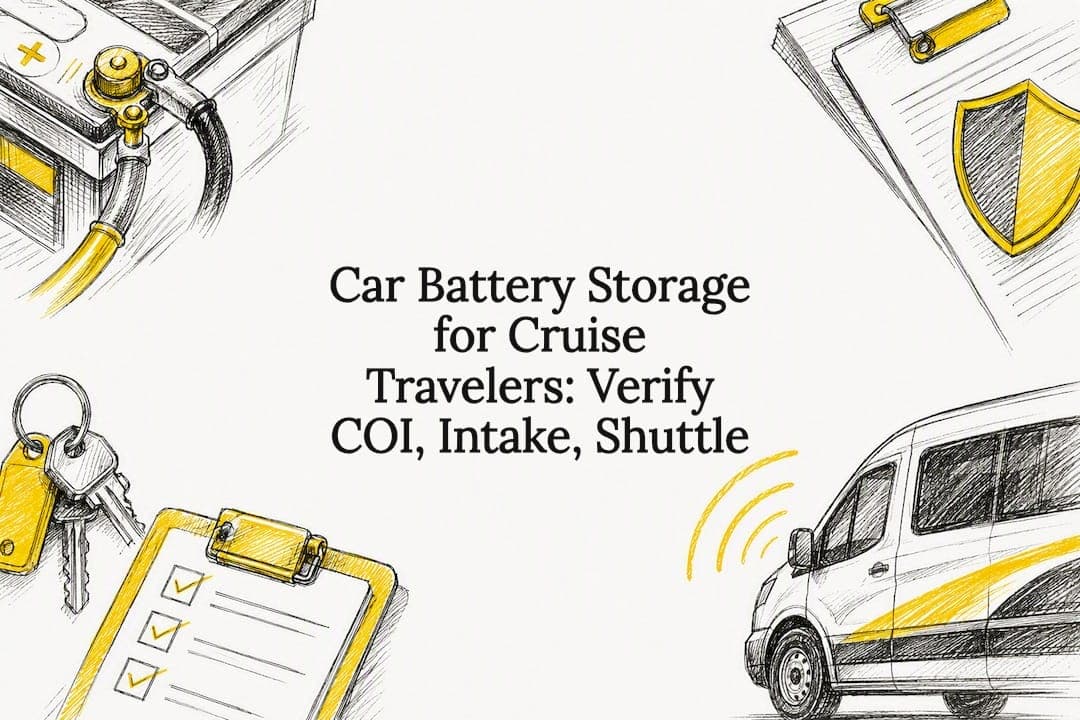
Secure indoor storage, booked with a signed contract and a facility Certificate of Insurance, is the safest way to protect your car during a cruise, a deployment, or any extended trip away from home. Verify the paperwork before you hand over your keys. Asphalt Lots, located just 15 minutes from Norfolk, is built for exactly this need, and its VIP Unlimited Parking Membership is worth checking before you book anything else.
TL;DR:
- Ensure the storage facility provides a Certificate of Insurance and confirms access authority policies before booking your vehicle storage.
- Verify the retention period of surveillance footage and the specific conditions under which your car may be moved or accessed, requiring written policies and consent.
- For electric vehicles, confirm the storage facility's charging practices do not void your manufacturer warranty and require explicit permission for remote or firmware updates.
- Choose long-term or membership-based parking options for better value if you face multi-week or frequent cruising, with the VIP Unlimited Parking Membership offering prioritized access and guaranteed spots.
- Conduct a thorough walk-around, document existing vehicle conditions, and confirm the storage provider’s environmental controls and security measures within 72 hours before drop-off.
Table of Contents
- What does secure indoor car battery storage actually include?
- How do you choose a storage provider for your trip?
- What should you do in the 72 hours before handover?
- What insurance and contract terms should you verify in writing?
- How should EV owners manage battery storage during a long trip?
- Why Asphalt Lots focuses on cruise travelers and how that solves common problems
- Book Asphalt Lots for guaranteed cruise-day or long-term storage
- Sources
What does secure indoor car battery storage actually include?
Indoor vehicle storage isn't just a roof over your car. The strongest facilities layer three types of protection that a basic surface lot skips entirely.
Security comes first: gated and logged entry, live monitoring around the clock, and staff on-site who actually watch the feeds rather than just recording them. Specialist operators document security as five separate dimensions, including a curated tenant mix, because mixed-use lots where anyone can wander in raise the odds of accidental damage or vandalism.
Environmental control matters just as much. A sealed indoor envelope, climate management where the facility offers it, and pest control all guard against the slow damage that outdoor storage invites, from sun-baked seals to moisture-driven corrosion. Premium facilities commonly advertise 24×7 CCTV, fire protection, and climate control as standard, not upsells.
Then there's the operational side:
- Signed intake reports with time-stamped condition photos
- Maintenance packages that include periodic battery tending
- Scheduled shuttle service to the terminal or airport
That last piece is what separates a real vehicle storage provider from a parking lot with a fence. A comparison of secure indoor parking versus outdoor lots makes the price difference easier to justify once you see what's actually at stake.
How do you choose a storage provider for your trip?
Before you commit a deposit, run the facility through a short list of questions. Most will answer confidently. The ones that hesitate are telling you something.
- Ask for the COI. A facility unwilling to produce a Certificate of Insurance on request is a red flag, full stop. A legitimate operator hands it over without friction.
- Ask who's authorized to move your car, and under what conditions. Acceptable answer: a documented policy naming staff roles and requiring your written consent for anything beyond repositioning. Red flag: vague answers like "we handle it as needed."
- Ask about camera retention. A facility should be able to tell you how long it retains footage and how to request pullbacks if something goes wrong.
- Ask about access hours and notice requirements. If you can't get a straight answer on how much lead time you need to retrieve your vehicle, assume the worst on a cruise-day deadline.
- Ask about tenant mix. Vehicle-only facilities carry less risk than general self-storage lots where foot traffic includes people with no connection to cars at all.
Pro Tip: Call the facility's insurer directly if you can, not just the sales rep. A five-minute call confirming coverage limits beats a five-month regret.
On pricing, the math is straightforward. Long-stay parking guides note that daily rates make sense for short trips, but they add up fast past a week or two. Monthly storage or a membership model, like Asphalt Lots' VIP Unlimited Parking Membership, tends to pay for itself once you're a frequent cruiser or facing a multi-month deployment. If you're weighing options for a longer trip, a decision checklist built for long-stay travelers can help you compare without guessing.
What should you do in the 72 hours before handover?
The last three days before drop-off are where most people cut corners. Don't.
- Walk the car and take time-stamped photos from all four angles, plus close-ups of existing scratches, dents, or wear.
- Record the odometer reading and note it on the intake form alongside the photos.
- Confirm the signed intake checklist matches what you documented yourself. Discrepancies get resolved now, not in six weeks.
- Top off fluids and set tires to the manufacturer's recommended pressure. Underinflated tires sitting for months risk flat spots, a problem covered in more detail in this guide to preventing tire flat spots during storage.
- Clarify the battery care plan. If the facility offers periodic tending or trickle charging as part of its maintenance package, get the schedule in writing.
- Confirm your keys and telematics custody plan.
A few things need to be locked down beyond the walk-around:
- Decide who besides you is authorized to access the vehicle, and put that name in writing.
- If your car has remote-start or app-based telematics, document whether the facility needs access and revoke it if not.
- Confirm your shuttle reservation to the cruise terminal, including pickup time and any transit insurance that applies during transport.
For a broader prep list beyond these three days, the step-by-step storage guide covers longer-lead items worth handling a week or more out. And if you're traveling with family, this cruise prep guide covers the logistics beyond just the car.
What insurance and contract terms should you verify in writing?
This is the section people skip, and it's the one that bites them later. A parking lot fence photo doesn't help you if your policy excludes the exact situation you're in.
Start with the Certificate of Insurance. Facility operators consistently recommend that tenants request a COI and verify the premises liability limits directly, rather than assuming coverage exists. Then call your own insurer. Some personal auto policies exclude unattended, long-duration storage at a commercial facility, which means you could be paying for coverage that doesn't apply to your exact situation.
Beyond insurance, verify these items before you sign anything:
- Movement authorization language. Who can start or reposition your car, and does the contract require your consent first?
- Telematics access. If your car reports data remotely, does the facility need or want that access, and can you decline it?
- Camera retention policy. Get the retention window in writing, not verbally promised.
- Dispute and claim timeline. Ask how long you have to report damage after pickup and what evidence the facility requires.
A long-term storage evaluation guide walks through most of these clauses in more depth if you want the full checklist before your trip.
How should EV owners manage battery storage during a long trip?
Electric vehicles need a different playbook than gas cars, mainly around state of charge. Long-term storage guidance generally points to a 40 to 60 percent charge range for extended parking, unless your manufacturer specifies otherwise. Charging to 100% and letting it sit for weeks stresses the battery; letting it drain to zero risks damage that's expensive to fix.
Facility-managed charging or monthly top-ups sound convenient, but they come with tradeoffs worth asking about upfront:
- Confirm whether facility-managed charging affects your manufacturer warranty.
- Ask whether your insurer treats facility charging access differently than standard storage.
- Limit telematics and remote-access permissions in the contract, and require your explicit consent before any firmware update or remote-start action.
Get these terms in writing before you hand over the key fob, not after.
Why Asphalt Lots focuses on cruise travelers and how that solves common problems
Asphalt Lots is veteran-owned and built specifically around the cruise traveler's calendar, not adapted from a generic parking model. Round-the-clock surveillance and scheduled shuttle service exist because cruise departures don't wait, and neither should your ride to the terminal.
The VIP Unlimited Parking Membership solves the problem frequent cruisers know best: showing up on a busy departure morning with no guaranteed spot. Reserved parking on cruise days, priority shuttle boarding, and membership perks remove that uncertainty entirely. Customers consistently describe the handoff as far less stressful than navigating public lot chaos, which is consistent with findings from a real-world look at secure parking facilities explaining why documented, staffed facilities outperform first-come lots.
— Martin
Book Asphalt Lots for guaranteed cruise-day or long-term storage
Asphalt Lots is the difference between hoping for a spot and knowing you have one. Whether you need a single day of parking before a cruise, monthly storage while you're deployed, or a long-term contract while you handle life elsewhere, the setup is the same: documented intake, round-the-clock surveillance, and a shuttle that runs on your schedule, not a guess.
The VIP Unlimited Parking Membership is the strongest option for frequent cruisers specifically because it guarantees availability on cruise days, something no ordinary lot can promise once the terminal fills up. You also get priority shuttle boarding and membership perks that pay off after just a few trips. For a closer look at how the membership stacks up for repeat sailors, this guide to guaranteed indoor cruise parking breaks down the specifics.
Ready to lock in your spot? Head to Asphalt Lots to check availability for your cruise date, request your Certificate of Insurance, and reserve before the lot fills.
Sources
- Evaluate long-term car storage for vacations & viewings
- Ultimate Long Stay Car Park Selection Guide | Parksy