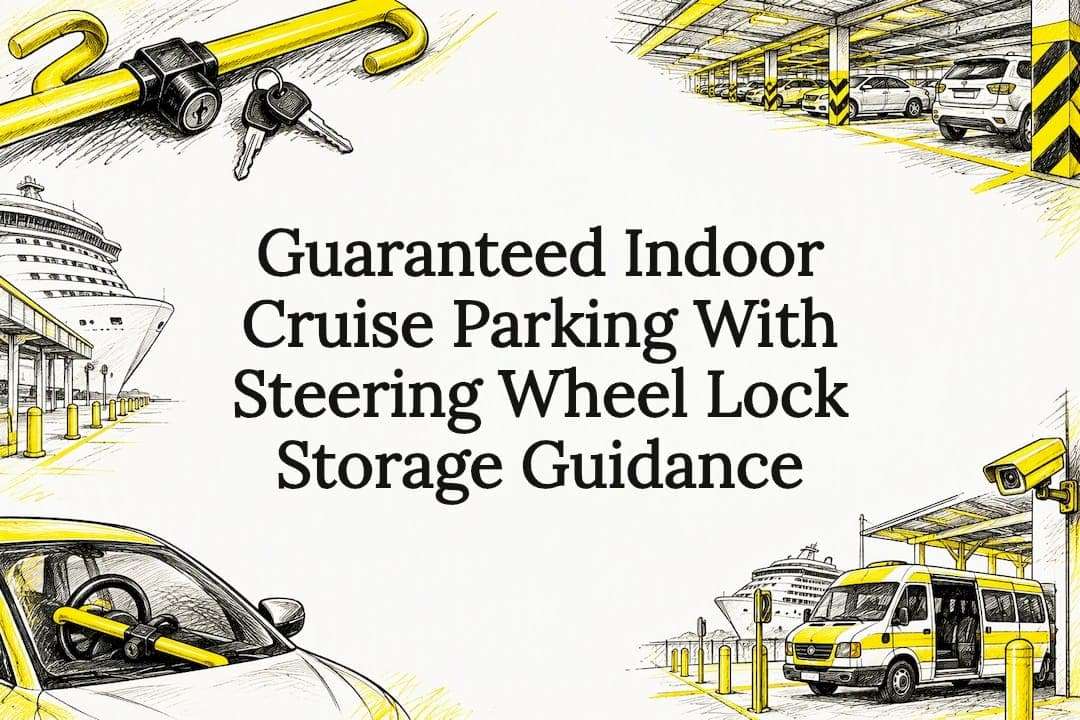
The safest way to protect your vehicle during a cruise is to reserve indoor secure parking with a guaranteed space and documented shuttle service, not a first-come lot near the terminal. Indoor shelter, 24/7 surveillance, and a written reservation protect your car while you travel and remove the guesswork on embarkation morning. We offer a VIP Unlimited Cruise Parking Membership that builds that protection into one plan. Book it, then run through the checklist below before you leave home.
TL;DR:
- Booking two to four weeks in advance ensures guaranteed parking spots, with even earlier reservations needed during peak cruise seasons or holidays.
- Confirm that the parking facility has 24/7 camera coverage, gated controlled access, and provides written confirmation of your reserved space and shuttle schedule before paying.
- Protect your vehicle by taking photos of its condition and noting tire pressure and fuel level at drop-off, keeping records to avoid disputes on return.
- A VIP membership costing $100 per month guarantees a reserved spot and priority shuttle service, with daily parking at $10 per day as a flexible alternative.
- Terminal security operates separately from parking lot security, so evaluate parking facilities based on access control and surveillance rather than relying on cruise terminal safety measures.
Table of Contents
- Quick security checklist before you book
- How to book and secure your spot
- What to expect on cruise day
- Caring for your vehicle while it sits in storage
- Why our facility fits what cruise travelers actually need
- Book your spot or join the VIP membership
- FAQ
- Sources
Quick security checklist before you book
Not every lot that calls itself secure actually verifies access, so a few direct questions before you pay save you a headache later.
Start with whether the space is indoor or outdoor. Indoor storage shields your car from sun, rain, and the kind of casual foot traffic that outdoor lots attract, which matters most for cruise trips lasting several days or longer, as we explain in our comparison of indoor parking versus outdoor lots.
Confirm these before handing over payment:
- Does the facility run 24/7 camera coverage with staff on-site, not just signage?
- Is entry gated or otherwise controlled, and is each entry logged?
- Will you get written confirmation of a reserved, guaranteed space, not just a general "we'll find you one"?
- What is the shuttle schedule, and what happens if your return flight or disembarkation runs late?
- How are keys handled: a secured register, limited staff access, and a signed receipt if you leave them?
Real facilities document these details rather than leaving them vague, and our rundown of access control at parking facilities walks through what gated entry and logged access actually look like in practice.
Before you commit, ask for the reservation terms in writing:
- Exact dates of drop-off and pickup
- Vehicle make, model, and license plate on file
- Oversized-vehicle restrictions, if you drive a truck or SUV
- Cancellation and refund terms
- Total cost, including any shuttle or late-return fees
Pro Tip: Call the day before you plan to book and ask for the written reservation policy by email before you pay. A facility that hesitates to put it in writing is one to skip.
How to book and secure your spot
Booking early matters more during peak cruise season, when guaranteed spots fill first and walk-in lots fill second.
- Book 2 to 4 weeks ahead for standard sailing dates, earlier for holiday or summer departures, since reserved spots are allocated before drop-in parking.
- Provide your vehicle's make, model, license plate, and a current phone number so staff can match you to your reserved space on arrival.
- Request the shuttle schedule and late-return policy in writing, along with your cancellation terms, before you pay anything.
- Keep your payment receipt and any written proof of a guaranteed VIP spot. If you booked a membership, ask for confirmation that your cruise-day reservation is locked in, not just "likely."
- At drop-off, photograph your vehicle from all four sides, note the odometer reading, and flag any existing scratches or dents with staff before you walk away.
That last step takes two minutes and gives you a clear record if there is ever a dispute about the vehicle's condition when you return. Our guide on choosing a nearby cruise parking facility covers additional questions worth asking if you're comparing more than one lot.
Pro Tip: Take photos with your phone's timestamp visible, or text them to yourself, so the date is verifiable later.

What to expect on cruise day
Arrival at an indoor facility usually follows a simple pattern: you pull in, staff check you against your reservation, and you hand off keys or park in your assigned space yourself depending on the facility's process.
- Signage directs you to check-in before parking, not after.
- "Priority" or "VIP" shuttle service means your group boards ahead of standard drop-in customers, cutting wait time on embarkation morning.
- Late returns typically require a phone call ahead of time so staff can adjust shuttle timing or hold your space past the standard pickup window.
One point travelers often get wrong: terminal security and parking-lot security are two separate systems. Cruise terminal screening programs, governed by federal regulation, require terminal operators to staff and document passenger and baggage screening inside the terminal's secure areas. That regulation does not extend to parking lots outside the terminal, which means the security of your parked car depends entirely on the lot you choose, not on anything the cruise line or port screens.
Caring for your vehicle while it sits in storage
A car that sits for a week or more needs a few minutes of prep, especially if you're leaving for a long deployment or an extended cruise.
- Battery: a trickle charger or battery disconnect prevents a dead battery on return; if you can't use one, ask whether the facility offers power access.
- Tires: inflate to your vehicle's recommended PSI before drop-off, and for storage longer than a few weeks, ask whether the facility repositions parked cars to avoid flat spots, a concern we cover in our guide to preventing tire flat spots.
- Fuel: leave the tank at the level your facility recommends rather than empty, since an empty tank invites condensation issues in humid climates.
- Insurance: confirm your policy covers a parked, stored vehicle and keep the facility's contact information with your records in case you need to file a claim.
- Keys: if you leave a set, get a signed receipt and photograph the keyset beforehand, a step we detail in our piece on keeping or leaving your keys during cruise parking.
Pro Tip: Snap a photo of your tire pressure and fuel gauge at drop-off. It takes ten seconds and settles any question about the vehicle's condition when you left it.
For broader context on storage prep across vehicle types, our partners at GoKarts USA outline similar battery and tire principles worth knowing before any extended storage period.
Why our facility fits what cruise travelers actually need
We built Asphalt Lots around the checklist above because we kept hearing the same worries from cruise travelers: is my car sheltered, is someone watching it, and will my spot actually be there when I get back. Our indoor facility runs 24/7 surveillance, and our VIP Unlimited Cruise Parking Membership answers the reserved-space question directly: a guaranteed spot on cruise days plus priority shuttle service, so you're not waiting behind walk-in customers. We also publish how-to guidance on vehicle storage care because the questions don't stop once your car is parked.
— Martin
Book your spot or join the VIP membership
Reserving ahead removes the biggest cruise-day stressor: wondering whether a spot will be open when you pull up. Our VIP Unlimited Cruise Parking Membership gives you:
- A guaranteed reserved space every time you sail, not a wait-and-see arrival.
- Priority shuttle service to the terminal, ahead of standard drop-in traffic.
- Added perks for frequent cruisers who book with us repeatedly.
Daily parking through our Norfolk Carnival Cruise Parking service is $10 per day, while the VIP membership is $100 per month according to published rates. Check our services page for monthly and long-term deployment parking options as well. Whichever you choose, get your confirmation in writing and photograph your vehicle at drop-off so there's a clear record on both ends.
FAQ
Is a steering wheel lock or kill switch necessary if I park indoors?
A visible anti-theft device can discourage tampering, but it doesn't replace facility-level protections like monitored access and 24/7 surveillance. Indoor parking with logged entry and camera coverage addresses the risk at the lot level, which matters more for a vehicle sitting unattended for days.
What's the difference between terminal security and parking lot security?
Cruise terminal screening, set out in federal regulation, covers passengers and baggage inside the terminal's secured areas only. Parking lot security is a separate system entirely, so you need to evaluate any lot's cameras, access control, and staffing independently of the terminal's own screening process.
How much does secure cruise parking cost?
Daily parking through Norfolk Carnival Cruise Parking is priced at $10 per day, while the Unlimited VIP Cruise Parking Membership runs $100 per month and includes guaranteed cruise-day spots and priority shuttle service. Monthly and long-term deployment parking options are listed on our services page without a published flat rate.
How far in advance should I book cruise parking?
Booking two to four weeks before your sailing date generally secures a reserved spot, with earlier booking recommended around holidays or peak summer cruise season. Reserved and VIP spots are allocated before walk-in parking, so early booking matters most if you want a guaranteed space.
What should I do with my car before leaving it for a long cruise or deployment?
Inflate your tires to the recommended PSI, leave fuel at the level your facility recommends, and consider a trickle charger if your vehicle will sit for several weeks. Confirm your insurance covers a stored vehicle and get a signed receipt if you leave your keys with facility staff.