Reservation-linked access control, specifically License Plate Recognition (LPR) paired with a Parking Access and Revenue Control System (PARCS), is the single feature that separates a VIP cruise parking experience from a stressful one. Your plate gets pre-authorized before you arrive, the system validates your reservation as you pull in, and the barrier opens or stays gateless with no ticket, no kiosk, and no delay. Cruise terminals can process thousands of vehicles in a typical embarkation window, so frictionless entry is not a luxury feature; it is what keeps the whole operation from locking up. This guide covers how the technology works, what to verify before you book, and how Asphaltlotsva applies it through the VIP Unlimited Parking Membership.
Table of Contents
- How does modern parking access control actually work?
- Why access control matters for cruise travelers
- What operators must get right for cruise turnarounds
- What should you ask before booking VIP cruise parking?
- Security and compliance signals that matter
- How Asphaltlotsva uses access control for cruise travelers
- Key Takeaways
- What most cruise travelers overlook about parking access control
- Asphaltlotsva VIP parking: reserved, indoor, and ready when you are
- Sources and further reading
How does modern parking access control actually work?
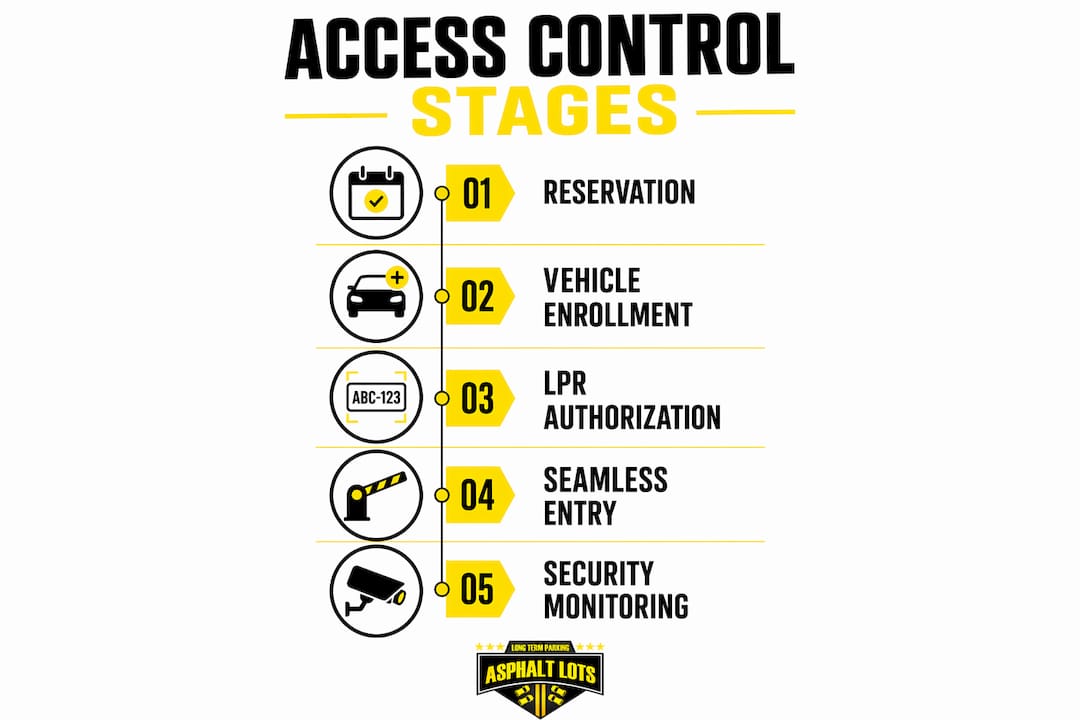
Access control matches a credential, your license plate, a mobile pass, or a QR code, to a reservation record and triggers entry with no human interaction required. Here is the arrival sequence in plain terms:
- Pre-authorization. You book a spot and enroll your plate. The system links your plate number to your reservation dates, including your voyage return date.
- Lane capture. A camera reads your plate as you approach. LPR translates the image to text and queries the reservation database in under a second.
- Validation. The PARCS checks your reservation status, membership tier, and payment. If everything clears, the actuator opens or the gateless lane simply logs your entry.
- Exception handling. Rental cars, unread plates, or multi-vehicle reservations trigger a fallback: a mobile pass QR or an intercom connects you to staff without blocking the lane behind you.
- Voyage lifecycle close. Your access window stays active through your scheduled return date. When you drive out post-cruise, the system closes the reservation automatically.
The ANPR/LPR ecosystem only delivers enterprise-grade auditing when it is connected to PARCS, a reservation database, shuttle scheduling software, and a video management system. A standalone camera at the gate is not access control. It is just a camera.
| Credential type | Entry speed | Reliability | Exception handling |
|---|---|---|---|
| LPR (pre-authorized plate) | Fastest, under 2 seconds | High; fails on damaged or obscured plates | Mobile pass or intercom fallback |
| Mobile pass / QR | Fast, 3–5 seconds | High; requires charged phone | Staff override via intercom |
| Manual kiosk | Slowest, 30 seconds | Moderate; payment errors common | Staff intervention required |
Why access control matters for cruise travelers
The core benefit is not just theft prevention. It is that reservation-integrated LPR removes every manual step that slows you down on embarkation morning, when you are already juggling luggage, boarding passes, and a hard departure time.
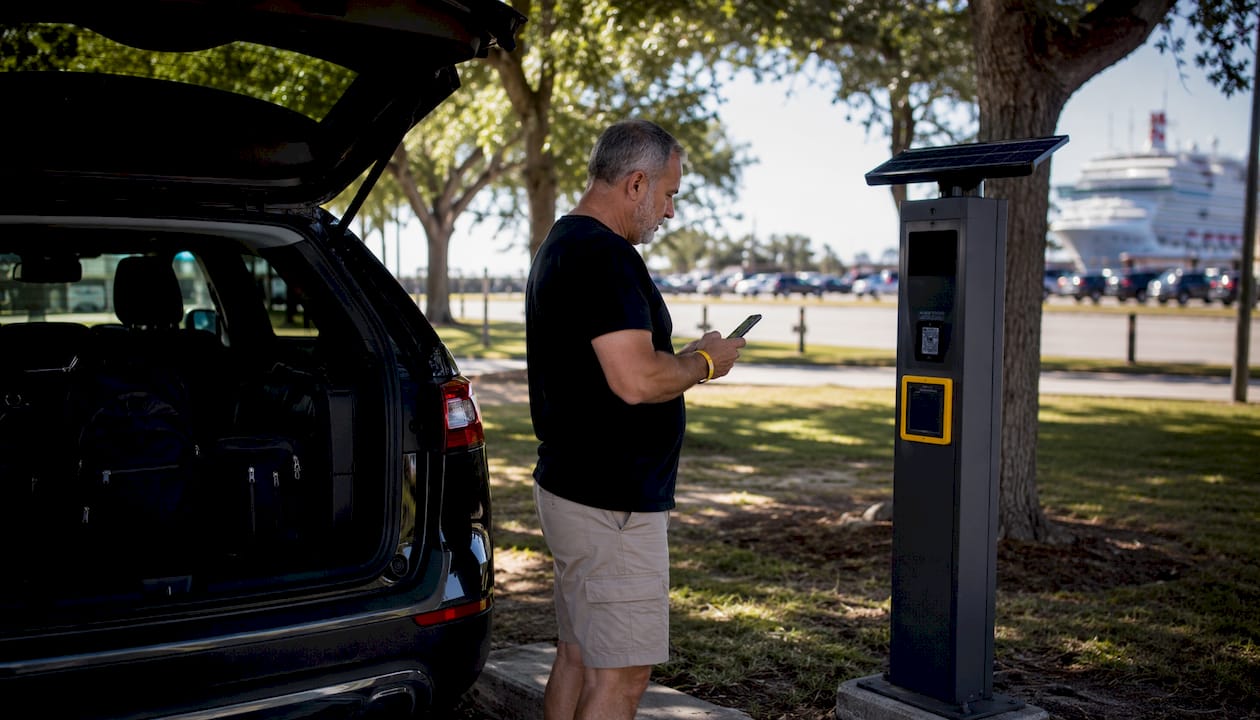
Security is the foundation. Access control reduces unauthorized entry and produces full audit trails, so if something happens to your vehicle over a seven-day voyage, the operator has a timestamped record of every vehicle that entered and exited. That record matters for insurance claims and incident investigations.
Speed is the differentiator. A gateless digital system at the Mobile, Alabama cruise terminal reported very high compliance and a positive NPS after adopting reservation-integrated parking. Those numbers reflect what happens when passengers stop fighting kiosks and start walking straight to the shuttle.
The experience layer is where VIP parking earns its name. When your plate triggers entry, the same system can dispatch your priority shuttle, flag your luggage assistance request, and pre-populate your guest profile. You arrive, park, and board. That is the whole sequence.
What operators must get right for cruise turnarounds
Cruise parking is operationally unlike any other parking context. Systems built for daily commuters fail at cruise peak events without voyage logic baked in. Here is what a competent operator needs in place:
- Pre-authorization windows tied to voyage start and end dates, not just calendar days
- Dynamic lane assignment that shifts VIP lanes during peak embarkation hours
- Multiple credential fallbacks: LPR primary, mobile pass secondary, intercom tertiary
- Priority lanes for membership holders, separated from general public entry
- Reserved-spot guarantees with real-time occupancy enforcement
- Shuttle coordination integrated with access logs so dispatch knows when VIP vehicles arrive
- 24/7 monitoring with PTZ cameras, separated long-term storage zones, and pedestrian intercoms
- Port authority compliance: CBP security zone requirements, TWIC card credentialing for staff, and video retention periods that meet port security standards
| Operational checkpoint | Why it matters |
|---|---|
| ICT integration test pre-season | Confirms LPR, PARCS, and reservation DB talk to each other before peak day |
| Peak-day drill (simulated thousands of vehicles) | Exposes lane bottlenecks and staffing gaps before they affect passengers |
| Contingency intercom procedure | Ensures no vehicle sits blocked if LPR fails |
| Real-time dashboard for port authority | Meets CBP reporting requirements and supports incident response |
What should you ask before booking VIP cruise parking?
The single most decisive question: "Can you guarantee a reserved, pre-authorized spot with ticketless entry tied to my plate or membership, and what happens if that spot is unavailable when I arrive?" If the answer is vague, keep looking.
- Reservation guarantee and cancellation policy. Confirm the spot is held, not just "available." Ask what the refund window is if your cruise is rescheduled.
- Credential types accepted. LPR and mobile pass are the standard. A facility that requires a manual kiosk on arrival is not running a VIP operation.
- VIP lane and priority shuttle. Ask for the shuttle schedule and the maximum wait time. "Frequent" is not an answer. A specific interval is.
- Indoor or covered storage. Separated long-term zones reduce the risk of vehicle damage from weather and from other vehicles moving in and out daily.
- Surveillance and incident reporting. Ask whether cameras cover the full facility 24/7 and how long footage is retained. Port security standards often require longer retention than commercial lots.
- Staff vetting and insurance. Operators in port security zones may require TWIC-credentialed staff. Ask about commercial insurance limits.
- Proximity and shuttle transit time. Distance to the terminal matters most on disembarkation day when you are tired and carrying bags. Confirm the actual drive time, not a marketing estimate.
- Membership benefits. A VIP parking membership at a cruise port typically bundles reserved spots, priority shuttle, and surveillance under one annual or per-voyage fee.
Red flags: manual kiosk required on arrival, no plate enrollment option, ambiguous shuttle schedules, no mention of surveillance logs, or a refund policy buried in fine print.
Verification steps: screenshot your reservation confirmation showing your plate number, confirm shuttle pickup time in writing, and ask for the facility's incident response contact before you leave for the terminal.
Security and compliance signals that matter
Operators should provide 24/7 surveillance, immutable access logs, reservation-linked LPR, staff background screening, and commercial insurance. Those are the floor, not the ceiling.
Access logs are the most underrated trust signal. Every entry and exit event should carry a timestamp and a credential identifier. Integrated cameras attach video footage to the access log automatically, so an incident investigation does not rely on memory or manual review. Voyage-based data retention means those logs stay available through your return date and beyond, which matters if a claim surfaces weeks after you disembark.
Pre-booking guarantees at major cruise terminals have become a baseline expectation. Operators who cannot offer advance reservation with plate enrollment are behind the standard the industry has already set.
Pro Tip: Ask the operator for their incident response SLA in writing. A credible facility can tell you exactly how long it takes to pull footage and who you call if something happens to your vehicle. If they cannot answer that question, their surveillance is decorative.
| Credential model | Speed | Reliability | Exception handling |
|---|---|---|---|
| LPR (pre-authorized) | Fastest | High | Mobile pass / intercom fallback |
| Mobile pass / QR | Fast | High | Staff override |
| Manual kiosk | Slowest | Moderate | Staff intervention |
How Asphaltlotsva uses access control for cruise travelers
Asphaltlotsva, located 15 minutes from the Norfolk cruise terminal, applies voyage-aware access control through its VIP Unlimited Parking Membership. The system pre-authorizes member plates before embarkation day, enabling ticketless indoor parking with no kiosk stop and no manual check-in.
Membership features include:
- Reserved spot guarantee on cruise days, with confirmed availability before you leave home
- Priority shuttle pickup coordinated with vehicle arrival, not a fixed schedule you have to chase
- Round-the-clock surveillance covering the full indoor facility
- Separated long-term storage zones that keep your vehicle away from daily traffic movement
- Dedicated customer support for the duration of your voyage
The veteran-owned facility is built around one premise: your parking should be the least stressful part of your cruise day. For secure indoor parking options near Norfolk, the combination of pre-authorized access and membership guarantees is what makes the difference between hoping your spot is there and knowing it is.
Key Takeaways
Reservation-linked LPR is the core feature that separates genuine VIP cruise parking from a standard lot with a security camera.
| Point | Details |
|---|---|
| Reservation-linked access is essential | LPR pre-authorization eliminates kiosks and guarantees your spot before you arrive. |
| Verify credential support | Confirm the facility accepts LPR or mobile pass; a manual kiosk-only entry is a red flag. |
| Throughput demands are extreme | Cruise terminals handle 3,000–6,000 vehicles in four hours; only voyage-aware systems keep lanes moving. |
| Trust signals to check | Ask for 24/7 surveillance logs, voyage-based data retention, and staff credentialing details. |
| Asphaltlotsva VIP Membership | Reserved spots, priority shuttle, and indoor surveillance bundled for frequent cruise travelers near Norfolk. |
What most cruise travelers overlook about parking access control
Most people evaluate cruise parking on price and proximity. Those matter, but they are the wrong primary filter. The question that actually predicts your experience is whether the operator's system treats your reservation as a voyage lifecycle or just a calendar booking.
A facility that closes your reservation at midnight on day seven does not understand cruise operations. Ships are late. Disembarkation runs long. A system built for daily commuters will lock you out or charge overage fees for circumstances outside your control. Voyage-aware access control holds your reservation open through the scheduled return window and handles exceptions without penalizing you for the cruise line's schedule.
The other thing travelers underestimate is the value of the peace-of-mind parking experience on the return trip specifically. Embarkation is exciting. Disembarkation after seven days at sea, with bags and a long drive home ahead, is when a smooth, fast exit from a secure facility actually registers. That is the moment a VIP membership earns its keep.
Asphaltlotsva VIP parking: reserved, indoor, and ready when you are
Frequent cruise travelers near Norfolk get a reserved indoor spot, ticketless entry, and priority shuttle pickup through the Asphaltlotsva VIP Unlimited Parking Membership, with no kiosk stop and no guessing whether a space is available on embarkation morning.
The facility sits 15 minutes from the Norfolk cruise terminal. Shuttle service is coordinated with your vehicle arrival, not a fixed timetable. Indoor storage keeps your vehicle out of the weather and away from daily lot traffic for the full duration of your voyage. Round-the-clock surveillance and access logs run continuously.
Reserve your spot or learn about membership at Asphaltlotsva before your next sailing date. For a breakdown of what to look for across all nearby options, the cruise parking checklist for 2026 covers every verification step in detail.
Sources and further reading
- Why Cruise Port Parking Is Unlike Any Other Parking Operation — netPark Software — throughput figures, voyage lifecycle logic, and scaling requirements
- How License Plate Recognition Is Transforming Modern Parking Operations — TKH Security — LPR workflow, ticketless entry, and reservation linkage
- How the Mobile Alabama Cruise Terminal Drives Revenue and Improves Guest Satisfaction — Premium Parking — NPS and compliance data from a real cruise terminal implementation
- Parking Lot Access Control Guide — Acre Security — access control workflow, audit trails, and integration best practices
- How an ANPR Parking Access System Works — Nuveq — ANPR/LPR ecosystem integration with PARCS and video management
- Parking Access Control Guide — Entry2Exit — VIP pre-authorization workflows and kiosk bypass best practices
- AIA Best Practices: Designing Secure Parking — PTZ camera placement, long-term storage separation, and surveillance design
- Universal Parking Launches Reservable Cruise Parking — International Parking & Mobility Institute — pre-booking adoption at major cruise terminals including PortMiami