
Convenient parking for a local cruise traveler is defined as a reserved, secure spot near the port that costs less than the stress of losing it. Most travelers discover too late that official port lots charge $15–$35 per day, rarely accept advance reservations, and fill up fast on peak embarkation days. The right parking choice balances proximity, price, and vehicle security across three main categories: on-site port lots, off-site facilities with shuttle service, and park-and-sleep hotel packages. Getting that choice right before you leave the driveway is the single most effective way to start and end your cruise without a headache.
What are the main parking options for cruise travelers near port terminals?
Three parking categories cover nearly every situation a cruise traveler faces near a U.S. port.
On-site port parking puts your vehicle steps from the terminal. The convenience is real, but so is the price. Standard port parking runs $15–$35 per day, which adds up to $105–$245 for a 7-night cruise. The bigger problem is availability. Most ports do not accept advance reservations for official on-site lots, meaning you show up and hope for a spot. A few major ports are changing this. PortMiami Terminal B now offers reservable parking through advance online booking, reducing the first-come, first-served gamble at that location.
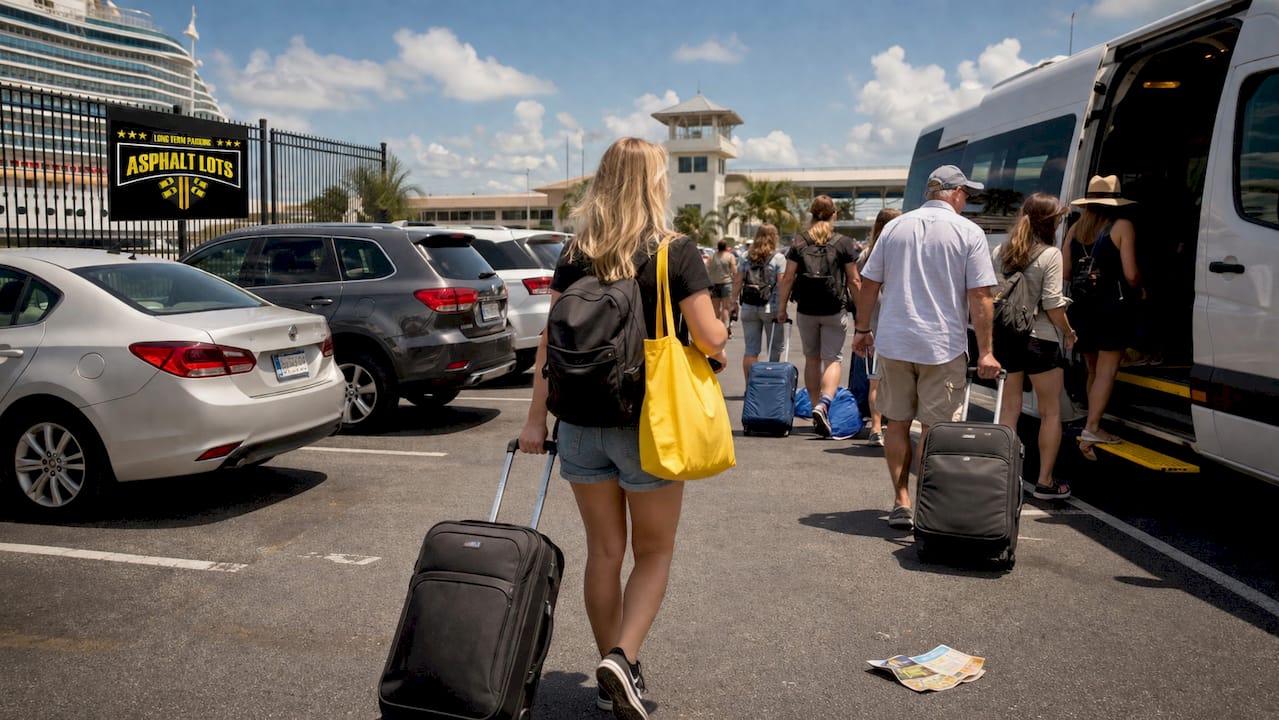
Off-site parking lots sit 1–10 miles from the terminal and use shuttle vans to move travelers back and forth. Off-site rates start as low as $5.95 per day in some markets, saving 20%–40% compared to port authority prices. Most off-site operators accept pre-bookings, which eliminates the availability risk entirely. The trade-off is a shuttle ride, typically 10–20 minutes each way, which adds time on embarkation and debarkation days.
Park-and-sleep hotel packages combine one or more nights at a hotel near the port with parking for the full cruise duration. These packages typically cost $100–$200 total, covering both the hotel stay and parking. They work especially well for travelers who live several hours from the port and want to arrive the night before without paying separately for a hotel room and a parking spot.
Here is a quick comparison of what each option delivers:
| Option | Avg. daily cost | Reservable | Shuttle needed |
|---|---|---|---|
| On-site port lot | $15–$35 | Rarely | No |
| Off-site lot | $6–$20 | Yes | Yes |
| Park-and-sleep package | $100–$200 total | Yes | Usually included |
Pro Tip: Book off-site parking the same day you book your cruise. Popular lots near major ports sell out weeks in advance during peak season.
How to choose the best parking solution based on your travel needs
The right parking option depends on four factors: budget, group size, luggage volume, and how far you live from the port.
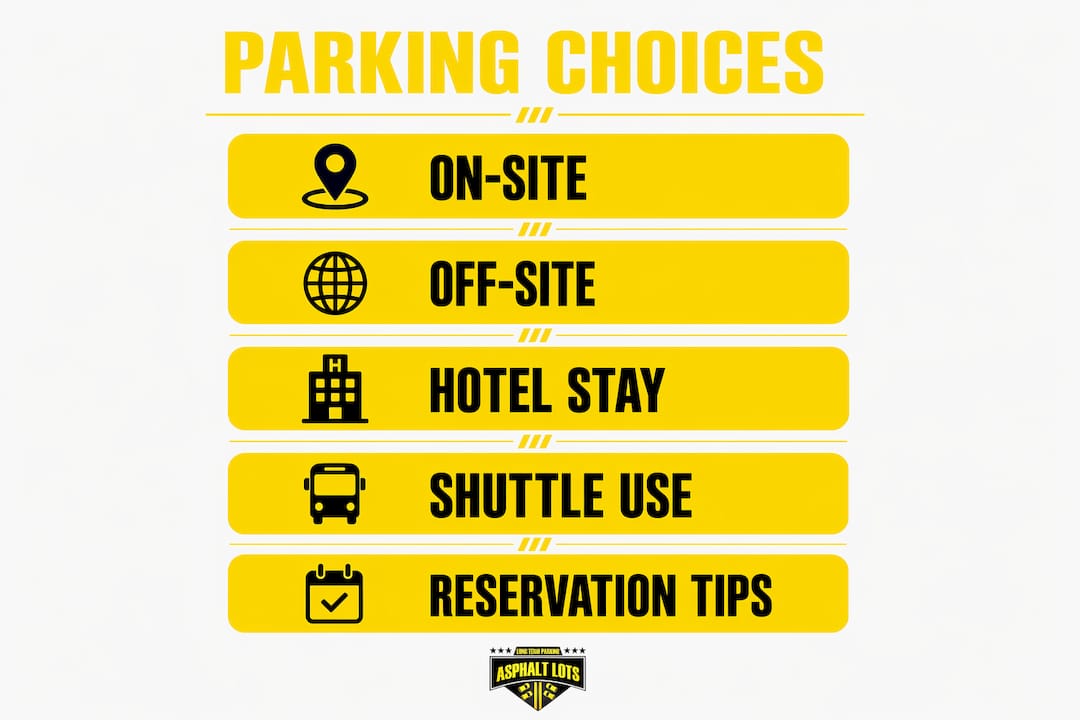
Budget is the most straightforward filter. If cost is the top priority, an off-site lot with a pre-booked spot delivers the best value. If you want zero logistics on embarkation day and price is secondary, on-site port parking (where reservable) removes every variable. Park-and-sleep packages win on value when you would otherwise pay for a hotel night separately.
Group size and luggage change the math on shuttle convenience. A family of four with six suitcases will find a shuttle van more manageable than a rideshare with limited trunk space. Solo travelers or couples with carry-on bags have more flexibility. Rideshare round trips cost $80–$150, which can beat parking fees for a solo traveler on a short cruise but rarely makes sense for a family.
Proximity to the port matters more than most travelers realize. If you live within 30 minutes of the terminal, an off-site lot with a free shuttle is almost always the best combination of cost and ease. If you live two or more hours away, a park-and-sleep package removes the pressure of an early morning drive on embarkation day.
Follow these steps to match your situation to the right option:
- Calculate your total parking cost at the port rate, including the extra day (more on that below).
- Compare that figure against the best pre-booked off-site rate for the same dates.
- Add the cost of a hotel night if you plan to arrive the evening before. If a park-and-sleep package beats the combined total, book it.
- Check whether the port you are departing from offers reservable on-site parking. If it does and the price is acceptable, that option removes all shuttle logistics.
- For solo travelers or small groups without much luggage, run a rideshare estimate as a final comparison.
Pro Tip: Always check whether the off-site lot offers a luggage drop-off service at the terminal before parking the car. This is a real time-saver on busy embarkation mornings.
How to prepare and reserve your parking before cruise day
Preparation is the difference between a smooth departure and a frantic one. Start the process at least four to six weeks before your sail date, longer during summer and holiday seasons.
Step 1: Check the port's official parking page. Every major U.S. cruise port publishes its current rates and policies online. Confirm whether reservations are accepted. If they are, book immediately. If not, note the lot address and plan your arrival time.
Step 2: Search pre-bookable off-site lots. Third-party parking platforms list off-site facilities near most major ports. Filter by shuttle service, covered parking, and 24-hour security. Read recent reviews specifically about shuttle wait times on debarkation day, since that is where off-site lots most often disappoint.
Step 3: Account for the extra billing day. A 7-night cruise is billed as 8 parking days because facilities charge for both the day you drop off and the day you pick up. This catches many travelers off guard. Build that extra day into every cost comparison you make.
Step 4: Confirm your reservation details. Print or download your confirmation. Note the lot address, shuttle pickup location, and the facility's phone number. Cell service near busy port areas can be unreliable.
Step 5: Plan your arrival window. Port gates and parking entrances back up significantly in the two hours before a ship's departure. Arriving 30–45 minutes earlier than you think you need to gives you time to park, load onto the shuttle, and reach the terminal without rushing.
On embarkation day, bring your parking confirmation, your cruise documents, and cash or a card for any unexpected fees. Experienced cruisers often use off-site lots with luggage drop-off to hand off bags at the terminal curb before the car is parked, cutting down on heavy lifting and terminal congestion.
For families preparing their vehicles for extended storage, a practical car prep checklist for cruises covers everything from tire pressure to locking valuables out of sight.
What are the common challenges local cruise travelers face with parking?
The most frequent problems are full lots, hidden costs, and security concerns. Each one is avoidable with the right preparation.
- Full on-site lots. Because most ports do not allow advance reservations, official lots fill up on busy embarkation days. Travelers who arrive late may find no space and scramble for alternatives at the last minute.
- The hidden extra day charge. Parking fees for both embarkation and debarkation days add one full day to your bill. On a $25/day lot, that is $25 you did not plan for.
- Traffic congestion at port entrances. Even with a confirmed spot, port gate backups can add 20–40 minutes to your arrival. Arriving early is the only reliable fix.
- Security concerns during a long absence. Leaving a vehicle for 7–14 days in an open lot raises legitimate concerns. Covered, monitored facilities with 24-hour surveillance address this directly.
- Shuttle timing on return day. Off-site shuttles run on schedules. If your ship docks early or late, you may wait longer than expected. Confirm the lot's policy on extended shuttle hours before booking.
Pre-booking off-site parking with guaranteed availability removes the single biggest risk cruise travelers face: showing up on embarkation day with nowhere to park. A confirmed spot, a free shuttle, and covered storage turn a stressful morning into a routine one.
For travelers weighing hotel parking options as part of a park-and-sleep strategy, understanding the difference between self-park and valet arrangements helps you pick the right setup for your vehicle and budget.
Key Takeaways
The most effective parking strategy for a local cruise traveler combines a pre-booked off-site lot with shuttle service, accounting for the extra billing day and arriving at the port at least 30 minutes ahead of schedule.
| Point | Details |
|---|---|
| On-site lots fill fast | Most port lots do not accept reservations, so arriving early is the only guarantee. |
| Off-site lots save money | Rates start as low as $5.95/day, saving 20%–40% versus official port pricing. |
| Budget for 8 days, not 7 | A 7-night cruise is billed as 8 parking days due to drop-off and pickup charges. |
| Pre-booking removes uncertainty | Off-site facilities and select ports like PortMiami now offer guaranteed reserved spots. |
| Match option to traveler profile | Solo travelers may save with rideshare; families with luggage benefit most from shuttle lots. |
What I have learned after years of watching cruise travelers park badly
Parking is the part of a cruise that people plan last and regret most. I have watched travelers circle a port lot for 25 minutes on embarkation morning, miss their luggage drop-off window, and board the ship already exhausted. Every one of those situations was preventable.
The conventional wisdom says "just park at the port." That advice made sense when ports were less crowded. Today, on a busy Saturday in july at a major East Coast terminal, on-site lots hit capacity before noon. The traveler who booked an off-site spot two months ago is already on the shuttle. The traveler who planned to "figure it out" is still in the parking queue.
The insight that most guides skip: the shuttle is not an inconvenience. For a family with four bags and two kids, a shuttle van that drops you at the terminal curb is genuinely easier than dragging luggage across a multi-level parking garage. The off-site lot with luggage drop-off service flips the experience entirely. You hand off the bags, park the car, and board the shuttle with nothing but a carry-on.
Park-and-sleep packages deserve more credit than they get. For travelers who live more than 90 minutes from the port, arriving the night before removes all the morning pressure. You wake up, eat breakfast, and walk to the shuttle. That is a better start to a vacation than a 4:00 AM alarm and a two-hour drive.
The one situation where I genuinely recommend rideshare over parking: a solo traveler on a 3-night cruise with one bag. The math rarely favors paying for 4 parking days when a round-trip rideshare costs less and eliminates every logistics question.
— Martin
Asphaltlotsva: secure parking near Norfolk's cruise terminal
Cruise travelers departing from Norfolk have a purpose-built option that addresses every problem covered in this guide. Asphaltlotsva is a veteran-owned indoor parking facility located 15 minutes from the Norfolk cruise terminal, offering round-the-clock surveillance and a free shuttle to and from the port.
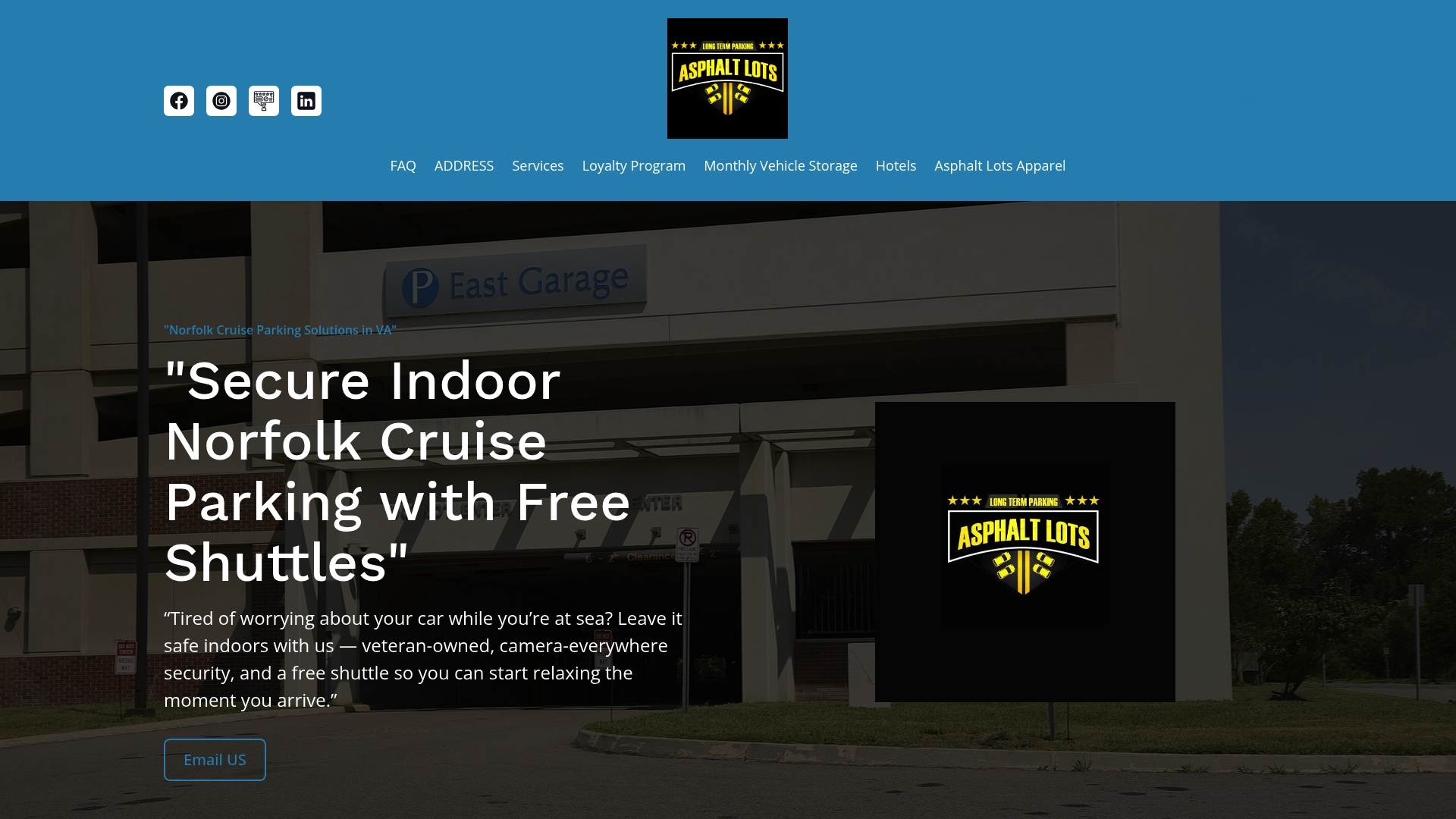
The facility's VIP Unlimited Parking Membership gives frequent cruisers a reserved spot on every sail date, guaranteed availability, and priority shuttle service. That means no first-come, first-served anxiety and no circling the lot on embarkation morning. For travelers who cruise multiple times a year, the membership pays for itself quickly. Reserve your spot at Asphaltlotsva before your next departure and start your cruise the right way.
FAQ
What is the average cost of parking near a cruise terminal?
Standard port parking runs $15–$35 per day, totaling $105–$245 for a 7-night cruise. Off-site lots offer rates starting near $6/day in some markets.
Can I reserve a parking spot at the cruise port in advance?
Most U.S. ports do not accept advance reservations for on-site lots. Select facilities, including PortMiami Terminal B, now offer pre-bookable spots online.
How many days does a 7-night cruise actually cost in parking fees?
A 7-night cruise is billed as 8 parking days because facilities charge for both the drop-off day and the pickup day.
Is rideshare cheaper than parking for a cruise?
Rideshare round trips cost $80–$150, which can be cheaper than parking for solo travelers on short cruises. Families with luggage typically save more by using a pre-booked off-site lot with shuttle service.
What should I look for in an off-site cruise parking lot?
Prioritize lots that offer pre-booking, covered or indoor storage, 24-hour security, and a shuttle with confirmed hours on debarkation day. A concierge-style parking setup at select facilities adds luggage handling and reserved spot guarantees for frequent travelers.