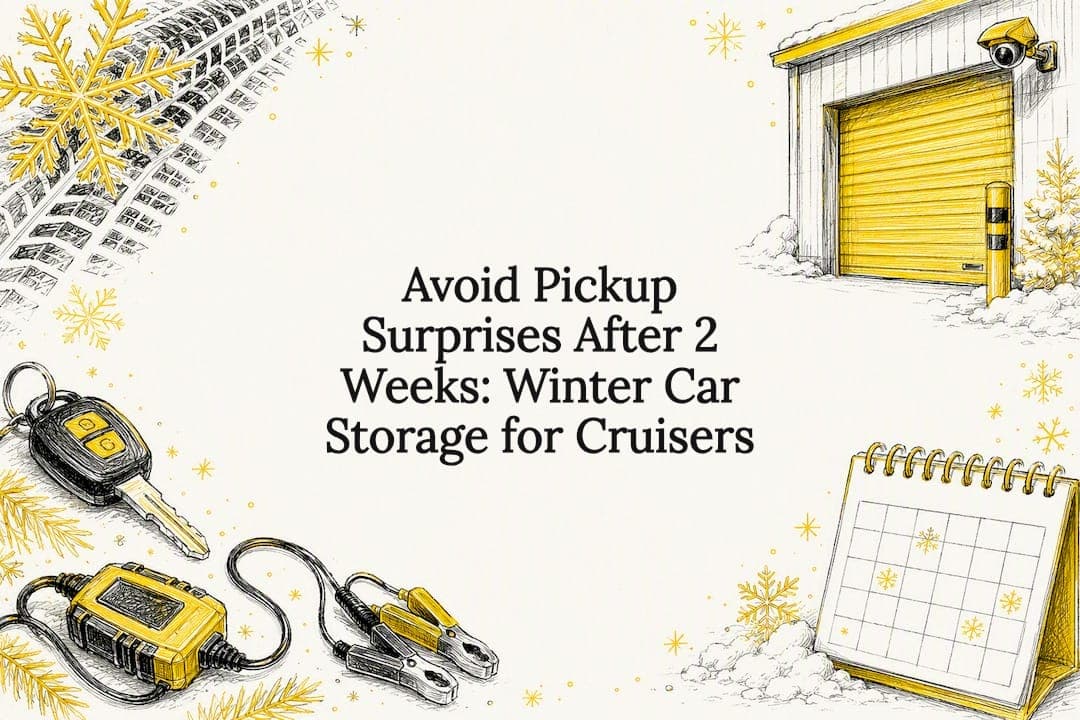
For most cruises of a week or longer, the safest bet is either indoor secure parking or a reputable off-site cruise lot with a clear long-stay policy. The exception is a multi-month world cruise or a high-value collector car, where climate-controlled indoor storage with a battery maintainer and weight-off tire care earns its higher price tag.
TL;DR:
- Using indoor climate-controlled storage with battery maintainers is advisable for trips longer than several months to protect high-value vehicles.
- Reputable off-site cruise lots with 24/7 monitoring are increasingly secure options, especially if shuttle schedules and long-stay pricing match your plans.
- Car retrieval on return requires inspecting for damage, testing the battery, and checking fluids, with timestamped photos providing proof in case of disputes.
- Long-term storage beyond 60 to 90 days demands special care like jack stands for tires, a partial charge for EVs, and verifying facility policies beforehand.
- Securing your vehicle involves choosing monitored facilities with cameras, removing valuables, and ensuring factory security systems are active, to minimize theft risk.
Table of Contents
- Winter Car Storage Cruises: The Pre-Departure Checklist
- Where Should You Leave Your Car During a Cruise?
- How Long Can You Store a Car Before It Needs Extra Care?
- What Should You Check the Day You Pick Up the Car?
- Why Indoor, Monitored Parking Makes Sense for Cruise Travelers
- What Paperwork Do You Need Before Storing Your Car?
- Do Cruise Terminals Have Rules About Parking?
- How Can You Protect Your Car From Theft or Vandalism While You're Gone?
- What Cruisers Get Wrong About Winter Storage
- Reserve Your Spot Before You Sail
- Sources
Winter Car Storage Cruises: The Pre-Departure Checklist
The week before you leave matters more than most cruisers think. A car that sits untouched for two or three weeks develops problems that never show up on a weekend trip: flat-spotted tires, a dead battery, gummed-up fuel, and sometimes a rodent nest under the hood. Working through a short checklist the day before departure heads off almost all of it.
- Wash and wax the exterior, then vacuum the interior. Road salt and grime left on paint over weeks of storage etches into the clear coat.
- Temporarily block the air intake and tailpipe with mesh or a rag to keep mice out, then remove the blockage before you start the engine on return. Rodent damage and battery drainage are the two most common reasons a stored car won't start.
- Fill the tank and add fuel stabilizer if you're gone more than two weeks. A full tank limits condensation buildup inside it.
- Hook up a smart battery maintainer rather than a basic trickle charger, or disconnect the battery entirely if the car sits indoors. A maintainer regulates voltage and stops overcharging that cheap trickle chargers can cause.
- Inflate tires to the pressure listed on your driver-side door placard. For extended stays beyond several months, jack stands or a lift are worth the trouble.
- For shorter stays, overinflate by 2 to 5 psi and park on a sheet of plywood to reduce moisture transfer from concrete.
- Release the parking brake for long absences and set wheel chocks instead, so the pads don't fuse to the rotors.
- Check and top off fluids, and change anything overdue if you'll be gone more than 30 days.
- Set up automatic payments for registration and insurance, or hand a trusted contact the authority to act if something comes up.
- Photograph the car from all angles and record the mileage and VIN before you hand over the keys.
Pro Tip: Snap the odometer and fuel gauge in the same photo as the exterior shot. If a dispute ever comes up about mileage or fuel level at drop-off, you'll have timestamped proof.
Where Should You Leave Your Car During a Cruise?
Cruise travelers generally choose from five setups, and the right one depends on trip length, vehicle value, and how much hassle you're willing to tolerate on embarkation morning.
- On-site terminal garages put your car steps from the ship, but you pay for that convenience, and long stays sometimes trigger surcharges that aren't obvious until checkout.
- Off-site cruise lots usually cost less and rely on a shuttle to get you to the terminal. AAA's port-parking breakdown recommends confirming security coverage, liability terms, and reservation policy before you book, since quality varies widely between lots.
- Park-and-cruise hotels work well for short trips or when you're flying in the night before. Check exactly how many parking days are bundled with the room rate. Some hotels only cover the cruise length itself, not extra buffer days.
- Indoor climate-controlled storage makes the most sense for multi-month trips or vehicles worth protecting from temperature swings. Facilities in this category often include battery tenders and weight-off tire solutions as part of the service, which matters more the longer the car sits.
- Leaving the car with a neighbor or friend costs nothing but depends entirely on trust. Confirm your insurance still covers the vehicle while someone else holds the keys, and put the arrangement in writing if the cruise runs longer than a couple of weeks.
Reputable off-site lots increasingly allow vehicles to stay parked for multiple weeks under 24/7 monitoring, which has closed much of the security gap that used to separate them from terminal garages. The real question isn't security anymore. It's whether the shuttle schedule and long-stay pricing fit your itinerary.
How Long Can You Store a Car Before It Needs Extra Care?
Storage duration changes what your car actually needs, and treating a 90-day world cruise the same way you'd treat a one-week Caribbean run is where most damage happens.
- Batteries: A smart maintainer beats a trickle charger for any absence past two weeks. Automotive-grade maintainers monitor voltage and enter a float state once the battery is topped off, while basic trickle chargers keep pushing current and can cook the cells over time.
- Tires: Door-placard PSI plus a few weeks off the road is fine. Beyond three months, jack stands or a weight-off setup are the only reliable way to prevent flat-spotting on the tire's contact patch.
- Fuel: Stabilizer plus a full tank limits condensation and keeps ethanol-blended gasoline from separating during long dormancy.
- Brakes: Release the parking brake and use wheel chocks. Pads left engaged for weeks can bond to the rotor surface.
- EVs: Store at roughly 40 to 60 percent state of charge rather than full or empty, and use the vehicle's built-in storage mode if it has one. Charging schedules matter more than most EV owners realize for preserving long-term battery health.
- Oil and coolant: If either is due within the next month, change it before storage rather than after. Old oil sitting in an engine for 30-plus days accelerates internal corrosion.
World cruise providers sometimes add long-stay surcharges past 60 to 90 days or require a written agreement for continuous stays that long, so confirm the fine print before you commit to a facility for a multi-month itinerary.
What Should You Check the Day You Pick Up the Car?
Retrieval day is not the time to just hop in and drive. A few minutes of inspection saves you from a breakdown on the highway home.
- Walk the full perimeter of the car and compare it against your drop-off photos, checking especially for rodent chew marks near the engine bay.
- Test the battery before starting the engine. If you used a maintainer, it should crank normally; if not, a jump start is safer than repeated cranking that can damage the starter.
- Check tire pressure and look for any bulges or flat spots before pulling out of the space.
- Take it slow for the first mile or two. This reseats the brake pads and gives you a chance to catch fluid leaks or odd noises early.
- Check every fluid level and address warning lights immediately rather than assuming they'll clear themselves.
If anything looks off, photograph it before you leave the lot. Timestamped photos paired with your original drop-off receipt make an insurance claim far less painful.
Why Indoor, Monitored Parking Makes Sense for Cruise Travelers
Asphalt Lots is a veteran-owned facility about 15 minutes from Norfolk that runs 24/7 surveillance on an indoor lot, built specifically around the reality that cruise cars sit untouched for a week, a month, or longer. Martin, who covers vehicle storage and cruise logistics for Asphalt Lots, put together this guide after seeing how often small prep mistakes turn into expensive post-cruise repairs.
The VIP Unlimited Parking Membership matters most to frequent cruisers because it locks in:
- A reserved spot guaranteed on cruise days, so you're never turning away from a full lot
- Priority shuttle service to the terminal instead of waiting behind walk-in customers
- Ongoing access without rebooking for every single trip
"The two things that actually determine whether your car survives storage well are climate control and whether someone is watching it. Everything else is secondary." That's the standard worth holding any facility to before you hand over your keys.
Before booking anywhere, confirm the long-stay policy, ask what insurance covers the vehicle while parked, and check the access window and any after-hours retrieval fee. Paying more for indoor storage is worth it for longer trips, higher-value vehicles, and regions with harsh winter swings.
What Paperwork Do You Need Before Storing Your Car?
Most cruisers underestimate how much documentation matters until something goes wrong. Before you drop the car off, gather your registration, proof of insurance, and a copy of your storage or parking reservation confirmation. If you're using a facility for the first time, read the storage agreement closely. It should spell out liability limits, what happens if the facility can't retrieve your car during a stated window, and whether damage claims require a police report first.
Keep a written record of your VIN, current mileage, and fuel level at drop-off, along with the photos mentioned earlier. If you're storing the car for more than 30 days, some insurers want to know the vehicle will be parked rather than driven, since certain policies adjust coverage for stored vehicles. A quick call to your insurance agent before you leave clears this up in minutes and avoids a coverage gap you'd otherwise discover only after filing a claim.
If someone else has permission to access the car while you're gone, whether a family member or a facility manager acting on your written request, put that authorization in writing with your contact information for the cruise. Facilities dealing with law enforcement or emergency access situations need that document on file, and it protects you if a decision has to be made while you're at sea and unreachable.
Do Cruise Terminals Have Rules About Parking?
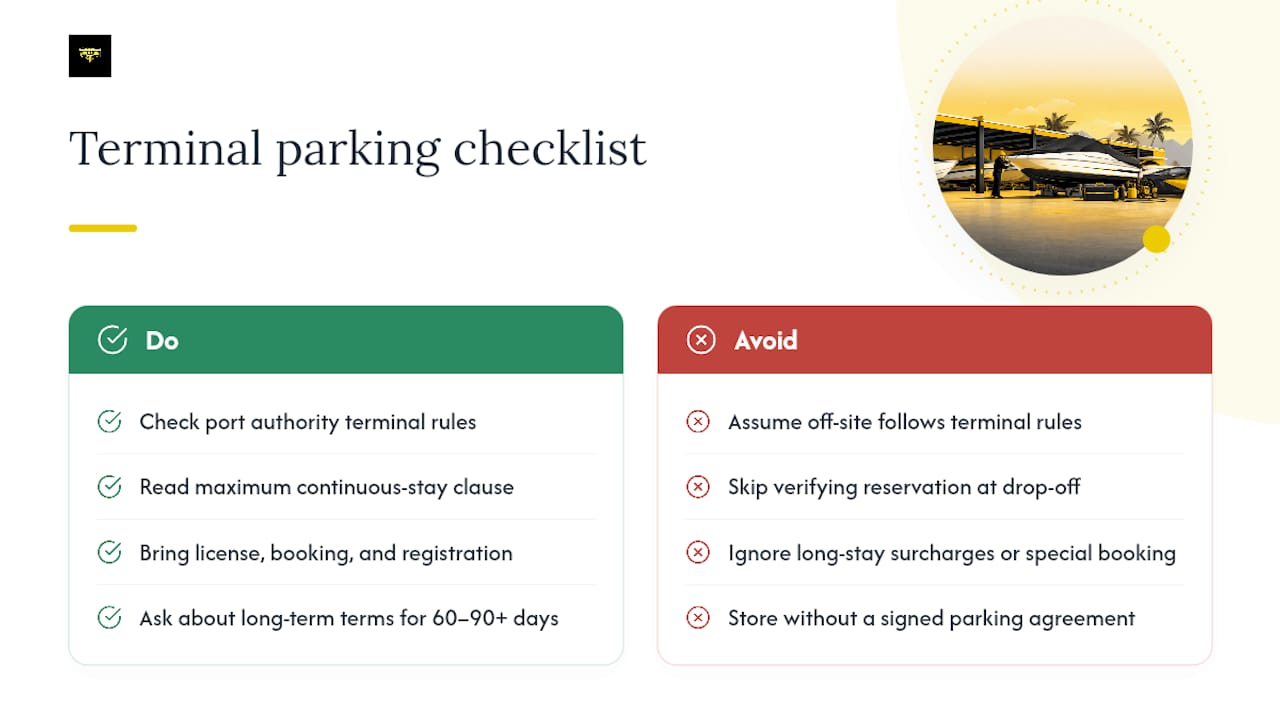
Regulations around cruise terminal parking come from two sources: the port authority and the individual facility. Port authorities that operate terminal garages set their own rules on maximum stay length, accepted payment methods, and whether advance reservations are required, and these rules vary by port. Some terminals cap on-site parking at a set number of days before requiring special arrangements, which is one reason off-site lots and indoor facilities exist for cruisers taking longer trips.
Off-site facilities and third-party lots set their own terms rather than following terminal regulations directly, but they typically require you to sign a parking or storage agreement that functions like a permit for your specific stay. Read the maximum continuous-stay clause carefully. As already noted, some providers apply long-stay surcharges or require special booking for trips past 60 to 90 days, and world cruise durations often fall into that special-arrangement category.
There's no universal parking permit required to drive to a cruise terminal, but bring your driver's license, cruise booking confirmation, and vehicle registration anyway. Some facilities cross-check your reservation against your ID at drop-off, particularly for spots booked under a membership or long-term contract. If you're storing the car for a deployment or an extended trip rather than a standard cruise, ask the facility directly whether their standard terms apply or whether you need a separate long-term storage contract.
How Can You Protect Your Car From Theft or Vandalism While You're Gone?
An empty parking lot with rows of unattended cars is an obvious target, and cruise ports are no exception. A few precautions cut your risk significantly.
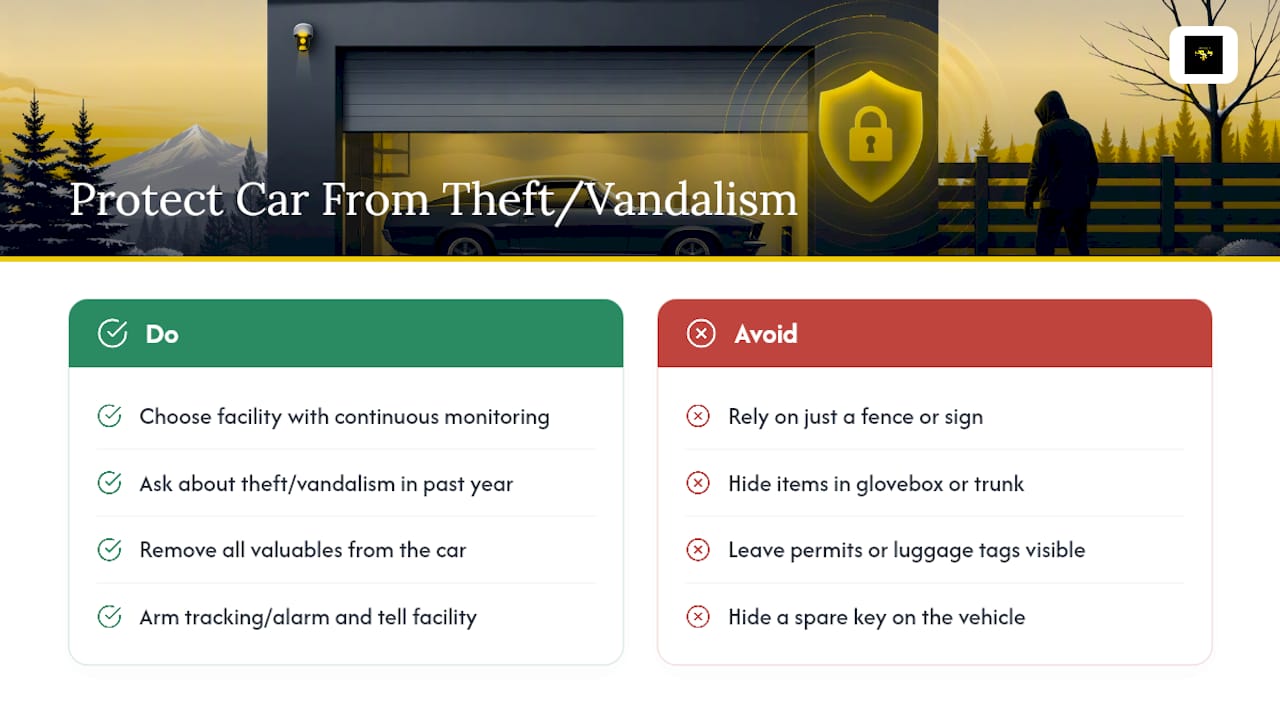
Choose a facility with actual monitoring, not just a fence and a sign. Cameras that record continuously, controlled gate access, and on-site staff during business hours all matter more than a lot's size or location. Ask directly whether the facility has had theft or vandalism incidents in the past year. A reputable operator won't dodge the question.
Remove valuables from the interior entirely rather than hiding them in the glovebox or trunk. Anything visible through a window is an invitation, and trunk hiding spots are the first place a break-in targets. Leave the car looking as unremarkable as possible: no parking permits or luggage tags left in plain view suggesting the owner is away for an extended period.
If your car has a factory alarm or tracking system, make sure it's armed and, where possible, notify the facility that it's active. Vehicles with visible aftermarket security devices, like a steering wheel lock, are statistically less appealing targets simply because they add friction for anyone testing car doors in a lot. Finally, keep a spare key with a trusted contact rather than leaving one hidden on the vehicle. Magnetic key boxes under wheel wells are common knowledge among anyone casing a parking lot.
What Cruisers Get Wrong About Winter Storage
Most advice about winterizing a car for storage assumes the vehicle is sitting in a garage at home. Cruise travel breaks that assumption completely. You're not just storing a car. You're coordinating a drop-off window, a pickup window, and weeks of unattended time with someone else holding partial responsibility for the outcome.
The conventional wisdom oversells fuel stabilizer and battery maintainers while undersaying the thing that actually causes most post-cruise headaches: nobody checks what the facility's long-stay policy actually says until they're standing at the counter on retrieval day. Read the agreement before you book, not after.
If I had to rank priorities for cruise travelers specifically, security and access logistics come before tire pressure and fuel additives. A flat-spotted tire costs you an afternoon. A facility that can't retrieve your car during your actual arrival window, or one with vague insurance language, costs you a lot more. Prioritize the facility relationship first. The mechanical prep matters, but it's the easier half of the problem.
— Martin
Reserve Your Spot Before You Sail
Asphalt Lots gives cruise travelers something a standard airport lot or a random off-site option can't guarantee: an indoor space, watched around the clock, with a shuttle that runs on your schedule rather than a public lot's. For anyone sailing regularly out of Norfolk, the VIP Unlimited Parking Membership locks in a reserved spot on every cruise day, priority shuttle pickup, and no scrambling to find space during peak sailing weekends.
Booking takes a few minutes online, or you can call ahead to confirm availability for your sail date. Before you finalize a reservation anywhere, double check the long-stay terms and what insurance coverage applies while your car sits parked. Check open dates and reserve your spot at Asphalt Lots before your next departure.
Sources
- How to prep your car for long-term storage in 10 steps - RedlineRev
- The best tips for winter car storage and care - Hagerty Media
- How to store a car long-term: Everything you need to know - Kelley Blue Book
- Drive to your next cruise: Parking, tips & savings guide - AAA
- World cruise from Southampton: parking for 90+ days - Cruise Azure