Cheap parking looks like a win right up until it isn't. The posted rate is low, you grab the spot, and you move on. What you don't see is the stack of costs that never appear on the ticket: land that could generate tax revenue sitting under asphalt, maintenance bills that compound every year, hidden fees that surface at checkout, and the slow grind of inflation that turns today's bargain into next year's budget problem. Urban economist Donald Shoup spent decades arguing that "free" or cheap parking is one of the most expensive subsidies American cities have ever created, because the costs don't disappear. They just get buried in your rent, your groceries, and your insurance premium.
Here's what actually drives the long-term cost of cheap parking:
- Land opportunity cost: Every acre of surface parking forgoes the tax revenue and economic activity a building would generate.
- Construction and maintenance: Structured parking costs $30,000–$50,000 per space nationally, and those costs get passed to tenants and consumers.
- Inflation and demand pressure: Rising land values and urban density push fees up steadily, even in lots that started cheap.
- Hidden fees: Security surcharges, shuttle costs, and seasonal spikes inflate the real price beyond what's posted.
- Subsidized externalities: Car-free renters pay an average of $621 annually for parking they never use, bundled invisibly into rent.
The sections below unpack each of these drivers in detail, with data, real-world examples, and a practical framework for making smarter parking decisions.
Table of Contents
- Why cheap parking costs more long-term: the economic foundation
- How maintenance, inflation, and demand push costs higher over time
- Hidden fees and indirect costs you won't see on the sign
- Short-term vs. long-term parking: which actually costs less?
- Practical strategies to reduce long-term parking costs
- What Asphaltlotsva's cruise parking experience reveals about real costs
- Key Takeaways
- Secure parking near Norfolk that actually saves you money
Why cheap parking costs more long-term: the economic foundation
The sticker price of a parking space has almost nothing to do with what that space actually costs to provide. The gap between those two numbers is where the long-term expense hides.
Surface parking on cheap land is the least expensive option to build, but it still carries real costs. According to comprehensive parking supply analysis from the Victoria Transport Policy Institute, annualized costs per space range from roughly $600 for basic surface lots on inexpensive land to more than $5,000 for structured parking with amenities. Across the full U.S. parking stock, those costs average about $1,200 annually per space, totaling more than a trillion dollars per year nationally. For every dollar a driver spends on their vehicle, someone else typically spends about a dollar on parking facilities to support it.
The land question is where things get particularly expensive in cities. When a developer or municipality uses an acre for surface parking, that land stops generating the property taxes, jobs, and economic activity it would produce as a mixed-use building. Parking lots generate fewer taxes than mixed-use buildings, which means the city loses revenue it then has to recover elsewhere. That recovery shows up in higher taxes, higher rents, and higher retail prices for everyone.
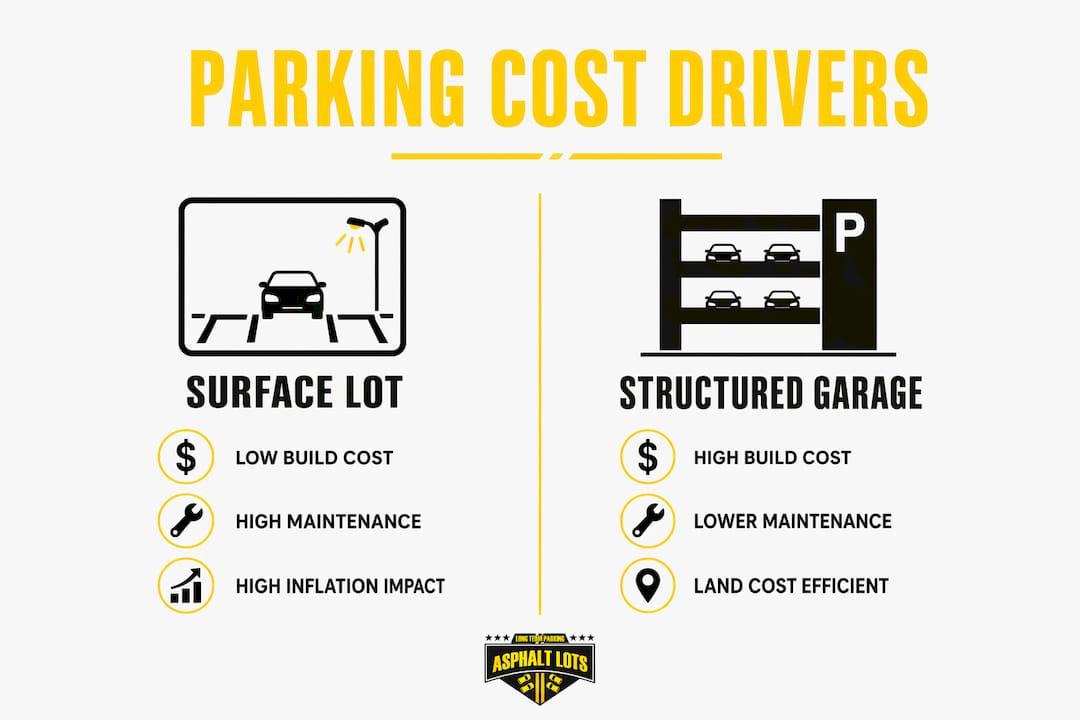
Structured parking only becomes cost-effective when land prices reach approximately $3 million per acre, which tells you exactly how much urban land value drives the decision to build up rather than spread out. Below that threshold, surface lots dominate. Above it, the construction cost of a garage becomes the lesser of two expensive options.
Minimum parking requirements make this worse. Developers must charge 28% more to get the same return on housing units with mandated parking as without. That premium doesn't stay with the developer. It flows directly to renters and buyers, whether they own a car or not.
| Cost Component | Surface Lot | Structured Garage |
|---|---|---|
| Construction per space | Low ($5,000) | High ($30,000–$50,000) |
| Annual operating cost per space | ~$600 | ~$1,200–$5,000+ |
| Land opportunity cost | Moderate to high | High (urban locations) |
| Tax revenue foregone | Significant | Significant |
| Passed to tenants/consumers | Yes (via rent/prices) | Yes (via rent/prices) |
How maintenance, inflation, and demand push costs higher over time
A parking lot that opens cheap rarely stays cheap. The forces working against that low price are relentless and compound over time.
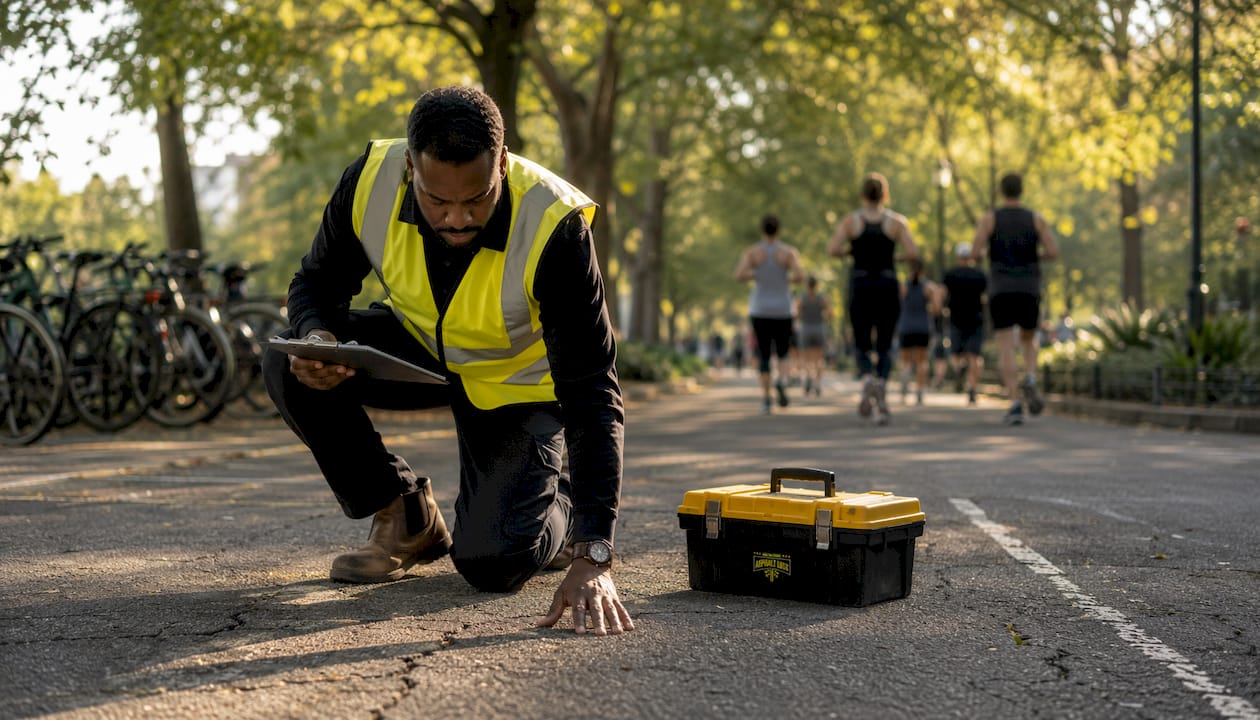
Maintenance is the most predictable of these forces. Lighting, line repainting, drainage repairs, security systems, and surface resurfacing are not optional. Maintenance liabilities rise as lots age, and operators who defer these costs eventually face larger repair bills or deteriorating conditions that drive customers away. Either way, someone pays. When operators absorb the cost, fees go up. When they don't, the lot becomes unsafe and the hidden cost shifts to drivers in the form of vehicle damage and theft risk.
Inflation compounds the maintenance problem. Land values in urban areas have risen steadily for decades, and parking fees track that trend. Amsterdam increased maximum parking fees by 50% in response to land price appreciation, a pattern that plays out in American cities too, just more gradually. A monthly rate that felt reasonable three years ago may now represent a significant budget line.
Demand pressure is the third driver, and it's the one most people underestimate:
- Urban density increases: As cities grow denser, available parking spaces per capita shrink, pushing prices up through basic supply and demand.
- Peak-period premiums: Lots near stadiums, airports, and cruise terminals charge surge prices during high-demand windows, often doubling or tripling the standard rate.
- Reduced availability: When cheap lots fill up, drivers default to more expensive options nearby, paying a premium they hadn't budgeted for.
- Airport parking trends: Long-term airport parking often looks cheaper per day than short-term options, but cumulative costs over a week or two can exceed what travelers expect once fees and shuttle time are factored in.
A cruise traveler who books a cheap surface lot six months in advance may return to find the rate has increased, the lot is under new management, or the shuttle service that made the distance tolerable has been cut. That's not a hypothetical. It's a pattern that plays out at ports and airports across the country every year.
Hidden fees and indirect costs you won't see on the sign
The posted rate is the floor, not the ceiling. Most cheap parking operations generate revenue through a layer of fees that only become visible at checkout or after something goes wrong.
Common hidden fees include:
- Security surcharges: Added at checkout, often framed as a "facility fee" or "safety assessment."
- Shuttle fees: Off-site lots frequently charge separately for the shuttle, or include it in a rate that looks competitive only until you add the tip and the wait time.
- Seasonal price spikes: Rates near cruise terminals and airports routinely spike during summer and holiday travel windows, sometimes by 40–60% above the base rate.
- Re-entry fees: Some lots charge every time you access your vehicle, which matters for multi-day stays.
- Damage liability gaps: Cheap lots often carry minimal insurance, leaving drivers exposed when a vehicle is scratched, broken into, or damaged by flooding.
The indirect costs are harder to see but larger in aggregate. Parking lot surfaces can reach 59°F warmer than nearby grassy fields on summer days, contributing to urban heat islands that raise cooling costs for surrounding buildings and neighborhoods. That's an environmental externality with a real dollar value, just one that never shows up on a parking receipt.
The fairness dimension is worth noting too. Car-free renters pay an average of $621 annually for parking they don't use, because parking costs are bundled into housing prices regardless of whether a tenant owns a vehicle. Mandatory parking minimums function as a regressive tax, forcing lower-income and car-free households to subsidize infrastructure they never benefit from.
Pro Tip: Before booking any parking facility, ask specifically about shuttle fees, re-entry policies, and whether the quoted rate is guaranteed or subject to change. Get it in writing. A lot that quotes $8/day but charges a $5 shuttle fee each way and a $3 security surcharge is actually $21/day.
Short-term vs. long-term parking: which actually costs less?
The math on short-term versus long-term parking is less straightforward than it looks. Long-term rates are almost always lower per day, but that per-day figure hides several variables that can flip the calculation.
Short-term parking (hourly or daily) is priced for convenience. You pay a premium for proximity, guaranteed availability, and the ability to leave on your schedule. For a two-hour errand, that premium is usually worth it. For a ten-day cruise, paying short-term rates would be financially irrational.
Long-term parking (weekly or monthly) offers a lower daily rate, but the total cost depends heavily on:
| Factor | Short-Term Parking | Long-Term Parking |
|---|---|---|
| Daily rate | Higher | Lower |
| Total cost (10+ days) | Very high | Moderate to high |
| Distance from terminal | Close | Often farther |
| Shuttle service | Usually included | Sometimes extra |
| Security level | Varies | Varies widely |
| Vehicle damage risk | Lower (attended) | Higher (unattended surface) |
| Availability guarantee | Yes (paid) | Not always |
| Hidden fee exposure | Low | Moderate to high |
A traveler parking near the Norfolk cruise terminal for a 10-day cruise illustrates the gap clearly. A cheap surface lot at $10/day totals $100, but add a $5 round-trip shuttle fee per day, a $15 security surcharge, and the risk of returning to a vehicle with a cracked windshield from sun exposure, and the real cost climbs fast. A slightly more expensive covered facility at $15/day with a flat shuttle fee and guaranteed security may cost less in total, and certainly costs less in stress.
The true cost of parking for travelers goes beyond the daily rate. Vehicle security, guaranteed availability, and the quality of the shuttle experience all factor into what you actually spend and what you actually get.
Practical strategies to reduce long-term parking costs
Cutting parking costs over time isn't about finding the cheapest lot. It's about finding the best value, which is a different calculation entirely.
Effective strategies include:
- Book in advance: Rates at quality facilities are almost always lower when reserved weeks or months ahead. Last-minute bookings at airports and cruise terminals carry a significant premium.
- Use membership programs: Facilities that offer monthly or annual memberships typically provide guaranteed availability and lower per-day rates for frequent users. Asphaltlotsva's VIP Unlimited Parking Membership is built exactly for this, giving cruise travelers a reserved spot on departure days with no availability risk.
- Choose covered or indoor parking: The incremental cost over a surface lot is often offset by lower vehicle damage risk and the insurance claims you avoid.
- Compare total cost, not daily rate: Factor in shuttle fees, security charges, and the distance from your destination before deciding.
- Avoid peak-period bookings without a reservation: Showing up at a busy lot during a holiday weekend without a reservation often means paying the highest available rate or being turned away entirely.
- Check for nearby cruise parking options: Facilities within a short, fixed-shuttle distance of the terminal often offer better value than the closest lot, which charges a proximity premium.
Pro Tip: Off-peak discounts are real but rarely advertised. Call the facility directly and ask whether they offer reduced rates for mid-week arrivals or extended stays. Many do, and the savings can be substantial.
The security dimension deserves its own emphasis. A vehicle left in an unsecured surface lot for ten days is exposed to weather, vandalism, and theft in ways that a covered, surveilled facility is not. The risks of unsecured parking for cruise travelers are well-documented, and the cost of a single insurance claim typically exceeds months of premium parking fees.
What Asphaltlotsva's cruise parking experience reveals about real costs
Cruise traveler parking is one of the clearest real-world cases for understanding why cheap parking costs more long-term. The stay is multi-day, the vehicle is unattended, and the traveler has no ability to intervene if something goes wrong. Every cost variable that matters in the abstract becomes concrete and personal.
Asphaltlotsva operates a secure indoor facility 15 minutes from the Norfolk cruise terminal, and the cost structure of that operation illustrates exactly why quality parking carries a higher sticker price but a lower total cost.
| Cost Component | Cheap Surface Lot | Asphaltlotsva Indoor Facility |
|---|---|---|
| Daily base rate | Low | Moderate |
| Shuttle service | Often extra or unreliable | Included, priority for VIP members |
| Security (surveillance) | Minimal or none | Round-the-clock |
| Weather/damage exposure | High (outdoor) | Low (indoor, covered) |
| Availability guarantee | No | Yes (VIP Membership) |
| Hidden fee risk | High | Low (transparent pricing) |
| Insurance claim risk | Higher | Lower |
A typical Asphaltlotsva customer parking for a 10-day cruise pays a predictable, all-in rate with no shuttle surprise and no security gap. The VIP Unlimited Parking Membership goes further, guaranteeing a reserved spot on cruise departure days, which eliminates the single biggest stress point in cruise travel logistics: arriving at a full lot with a ship leaving in two hours.
The quality and location of a parking facility directly affect total trip cost. A facility 15 minutes from the terminal with a reliable shuttle and indoor storage is worth more than a facility five minutes away with an exposed lot and a shuttle that runs on a 45-minute schedule. Parking location affects total cruise cost in ways that go well beyond the daily rate.
Key Takeaways
Cheap parking consistently costs more over time because hidden fees, maintenance, inflation, and land opportunity costs accumulate far beyond what the posted rate suggests.
| Point | Details |
|---|---|
| Construction costs are passed on | Structured parking costs $30,000–$50,000 per space, and those expenses flow to renters and consumers. |
| Car-free renters subsidize parking | Car-free renters pay an average of $621 annually for parking bundled into their rent. |
| Hidden fees inflate real cost | Security surcharges, shuttle fees, and seasonal spikes routinely push actual costs well above the posted rate. |
| Long-term rate doesn't mean lower total cost | A lower daily rate can still produce a higher total bill once security gaps, shuttle fees, and damage risk are counted. |
| Asphaltlotsva reduces hidden cost exposure | Indoor parking with surveillance, transparent pricing, and a VIP Membership guarantee eliminates the most common cheap-parking cost traps for cruise travelers. |
Secure parking near Norfolk that actually saves you money
Frequent cruisers out of Norfolk know the math by now: the cheapest lot at the port rarely stays cheap once you add up the shuttle, the security surcharge, and the anxiety of leaving your vehicle in an exposed surface lot for ten days. Asphaltlotsva is the alternative that changes the calculation.
Located 15 minutes from the Norfolk cruise terminal, Asphaltlotsva offers secure indoor parking with round-the-clock surveillance, a reliable shuttle service, and transparent all-in pricing. No surprise fees at checkout. No availability gamble on departure morning. The VIP Unlimited Parking Membership takes it further: a guaranteed reserved spot every time you cruise, priority shuttle access, and the kind of consistency that frequent travelers actually need.
This is a veteran-owned facility built around one specific problem: making long-term parking predictable, safe, and genuinely worth the cost. If you're planning a cruise out of Norfolk and want to know exactly what you'll pay and exactly what you'll get, reserve your spot at Asphaltlotsva before your next departure date fills the lot.