Parking location is the single biggest variable in your total cruise parking bill, with on-site port lots charging around $20 per day while off-site facilities run 20–40% less. That gap compounds fast across a 7-night cruise. Add security features, hidden fees, and shuttle logistics, and the difference between a well-chosen spot and a poorly chosen one can reach hundreds of dollars. Understanding why parking location affects total cost is the first step toward making a decision you won't regret at the end of your trip.
Why parking location affects total cost: the core breakdown
Parking location drives cost through three forces: proximity to the terminal, security level, and fee structure. Each one adds or subtracts from your final bill in ways that a simple daily rate never shows.
On-site port parking sits closest to the terminal. You park, grab your bags, and walk to the ship. That convenience carries a price. On-site premiums run $3–$8 per day above comparable off-site lots. Ports price within that range deliberately, keeping rates high enough to generate revenue without pushing budget travelers away entirely.
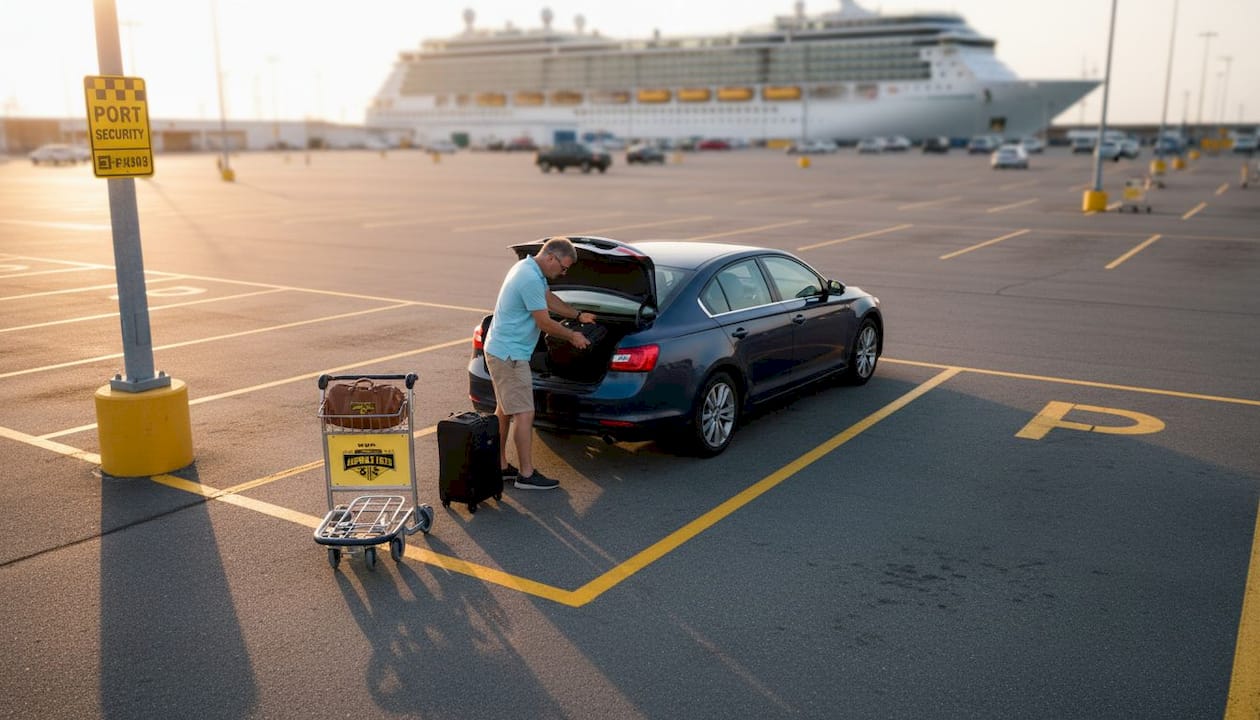
Off-site lots trade walking distance for savings. Rates at some facilities drop as low as $5.95 per day, which is a meaningful difference on a 10-night sailing. The trade-off is a shuttle ride, which adds time and depends on the operator's schedule.
Security level is the third cost driver. Covered garages with 24/7 surveillance charge more than open-air lots. That premium is not arbitrary. Security features like fencing and covered garages reduce theft and weather damage risk, which matters enormously when your car sits unattended for a week or more.
How proximity to the terminal shapes your parking bill
Proximity is the most visible cost factor in any parking location cost analysis. The closer the lot, the higher the daily rate. That relationship holds across virtually every major cruise port in the United States.
On-site parking delivers real value for travelers who prioritize speed. You skip the shuttle entirely, which eliminates wait time on embarkation day and removes one logistical variable when you return. For a solo traveler with light luggage, that convenience is worth paying for.
Off-site parking works best when the shuttle is reliable and the savings are substantial. A $6 per day lot versus a $20 per day port lot saves $98 on a 7-night cruise. That is real money, but only if the shuttle runs on a tight schedule and does not add stress to your departure morning.
Here is what to weigh when comparing proximity options:
- Daily rate difference: Calculate the total gap across your full parking duration, not just one day.
- Shuttle frequency: Confirm how often the shuttle runs and whether it operates during your arrival window.
- Luggage load: Heavy bags and family travel make on-site parking more practical.
- Cruise length: Longer trips amplify the daily savings from off-site lots.
- Return timing: Late-night returns are easier when your car is on-site.
Pro Tip: Multiply the daily rate difference by your actual parking days before deciding. A $5 per day savings sounds small but adds up to $40 on an 8-day trip.
Does parking location affect rates based on security level?
Security features directly influence parking fees, and the impact on parking fee variations by location is larger than most travelers expect. A covered garage with round-the-clock camera monitoring costs more than an open asphalt lot. That price difference reflects genuine risk reduction.
Open-air lots expose vehicles to weather, vandalism, and theft. Those risks are not hypothetical. Damage claims at cruise lots are rarely honored, which means any repair cost comes out of your pocket. A cracked windshield from hail or a broken mirror from a neighboring car becomes your problem entirely.
Long-term parking also creates mechanical risk. Vehicles left stationary for weeks can develop battery drain, tire flat spots, and brake corrosion. Secure, covered facilities reduce environmental exposure and give you a better chance of returning to a car in the same condition you left it.
Follow these steps to protect yourself regardless of which lot you choose:
- Photograph every panel and surface before you hand over your keys or walk away. Use your phone's timestamp feature.
- Document existing scratches and dents with close-up shots from multiple angles.
- Note tire condition and pressure so you have a baseline if something changes.
- Save photos to cloud storage immediately so they cannot be deleted or lost.
- Review the lot's damage policy in writing before you park, not after.
Pro Tip: Choosing a covered, surveilled facility can cost $3–$5 more per day but save you from a $500 repair bill that no insurance policy will cover cleanly.
Asphaltlotsva operates a veteran-owned covered garage with 24/7 surveillance, specifically designed for cruise travelers who need reliable, long-term vehicle protection.
What hidden fees do to your total parking cost
The advertised daily rate is rarely what you pay. Understanding the full impact of parking location on cost means reading every line of the fee schedule before you commit.
The most common surprise is the arrival and departure day rule. Most parking lots charge for both the day you arrive and the day you leave. A 7-night cruise becomes 8 days of parking charges. At $20 per day, that is an extra $20 you did not budget for.
Taxes and facility fees typically add 10–20% on top of the base rate. Additional charges like shuttle surcharges, credit card processing fees, and oversized vehicle fees can add $25–$80 to your total bill. An SUV or truck often triggers an oversized fee that smaller sedans avoid.
| Fee type | Typical range | When it applies |
|---|---|---|
| Taxes and facility fees | 10–20% of base rate | Almost always |
| Arrival/departure day charge | 1 extra day's rate | 7-night cruise billed as 8 days |
| Shuttle surcharge | $5–$15 per trip | Off-site lots without free shuttle |
| Credit card processing | $2–$5 flat | Lots that prefer cash |
| Oversized vehicle fee | $5–$15 per day | Trucks, SUVs, vans |
Weekly or multi-day packages reduce the effective daily rate by 10–30% at many facilities. Booking a package upfront locks in a lower rate and eliminates per-day billing surprises.
Pro Tip: Ask for a full written fee breakdown before booking, not just the headline daily rate. Calculate your true effective daily cost by dividing the total package price by your actual parking days.
How cruise length changes the math on parking location
Cruise length is the variable that most travelers underestimate when comparing parking options. The importance of parking site on expenses shifts significantly depending on whether you are sailing for 3 nights or 14.
For short cruises of 3–5 nights, on-site and off-site lots both work well financially. The daily rate difference is small enough that convenience often wins. A 4-night cruise at $20 per day on-site costs $100. The same cruise at $12 per day off-site costs $60. That $40 gap is real but not life-changing.
For longer cruises, the math changes. Park-and-cruise hotel packages reach their financial break-even point around 6 nights, and they save 10–30% for stays beyond that. Travelers who already planned an overnight stay near the port benefit most from these bundles. The parking cost effectively gets absorbed into the hotel rate.
| Cruise length | Best parking option | Estimated savings vs. on-site |
|---|---|---|
| 3–5 nights | On-site or off-site lot | $20–$50 with off-site |
| 6–7 nights | Off-site lot or park-and-cruise package | $50–$100 |
| 8–14 nights | Park-and-cruise package or off-site lot | $100–$200+ |
| 14+ nights | Off-site lot with security focus | $200+ |
Drive-in travelers who live within two hours of the port typically save the most with off-site lots. They skip the hotel entirely and absorb the shuttle time as a minor inconvenience. Travelers flying in the night before get more value from bundled packages that include the overnight stay.
Pro Tip: Match your parking choice to your travel pattern. A drive-in traveler on a 10-night cruise should run the numbers on off-site lots first. A fly-in traveler should price park-and-cruise bundles.
Key Takeaways
Parking location determines total cruise parking cost through proximity, security level, fee structure, and cruise length combined.
| Point | Details |
|---|---|
| Location drives daily rate | On-site lots charge $3–$8 more per day than off-site options due to proximity. |
| Security affects true cost | Covered, surveilled lots reduce theft and damage risk that open-air lots leave unprotected. |
| Hidden fees inflate totals | Arrival/departure day rules, taxes, and surcharges can add $25–$80 to your final bill. |
| Cruise length changes the math | Park-and-cruise packages save 10–30% on cruises of 6 nights or longer. |
| Document before you park | Timestamped photos protect you from damage claims that lots rarely honor. |
What I've learned about picking cruise parking the hard way
Most travelers treat parking as an afterthought. They book the cruise, book the flights, and then scramble to find a spot two days before departure. That approach almost always costs more money and more stress.
The travelers who come out ahead are the ones who run the full numbers before they book. Not just the daily rate. The full number: days billed, taxes, shuttle fees, and what happens if something goes wrong with the car. A scorecard approach that weighs proximity, security, shuttle reliability, and total cost consistently produces better outcomes than chasing the lowest advertised rate.
Security is the factor I see travelers undervalue most. An open-air lot that saves you $4 per day sounds reasonable until you return from a 10-night cruise to find a dent, a dead battery, or a broken window. None of those outcomes are covered by the lot's liability policy. The repair cost erases months of parking savings in one afternoon.
Booking early matters more than most people realize. The best-located, best-secured lots fill up fast, especially around holiday sailings. Locking in a rate 60–90 days out protects both your budget and your spot. Waiting until the week before often means settling for whatever is left, which is usually the most expensive or least secure option.
The right parking choice is not always the cheapest one. It is the one that accounts for your trip length, your vehicle's value, your tolerance for shuttle logistics, and the real total cost after every fee is counted.
— Martin
Secure cruise parking near Norfolk with Asphaltlotsva
Travelers who want covered, surveilled parking without the guesswork of open-air lots have a clear option near Norfolk.
Asphaltlotsva is a veteran-owned facility located 15 minutes from the cruise terminal. It offers indoor parking with 24/7 surveillance at competitive 2026 rates, with free shuttle service included. There are no hidden shuttle surcharges and no open-air exposure for your vehicle. Frequent cruisers can access the VIP Unlimited Parking Membership, which guarantees a reserved spot on sailing days with priority shuttle service. Booking early locks in the best available rate and guarantees availability during peak sailing periods.
FAQ
Why does on-site parking cost more than off-site?
On-site parking commands a premium of $3–$8 per day because it eliminates the shuttle ride and places your vehicle directly at the terminal. Ports price within that range to balance revenue with traveler retention.
How many days does a 7-night cruise actually bill for parking?
Most facilities charge for both the arrival and departure days, so a 7-night cruise is billed as 8 days of parking. Factor that extra day into your total cost calculation before booking.
What hidden fees should I watch for at cruise parking lots?
Taxes and facility fees add 10–20% to the base rate, and additional charges for shuttles, credit card processing, and oversized vehicles can add $25–$80 to your final bill. Always request a full fee breakdown before committing.
When does a park-and-cruise hotel package make financial sense?
Park-and-cruise packages reach their break-even point around 6 nights and save 10–30% on longer cruises. They work best for travelers who already planned an overnight stay near the port.
How do I protect my car from damage claims at a parking lot?
Take timestamped photos of every panel and surface before you leave. Damage claims at cruise lots are rarely honored, so documented proof of pre-existing condition is your only reliable protection.