
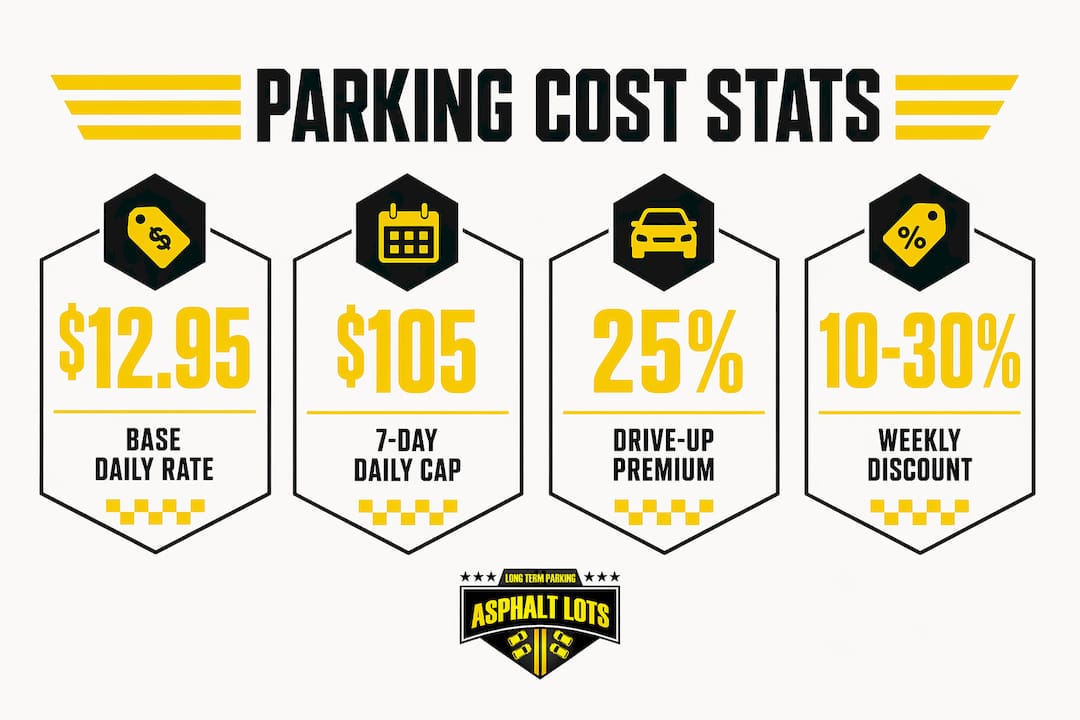
A multi-day parking rate is a pricing structure that sets a daily maximum fee or offers weekly packages to simplify and reduce the cost of parking a vehicle over several days. For cruise travelers, understanding this rate type is the difference between a predictable parking bill and an unpleasant surprise when you return to port. Daily maximum caps typically range from $7 to $30 per day, and weekly packages can cut that per-day cost by 10–30%. Whether you're boarding a Carnival cruise out of Norfolk or flying out of a major hub, knowing what is a multi-day parking rate before you book protects both your budget and your vehicle.
What is a multi-day parking rate and how is it structured?
A multi-day parking rate works through a tiered pricing system with two main components: a daily maximum cap and an optional weekly package. The daily cap stops your charges from climbing indefinitely, no matter how many hours your vehicle sits in the lot. Weekly packages bundle several days into a flat fee, which lowers the effective cost per day compared to paying the daily cap each day.
Daily maximums and hourly accumulation
Hourly rates accumulate throughout the day until they hit the daily maximum. Once you reach that cap, no additional hourly charges apply for that period. This structure protects long-stay travelers from paying exponentially more than short-stay visitors.

The rate hierarchy matters here. A base rate of $12.95 per day sounds straightforward, but local taxes and potential overage fees can push the real total higher. Always read the full rate card, not just the headline number.
24-hour rolling clocks vs. calendar-day charging
Not all facilities count time the same way. Some facilities charge a new 24-hour block the moment you cross the threshold into a new period, while others reset at midnight regardless of when you arrived. That distinction can add a full day's fee to your bill if you return at 12:05 AM instead of 11:55 PM.
Knowing which method your facility uses lets you time your exit to avoid paying for an extra day you barely used. This is one of the most overlooked details in multi-day parking, and it costs travelers real money every year.
Weekly packages and effective daily rates
Weekly packages often price 5–7 days as a flat bundle, reducing the per-day cost by 10–30% compared to paying the daily maximum each day. A facility charging $15 per day could offer a 7-day package for $80, bringing the effective daily rate down to roughly $11.43.
| Pricing Model | Example Total (7 Days) | Effective Daily Rate |
|---|---|---|
| Daily max cap ($15/day) | $105 | $15.00 |
| Weekly package | $80 | $11.43 |
| Economy lot daily cap ($9/day) | $63 | $9.00 |
| Secure garage daily cap ($25/day) | $175 | $25.00 |
Pro Tip: Calculate your effective daily rate for every option before booking. Divide the total package price by the number of days to get the true comparison number.
What multi-day parking options are available for cruise travelers?
Cruise travelers have more multi-day parking options than most realize. The right choice depends on your trip length, budget, and how much you value vehicle security.
On-site vs. pre-booked reservations
On-site drive-up parking is convenient but carries real risk. Drive-up prices can run 25% higher on peak travel days, and spots fill up fast during holiday cruise seasons. Pre-booking online locks in a lower rate and guarantees your space.
Online reservations also offer transparent pricing with no surge fees and the flexibility to modify or cancel if your cruise schedule changes. That predictability matters when you're coordinating a multi-day trip with multiple travelers.
Types of parking facilities
Cruise travelers typically choose from three facility types:
- On-site port parking: Closest to the terminal but often the most expensive, with limited availability during peak sailings.
- Economy surface lots: Lower daily rates, usually uncovered, with shuttle service to the terminal. Best for budget-focused travelers on shorter cruises.
- Off-site secure garages: Higher daily rates, but covered parking, 24/7 surveillance, and more reliable shuttle schedules. Best for trips over 5 days where vehicle security matters most.
Off-site lots often provide dedicated luggage assistance and more consistent shuttle service compared to on-site options, which can get overwhelmed during peak boarding hours.
Pro Tip: Book your parking at the same time you book your cruise. Rates and availability shift quickly as departure dates approach, especially for sailings around major holidays.
Shuttle service and added convenience
Shuttle reliability is a real differentiator between facility types. A lot that runs shuttles every 15 minutes beats one that runs every 45 minutes when you're hauling luggage and watching the clock before boarding. Ask about shuttle frequency before you commit to a facility, not after.
What factors drive cost differences in long-term parking rates?
Parking operators use dynamic pricing to balance demand from short-stay commuters and long-term vacationers. Several variables push rates up or down beyond the base daily cap.
- Security features: Facilities with 24/7 surveillance, controlled access gates, and perimeter lighting charge more. Secure garages cost more than outdoor lots, but they reduce the risk of vehicle damage or theft during a 7-day cruise.
- Location proximity: Lots within walking distance of a cruise terminal or airport command a premium. Off-site facilities 10–15 minutes away typically offer lower parking fees for several days.
- Peak season demand: Rates rise during summer sailings, holiday weekends, and spring break. Dynamic pricing means the same lot can charge significantly more in july than in february.
- Covered vs. outdoor parking: Covered garages protect your vehicle from weather and reduce sun damage on longer stays. That protection carries a price premium over open-air surface lots.
- Overage and late-return fees: Some facilities charge a full extra day if you return even one hour past your reserved window. Confirm the overage policy before booking.
The break-even point between facility types shifts with trip length. A higher daily cap at a secure garage may cost less than a cheap outdoor lot for a 10-day cruise once you factor in peace of mind and shuttle reliability.
How do you calculate and compare multi-day parking costs?
Calculating the true cost of parking fees for several days requires more than multiplying the daily rate by the number of days. Taxes, surcharges, and timing nuances all affect the final bill.
Step-by-step cost calculation
- Find the base daily maximum. This is the advertised rate, usually the starting point for comparison.
- Add taxes and surcharges. Local taxes and facility fees can add 10–20% on top of the base rate. Never assume the advertised price is the all-in price.
- Check the charging period method. Confirm whether the facility uses a rolling 24-hour clock or a midnight reset. Adjust your planned arrival and departure times accordingly.
- Calculate the effective daily rate for packages. Divide the total package price by the number of days to compare it fairly against the daily cap option.
- Factor in overage fees. If your cruise runs late and you return an hour past your reservation window, know what that costs before it happens.
| Cost Component | Example Amount | Notes |
|---|---|---|
| Base daily rate | $12.95 | Advertised starting rate |
| Local taxes (est.) | $1.55 | Varies by city and state |
| Facility surcharge | $0.75 | Not always disclosed upfront |
| Effective daily total | $15.25 | True per-day cost |
| 7-day total | $106.75 | Before any package discount |
Pro Tip: Ask the facility directly whether their advertised rate includes taxes. If they hesitate, assume it does not and budget accordingly.
Hidden fees to check before booking
The most common hidden costs in long-term parking rates include credit card processing fees, shuttle fees billed separately, and charges for oversized vehicles. Read the full terms before entering your payment details. A rate that looks affordable can climb fast once these extras appear at checkout.
Extended stays over 30–60 days carry an additional risk. Notify the parking facility proactively for stays that long, or your vehicle may be classified as abandoned and subject to towing, even if you prepaid. This rule applies even at reputable facilities with clear long-term storage policies.
Key Takeaways
Multi-day parking rates save cruise travelers money only when you understand the full pricing structure, including caps, packages, taxes, and timing rules.
| Point | Details |
|---|---|
| Daily cap structure | Rates stop accumulating once you hit the daily maximum, typically $7–$30 per day. |
| Weekly packages save money | Bundled packages reduce the effective daily rate by 10–30% compared to paying the cap each day. |
| Timing affects total cost | Rolling 24-hour clocks vs. midnight resets can add a full day's fee depending on your exit time. |
| Security costs more but protects more | Covered garages with surveillance charge higher rates but reduce theft and damage risk on long trips. |
| Pre-booking beats drive-up | Online reservations lock in lower rates and guaranteed spots, especially during peak cruise seasons. |
Why I always tell cruise travelers to book parking before they book excursions
Most travelers spend hours comparing shore excursions and zero minutes comparing parking facilities. That's backwards. Your vehicle sits unattended for 7–14 days while you're at sea. The parking decision deserves the same attention as any other part of the trip.
I've seen travelers return from a Caribbean cruise to find their car scratched in an unmonitored surface lot. I've also seen travelers pay $40 per day for on-site port parking when a secure off-site facility with a free shuttle was charging $14 per day three miles away. Both situations are avoidable with 20 minutes of research before departure.
The biggest mistake I see is treating parking as an afterthought. Travelers book the cruise, book the hotel for the night before, and then scramble to find parking the week of departure. By then, the best rates are gone and the best spots are full. Pre-booking 30–60 days out consistently yields the lowest rates and the most reliable availability.
For trips over 5 days, I always recommend a covered, surveilled facility over an open lot. The price difference is real, but so is the peace of mind. Knowing your vehicle is in a secured garage with controlled access changes how you feel on day 10 of a cruise. You stop worrying and start enjoying the trip you paid for.
One more thing: always verify the shuttle schedule in writing before you commit. A facility that promises "frequent shuttles" but runs them every 90 minutes during peak boarding hours is not the same as one that runs every 15 minutes. That detail matters when you're cutting it close to departure.
— Martin
Secure parking near Norfolk for your next cruise
Cruise travelers departing from Norfolk have a clear option for affordable, secure long-term parking. Asphaltlotsva operates a covered parking garage just 15 minutes from the cruise terminal, with round-the-clock surveillance and a free shuttle service to the port.
Asphaltlotsva's long-term vehicle storage includes competitive multi-day rates, easy online reservations, and a VIP Unlimited Parking Membership for frequent cruisers who want a guaranteed spot every sailing. The facility is veteran-owned and built specifically for cruise travelers who want security and convenience without paying port-adjacent prices. Book your spot early to lock in the best available rate before peak season fills the calendar.
FAQ
What is a multi-day parking rate?
A multi-day parking rate is a pricing structure that applies a daily maximum cap or weekly package fee to vehicles parked for more than 24 hours. Daily caps typically range from $7 to $30, and weekly packages can reduce the per-day cost by 10–30%.
How much does multi-day parking cost near a cruise port?
Costs vary by facility type and location, but affordable parking rates near cruise ports generally range from $9 to $25 per day for secure off-site lots. On-site port parking typically costs more and fills faster during peak sailings.
Is it cheaper to pre-book multi-day parking online?
Pre-booking online consistently yields lower rates than drive-up pricing. Drive-up rates can run 25% higher on peak travel days, and online reservations guarantee your spot during busy cruise seasons.
What hidden fees should I watch for in long-term parking rates?
Common hidden costs include local taxes, credit card processing fees, shuttle charges billed separately, and overage fees for late returns. Always confirm whether the advertised rate includes taxes before completing your reservation.
Do I need to notify the parking facility for very long stays?
For stays over 30–60 days, notify the facility directly to avoid your vehicle being classified as abandoned. Even prepaid vehicles can be subject to towing if the facility does not have a record of your extended stay authorization.