
Most cruisers handle this in two moves: line up pet care with thorough packing and predeparture planning (boarding, a sitter, or trusted family) and lock down secure parking (on-site, off-site, or a private indoor lot with a shuttle). Neither should be a last-minute scramble. Book both at least two to four weeks out during peak cruise season, and confirm the details in writing before you leave.
Here's what to have squared away before departure day:
- Pet paperwork: vaccination records, medication instructions, and your vet's emergency number
- Caregiver contact: name, phone number, and a written care plan they've confirmed receiving
- Parking reservation: lot name, shuttle pickup time, and your planned arrival window at the terminal
Everything below walks through how to choose each piece, what it costs, and how to keep your pet calm while you're at sea.
Key Takeaways
Coordinating pet care and vehicle parking as one planning task, booked two to four weeks ahead, is what prevents the pre-cruise scramble most travelers hit.
| Point | Details |
|---|---|
| Pick pet care by personality | Boarding suits social pets, sitters suit anxious ones, and family works if expectations are written down. |
| Run a trial stay first | A 24-hour test with any new sitter or facility reveals how your pet actually handles separation. |
| Compare parking on total cost | Off-site lots often save $40 to $100 over on-site parking for a 7-night cruise when booked ahead. |
| Book both two to four weeks out | Peak season fills fast for both boarding facilities and parking reservations. |
| Choose indoor parking for security | Asphalt Lots offers 24/7 surveillance, a free shuttle, and a VIP membership for frequent cruisers near Norfolk. |
Table of Contents
- Practical Pet-Care Options While You Cruise
- How Do You Choose the Right Pet-Care Option?
- Preparing Your Pet Before You Leave for the Ship
- Do Pets Actually Miss You? What the Research Says
- What Are Your Cruise Parking Options?
- What to Ask a Parking Provider Before You Book
- How Far Ahead Should You Book Everything?
- A Few Things I've Learned Coordinating This Myself
- Reserve Secure Parking Before You Leave for the Ship
- Sources
Practical Pet-Care Options While You Cruise
Cruisers who leave pets at home generally pick from five paths, and each one fits a different animal and budget.
Boarding facilities and kennels run roughly $25 to $75 a night depending on your region and whether your pet needs extra playtime or medication administration. They work well for social, healthy dogs who tolerate group settings, but they're a rough fit for anxious pets or seniors with mobility issues. Most require current vaccination records at drop-off, and popular facilities fill up fast around holiday cruise weeks.
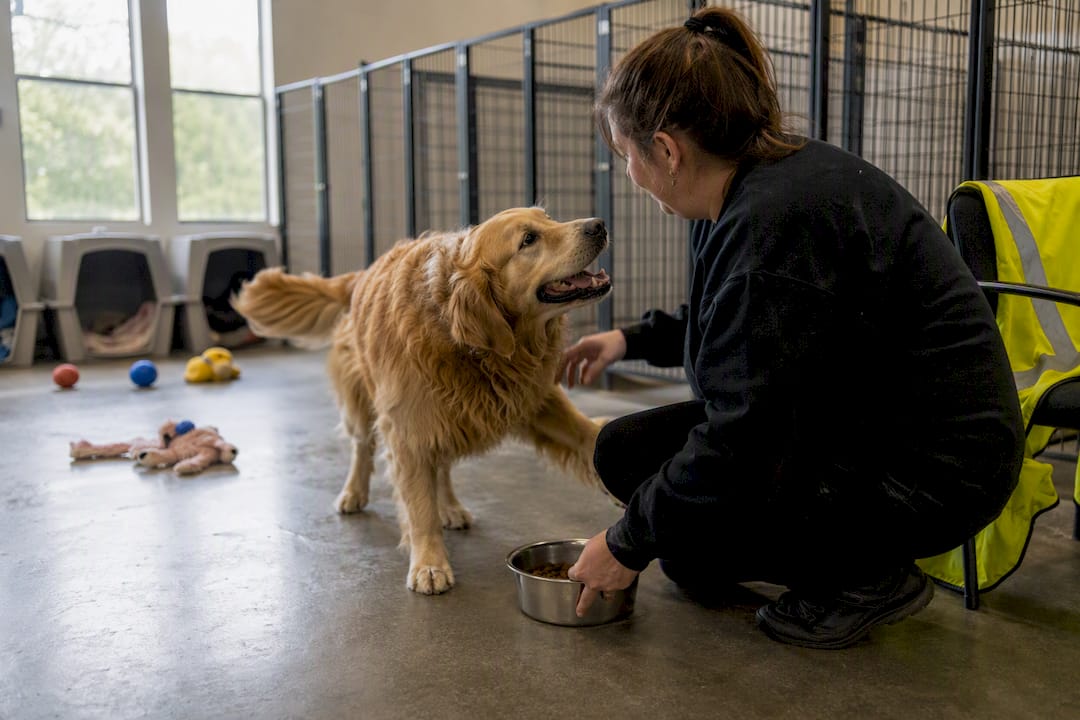
Professional pet sitters or house-sitters typically charge $30 to $75 per visit or $75 to $150 for overnight stays. This is often the better call for cats, elderly pets, or animals prone to separation anxiety, since the pet stays in its own environment. The tradeoff is trust: you're handing someone keys to your house for a week or more.

Friends and family cost nothing but come with their own risk. A well-meaning neighbor without pet experience can miss warning signs of illness or an escape risk. Set clear expectations in writing anyway, even for people you trust completely.
Taking your pet on the cruise is rare and mostly limited to a handful of cruise lines with pet-specific programs, usually restricted to small dogs and cats in approved carriers with advance registration. Check your specific cruise line's pet policy before assuming this is an option.
Service animals are a separate category under federal disability law and generally travel with their handler rather than staying behind, so most of this planning doesn't apply if you're bringing a service animal aboard.
Pro Tip: Before booking any boarding facility, ask to see their vaccination policy in writing, confirm they carry liability insurance, and request proof of 24/7 supervision or camera monitoring. A facility that hesitates to answer any of these is a facility to skip.
How Do You Choose the Right Pet-Care Option?
Run through a short set of questions before you commit to any provider.
For facilities, ask: What vaccinations are required, and do they check proof at drop-off? What's the staff-to-pet ratio during the day and overnight? Do staff have any veterinary or behavior training? What happens if your pet needs a vet during your cruise, and is that plan in writing? Is the facility insured against injury or escape?
For sitters, ask for a written contract, references from other clients, and a clear cancellation policy. Walk through their emergency plan step by step.
Watch for red flags on a facility visit: staff who won't let you tour the kennel area, no written intake contract, visible mess or odor, or a vague answer to "what if my pet gets sick." Any one of these is reason enough to look elsewhere.
Match the option to your pet's personality, not just convenience. High-energy dogs generally do better in daycare-style boarding with structured playtime. Anxious pets, cats, and seniors usually cope better with an in-home sitter or a familiar family member, since they avoid the stress of a new environment entirely.
Preparing Your Pet Before You Leave for the Ship
A short vet visit before departure covers most of what a caregiver will need. Confirm vaccinations are current, get a health certificate if your boarding facility or airline transport requires one, and verify your pet's microchip registration is up to date with your current phone number.
Pack a folder for whoever is caring for your pet:
- Food, pre-measured with a written feeding schedule and times
- Medications with exact dosing instructions and a backup supply
- A blanket, toy, or shirt carrying your scent
- Leash, collar, and an ID tag with a reachable phone number
- Crate or carrier if the caregiver's space requires one
On the day you leave, agree on a drop-off window and a pickup window for your return, and give the caregiver a written care plan covering feeding times, walk routines, and any quirks (won't eat from a metal bowl, hates thunderstorms, that kind of thing). If it's a house-sit, make sure they have a key, your Wi-Fi password, and clear instructions on trash day and mail.
Do Pets Actually Miss You? What the Research Says
Yes, and it's measurable. Studies on dogs show increased heart rate, pacing, and vocalization during separation, with the reaction growing stronger the longer the absence lasts and the closer the bond with the owner, according to research covered by Psychology Today. Your dog isn't being dramatic. It's a real physiological response.
The 3-3-3 rule from ASPCApro is built for pets adjusting to a brand-new home, but the framework applies to any temporary environment change too: three days for a pet to start decompressing in unfamiliar surroundings, three weeks before a routine feels normal, three months before it feels fully settled. A week-long cruise means your pet may spend the entire trip in that first, stressful decompression phase if the environment is new.
Three tactics cut that stress down:
- Keep feeding and walk times identical to your pet's normal schedule
- Send a shirt or blanket with your scent
- If separation anxiety is already an issue, work in gradual practice departures before the trip, not the week of
Pro Tip: Book a 24-hour trial stay with your chosen sitter or facility a few weeks before your cruise. It's the cheapest insurance you'll buy on this whole trip.
What Are Your Cruise Parking Options?
Four main choices exist for where your car sits while you're at sea, and they trade off convenience, cost, and security in different ways.
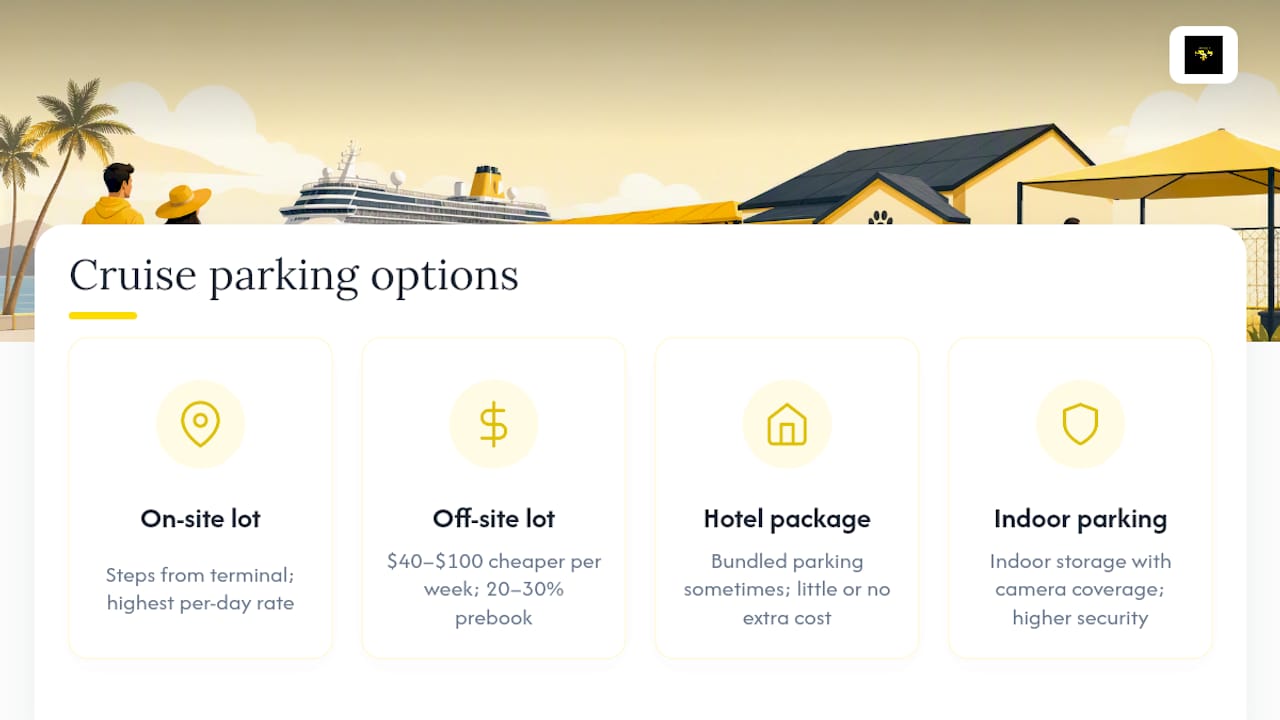
For a typical 7-night cruise, total parking costs generally run $90 to $280 depending on the port and lot type, and most ports charge for both your embarkation day and your return day even if you're only gone a week. On-site lots win on convenience since you're steps from the terminal, but they carry the highest per-day rate and typically sit in open-air lots. Off-site lots booked in advance often run $40 to $100 cheaper for the week, with prebooking discounts of 20 to 30% off walk-up rates. Hotel park-and-cruise packages make sense mainly if you were already planning an overnight stay before boarding, since some properties bundle parking in at little or no extra cost.
Indoor private parking closes the security gap that outdoor lots can't. A car sitting exposed in an open lot for seven straight days is a different risk profile than one stored indoors under camera coverage the entire time. That distinction is worth weighing against the price difference, especially for a newer vehicle or one you're not comfortable leaving unattended for a week or more.
Pro Tip: Arrive at the terminal during the first two hours of the embarkation window, typically late morning. Arriving right at the tail end of the window means fighting the heaviest shuttle and check-in traffic of the day.
What to Ask a Parking Provider Before You Book
Before handing over your keys for a week, run through a short checklist with any provider.
- How far is the lot from the terminal, and is a shuttle included or an extra fee?
- Is the lot indoor, fenced, or open-air, and is there 24/7 camera coverage?
- What's the shuttle schedule and frequency on both departure and return day?
- What's the cancellation and refund policy if your cruise dates change?
- Does the provider carry insurance covering theft or damage while your car is on the lot?
- What are the vehicle pickup hours after your cruise ends?
Before you drop the car off, top off the fuel tank partially (a quarter tank is generally enough for a week), disconnect or trickle-charge the battery if you're parking for longer than two weeks, and leave your insurance and registration in the glove compartment in case the lot needs to verify ownership. If you're storing the vehicle for an extended deployment or trip, a quick call to your insurance provider about coverage during storage is worth the five minutes. For more on what happens after you dock, this guide to vehicle retrieval after a cruise walks through the return-day process step by step.
How Far Ahead Should You Book Everything?
Book both pet care and parking two to four weeks out for peak cruise season (summer and major holidays), and even a standard week out during slower months still gives you better rate options than booking the day before. Plan to arrive at the terminal within the first couple hours of the embarkation window, and expect your vehicle pickup window on return day to open once the ship clears customs, typically a few hours after docking.
On cost: boarding runs $25 to $75 a night, sitters run $30 to $150 depending on overnight versus visit-only care, and parking for a 7-night cruise totals roughly $90 to $280 depending on lot type. Remember that parking is billed for the full span your car sits there, including your embarkation day and your return day, not just the nights you're actually sailing. This timing guide for booking cruise parking breaks down the booking calendar by cruise season if you want the specifics for your sail date.
A Few Things I've Learned Coordinating This Myself
Book the pet sitter and the parking reservation on the same afternoon, not weeks apart. Treating them as one trip task instead of two separate errands is what actually prevents the last-minute scramble.
A 24-hour trial stay with a new sitter tells you more than any reference call. And if your car is sitting for a week or more, indoor storage with real camera coverage is worth the extra cost over an open lot. Between a calm pet and a car you're not thinking about at sea, you get to actually enjoy the cruise.
Reserve Secure Parking Before You Leave for the Ship
Asphalt Lots solves the vehicle side of this equation with indoor parking near Norfolk built specifically around cruise schedules, not a generic long-term lot. Every vehicle sits inside under 24/7 surveillance instead of exposed in an open-air lot for a week or more, and a free shuttle runs you straight to the terminal so you're not hunting for a ride on embarkation morning.
Frequent cruisers can lock in a reserved spot every time through the VIP Unlimited Cruise Parking Membership, which guarantees availability and priority shuttle service even during peak sailing weekends when other lots fill up. Asphalt Lots also handles long-term vehicle storage for deployed military personnel and local residents who need secure parking beyond a single cruise. Compare that against a standard outdoor lot versus indoor secure parking and the security tradeoff becomes clear fast.
Reserve your spot for your next sail date at Asphalt Lots before your cruise fills the calendar around you.
Sources
For deeper background on the topics covered here, these sources are worth a look: the ASPCA's guide to separation anxiety covers warning signs and behavior interventions, ASPCApro's 3-3-3 guide explains pet adjustment timelines, and Cruise Port Advisor's parking cost breakdown compares rates across major ports.
- Pet Adjustment Periods: The 3 Days - 3 Weeks - 3 Months Guide | ASPCApro
- Cruise Port Parking Costs in 2026: Every Major Port Compared
- Do dogs grieve and miss their loved ones? | Psychology Today