
Dropping off your car at a cruise terminal is a coordinated process involving luggage handoff, vehicle parking, and passenger check-in. When each step happens in the right order, you board without stress. When one step goes wrong, you risk missing your sailing window. This drop off car cruise terminal guide covers every stage of the process, from parking options and cost comparisons to curbside timing rules and common mistakes that slow travelers down on embarkation day.
What are the common parking and drop-off options at cruise terminals?
Cruise terminals offer three main vehicle options: on-site parking, off-site parking with shuttle service, and valet parking. Each comes with real trade-offs in cost, convenience, and time.
On-site parking
On-site parking sits directly at the terminal, which makes it the fastest option on both embarkation and disembarkation days. The trade-off is price. For a 7-night cruise, on-site parking costs between $176 and $280 depending on the port. Ports like Miami and Seattle run highest; Jacksonville and Tampa are cheaper. Families with young children or travelers with mobility needs typically find the premium worth paying.
Off-site parking with shuttle service
Off-site lots sit outside the port perimeter and run shuttle buses to the terminal. Off-site shuttle lots can reduce a 7-night parking bill to $90–$120, a meaningful saving. The catch is shuttle frequency. Off-site parking offers 20–30% savings when booked in advance online, but low shuttle frequency can add significant wait time on return day. Check the shuttle schedule before you book, not after.
Valet parking
Valet parking at cruise terminals works differently from a hotel valet. Valet handoff procedures vary greatly by terminal, even within one city. Some terminals require you to exit the car immediately after luggage unloading. Others direct you to a separate intake zone. Always read your cruise line's specific valet instructions before arrival day. Understanding vehicle retrieval rules on disembarkation day is just as important as the drop-off itself.
Curbside drop-off zones
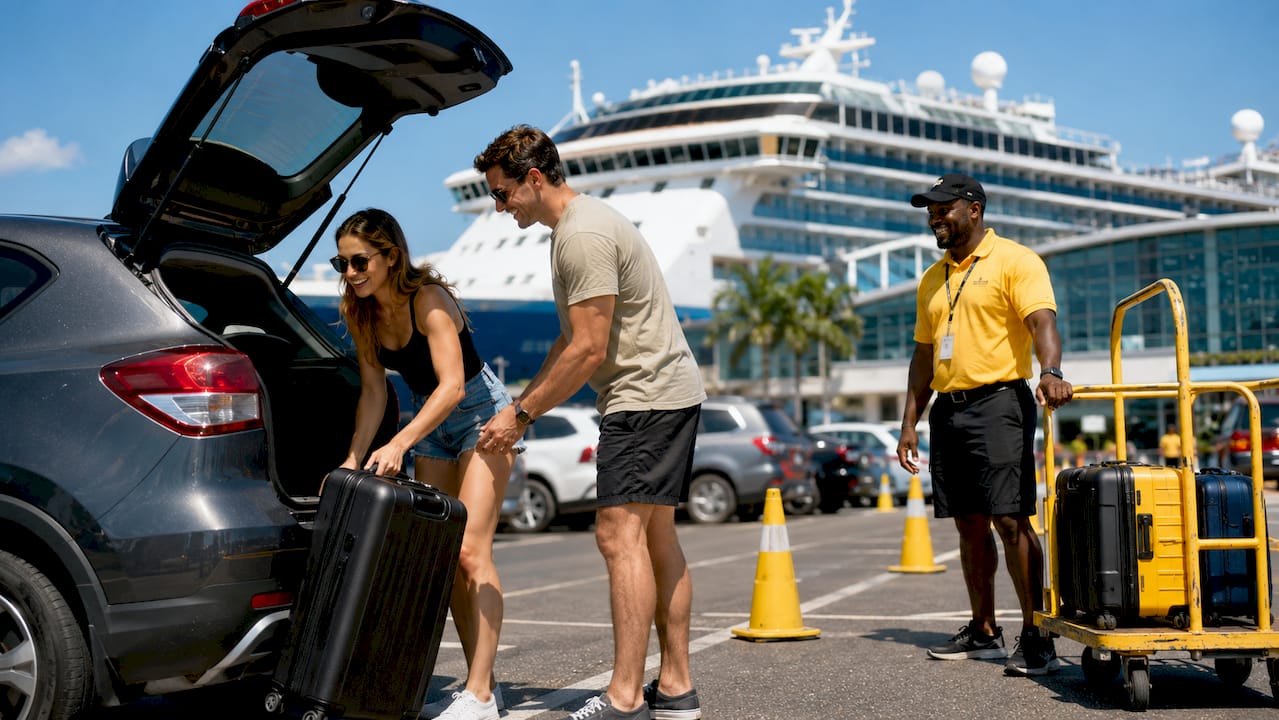
Curbside zones are for passenger and luggage drop-off only. They are not parking spots. Port staff enforce strict stop times of under 5 minutes to keep traffic moving. Pull up, unload, and move. Anyone who lingers risks a fine or a forced exit from the zone.
Pro Tip: Book off-site parking at least two weeks in advance. Rates climb sharply as sailing dates approach, and the best-located lots fill up fast.
How do you prepare and plan for a smooth car drop-off on embarkation day?
Preparation on the day before sailing separates a calm embarkation from a chaotic one. The steps below apply whether you are using on-site, off-site, or valet parking.
-
Arrive within your assigned boarding window. Arriving 30–60 minutes before your cruise check-in window gives you enough time to manage traffic, drop luggage, and park without rushing. Arriving too early creates a wait with nowhere to go. Arriving late means fighting peak curbside congestion.
-
Tag all checked luggage before you leave home. Cruise lines provide luggage tags in advance. Attach them at home, not at the curb. Porters move fast, and untagged bags create confusion.
-
Separate carry-ons from checked bags. Your checked bags go to porters at the curb and may not reach your cabin until the afternoon. Pack a carry-on with your passport, medications, phone charger, and anything you need for the first few hours onboard.
-
Clear valuables from your car. Remove electronics, cash, and personal documents before you reach the terminal. Do not leave anything visible on seats or in the center console.
-
Take timestamped photos of your vehicle. Photographing your car at arrival documents its condition and protects you from disputes when you return. Photograph all four sides and note the parking row or level.
-
Check terminal instructions the night before. Ports update arrival procedures, lane assignments, and parking rules regularly. A quick check of the terminal's website or your cruise line's app prevents surprises.
Pro Tip: Pack a small "ship-day" bag with sunscreen, your boarding documents, and a change of clothes. Checked bags often arrive at your cabin around 3:00 PM or later.
What are the step-by-step procedures when dropping off your car at the cruise terminal?
The terminal process follows a predictable sequence. Knowing it in advance means you move through each step without hesitation.
-
Follow port signage from the entrance. Cruise terminals post directional signs from the highway exit. Follow signs for your specific cruise line, not just the general terminal. Different lines often use different berths or parking structures.
-
Pull into the curbside drop-off lane. Curbside zones are marked and staffed. Pull as far forward as possible to avoid blocking traffic behind you.
-
Hand luggage to a porter immediately. Porters wear uniforms and carry bag tags. Hand over your checked bags right away. Tip porters $2–$3 per bag, which is the standard rate at most U.S. cruise ports. Keep your carry-on with you.
-
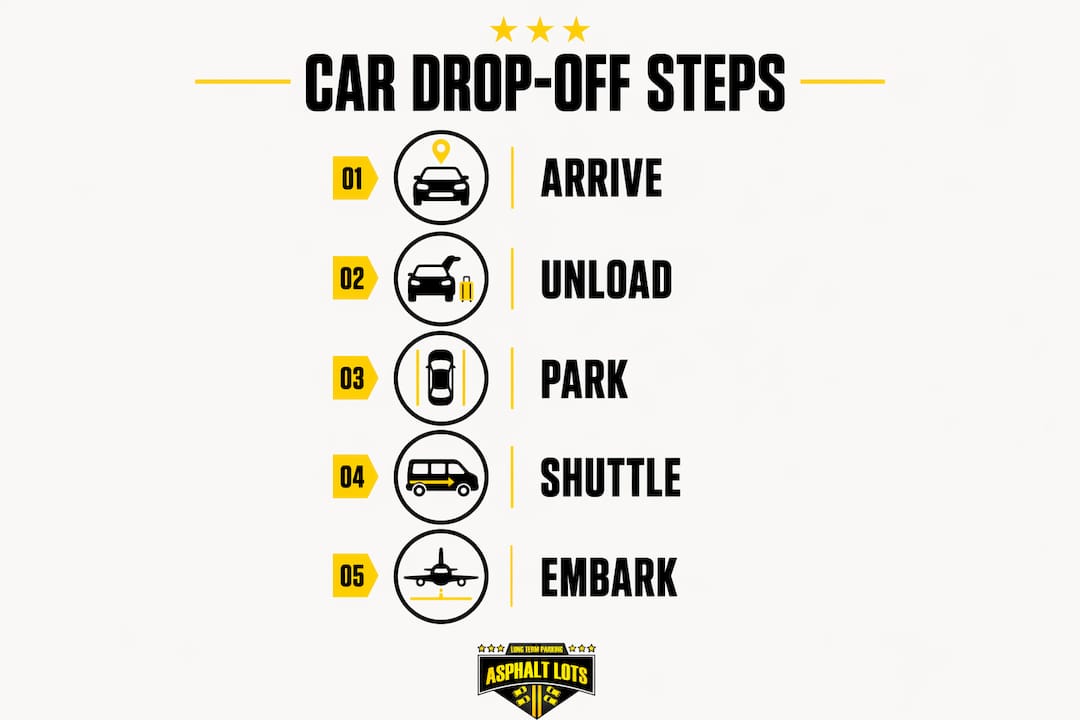
Move your car to parking. Once luggage is handed off, one person drives to the parking structure or valet intake while the rest of the group proceeds to the terminal entrance. Separating luggage drop and vehicle intake reduces bottlenecks but requires clear coordination among your travel group.
-
Complete security screening. Security at cruise terminals mirrors airport screening. Remove belts, laptops, and liquids. Have your boarding documents and passport ready before you reach the checkpoint.
-
Check in at the cruise line counter. Present your passport and booking confirmation. Staff will issue your SeaPass card or equivalent boarding card. The full process from queue entry to boarding typically takes 30–45 minutes for prepared passengers.
-
Board the ship. Follow staff directions to the gangway. Keep your boarding card accessible for scanning.
Key items to keep on your person throughout this process:
- Passport or government-issued ID
- Cruise booking confirmation
- Parking claim ticket or valet receipt
- Credit card for onboard account setup
- Any required health or travel documents
How can you avoid common mistakes during car drop-off at cruise terminals?
Most embarkation-day problems come from a short list of avoidable errors. Knowing them in advance is the fastest way to sidestep them.
- Arriving at the wrong time. Showing up before your assigned boarding window means waiting in a holding area with no access to your cabin. Arriving late means peak traffic and longer lines at every step.
- Lingering at the curb. Curbside zones enforce stop times under 5 minutes. Staff will ask you to move. Do not unpack slowly or wait for a family member who is not ready.
- Leaving passports in checked luggage. Keeping passports on your person prevents last-minute delays at check-in. Checked bags go directly to the ship's hold and are not accessible until after sailing.
- Skipping the car photo step. Timestamped photos of your vehicle protect you from disputes about pre-existing damage. Take them before you hand over keys or walk away from the lot.
- Ignoring shuttle schedules for off-site lots. On return day, shuttle frequency determines how long you wait. Confirm the schedule before you sail, and build extra time into your disembarkation plan.
- Failing to confirm valet retrieval rules. Valet arrangements vary widely, including whether keys are retained, whether the car is moved multiple times, and where it is stored. Get written confirmation of retrieval procedures before you board.
Frequent cruisers benefit most from a pre-cruise checklist covering valeting, document readiness, vehicle condition photos, and claim ticket organization. Treating embarkation day as a repeatable process, not a one-off scramble, cuts stress on every sailing.
Pro Tip: Screenshot your parking confirmation and valet receipt and save them offline. Cell service near large port facilities can be unreliable, and you do not want to search for a confirmation email while standing in a retrieval line.
Key Takeaways
The best way to drop off your car at a cruise terminal is to arrive within your assigned window, hand luggage to porters immediately, photograph your vehicle, and confirm parking retrieval rules before you board.
| Point | Details |
|---|---|
| Curbside time limits | Stop times run under 5 minutes; unload fast and move your car immediately. |
| Parking cost range | On-site lots cost $176–$280 for 7 nights; off-site shuttle lots run $90–$120. |
| Document discipline | Keep your passport and boarding documents on your person, never in checked luggage. |
| Vehicle documentation | Take timestamped photos of all four sides of your car before leaving the lot. |
| Valet retrieval rules | Confirm key retention, storage location, and retrieval procedures before sailing. |
What I've learned from watching embarkation day go wrong
Most cruise travelers underestimate how much the drop-off sequence matters. I've seen groups lose 45 minutes because one person stayed at the curb while another circled the parking structure with no agreed meeting point. The fix is simple: decide roles before you arrive. One person handles luggage at the curb. One person drives to parking. Everyone else walks to the terminal entrance. That split takes 30 seconds to plan and saves real time.
The cost-versus-convenience debate on parking is real, but people often frame it wrong. The question is not just price per night. It's what your time is worth on disembarkation day when you're tired, carrying bags, and waiting for a shuttle that runs every 25 minutes. For a short 3-night sailing, off-site parking is almost always the right call financially. For a 10-night sailing, the math shifts, and the local parking benefits of a well-located facility with frequent shuttles often justify the extra cost.
The detail most guides skip is the return-day plan. Everyone focuses on embarkation. Nobody thinks about disembarkation until they're standing at baggage claim at 7:30 AM wondering where their shuttle is. Confirm retrieval procedures for valet before you board. Know your off-site shuttle's first pickup time. Have your parking claim ticket in a place you can find it after a week at sea.
— Martin
Asphaltlotsva: secure parking near the Norfolk cruise terminal
Cruise travelers sailing from Norfolk, Virginia have a reliable parking option 15 minutes from the terminal. Asphaltlotsva is a veteran-owned facility offering secure indoor parking with round-the-clock surveillance and free shuttle service to the port.

The VIP Unlimited Parking Membership reserves your spot on cruise days, guarantees availability, and includes priority shuttle service. That means no circling lots on embarkation morning and no long waits on return day. For frequent cruisers who sail from Norfolk regularly, the membership removes parking as a variable entirely. Check the nearby parking checklist to see how Asphaltlotsva compares against the criteria that matter most.
FAQ
How long can I stop at a cruise terminal curbside drop-off zone?
Curbside stop times at most U.S. cruise terminals run under 5 minutes. Port staff actively enforce this limit to keep traffic moving during peak embarkation hours.
Is off-site parking worth it for a 7-night cruise?
Off-site shuttle lots typically cost $90–$120 for a 7-night cruise compared to $176–$280 for on-site parking. The savings are real, but confirm shuttle frequency before booking to avoid long waits on return day.
What should I keep with me and not put in checked luggage?
Keep your passport, boarding documents, medications, phone charger, and parking claim ticket in your carry-on. Checked bags may not reach your cabin until the afternoon and are inaccessible once handed to porters.
How do I prepare for valet parking at a cruise terminal?
Read your cruise line's specific valet instructions before arrival day, since procedures vary by terminal. Confirm whether keys are retained, where the car is stored, and exactly how to retrieve your vehicle on disembarkation day.
What is the fastest way to get through the cruise terminal drop-off process?
Arrive within your assigned boarding window, tag luggage before leaving home, hand bags to porters immediately at the curb, and have your passport and boarding documents ready before you reach security. Prepared passengers typically clear the full process in 30–45 minutes.