The single most effective set of moves to reduce your cruise's port-preparation bill: pre-book an off-site parking lot with a free shuttle, consider a hotel+parking package if you're flying in, and plan your shore days selectively. According to Cruise Critic, transport to and from the port is one of the leading hidden costs that can push your total trip price well above the advertised cabin fare. A few decisions made two to four weeks before departure can realistically save you $100–$300 on a single sailing.
Here's what to do right now:
- Pre-book off-site parking. Off-site lots with shuttle service save 20–40% versus official port garages, and booking online in advance locks in the best rate.
- Bundle hotel+parking if you're flying in. For a 7-night cruise, a park-and-cruise hotel package often makes parking effectively free compared to paying separately for a hotel and port garage.
- Compare ride-share vs. parking before you decide. For a solo traveler or couple, an Uber or Lyft round-trip can beat a week of parking fees at busy ports.
- Pick 1–2 paid shore excursions and DIY the rest. Cruise-line excursions carry a significant markup; independent operators or self-guided port days cut that line item sharply.
- Pack carry-on only when possible. Eliminating checked bags removes airline fees and speeds up embarkation morning considerably.
Key Takeaways
Cutting cruise port-preparation costs comes down to one discipline: calculate the all-in price before booking, not the headline rate.
| Point | Details |
|---|---|
| Book parking 2–4 weeks out | Secures the best rates and availability; peak-season sailings may need earlier booking. |
| Account for calendar-day billing | A 7-night cruise typically bills as 8 parking days — factor this into every cost comparison. |
| Off-site lots save 20–40% | Verified off-site lots with free shuttles cut the 7-night parking bill by $40–$100 versus port garages. |
| Pick 1–2 paid excursions | Independent operators on DIY port days cost a fraction of cruise-line excursion prices. |
| Asphaltlotsva for Norfolk sailings | Secure indoor parking, 24/7 surveillance, free shuttle, and a VIP membership for frequent cruisers. |
Table of Contents
- ## 1. Parking and transport: how to cut costs on cruise port preparation
- 2. Shore excursions and DIY port days: where to spend and where to save
- 3. Pre-cruise travel: when a hotel+parking package actually pays off
- 4. Onboard extras that quietly inflate your bill
- 5. Packing and baggage: the fees you can avoid entirely
- 6. Tipping, porter fees, and incidentals to budget at the port
- 7. A simple timeline and sample budget for port-prep costs
- 8. How to pick a parking provider: the questions that matter
- 9. When paying a premium for secure parking actually makes sense
- The real lesson most port-prep guides skip
- Secure indoor cruise parking near Norfolk: what Asphaltlotsva offers
- Sources
## 1. Parking and transport: how to cut costs on cruise port preparation
The clearest answer: for a 7-night cruise, an off-site lot with a free shuttle or a hotel+parking package will almost always beat the official port garage on price. On-site parking wins only when your drive is short, your cruise is 3–5 nights, and you're arriving the same day.
The calendar-day billing trap
Before you compare daily rates, understand how parking is actually billed. A 7-night cruise is commonly billed as eight calendar days because lots charge for any portion of an arrival or return day. Arrive Saturday, return the following Saturday — that's eight billed days, not seven. A headline rate of $15/day becomes $120, not $105. This single detail makes off-site savings even larger than the per-day comparison suggests.
Statistic: Off-site lots with shuttle service typically save 20–40% versus official port parking, and booking in advance online commonly cuts the 7-night total by $40–$100.
Port-by-port, the range for a 7-night cruise runs roughly $90–$280 depending on the port and parking type. West Coast ports and Brooklyn tend toward the high end; smaller Gulf ports sit at the low end. At PortMiami specifically, official garages run $20–$35/day while independent lots advertise $8–$15/day — but those independent lots sometimes add per-person shuttle fees or taxes at checkout that close the gap.
Your five parking options compared
For a couple on a 7-night sailing, a ride-share round-trip can sometimes be less expensive than parking, avoiding shuttle waits and calendar-day billing. Run the math for your specific port before defaulting to a lot.
Pro Tip: Always request the all-inclusive checkout total before booking any off-site lot. Ask specifically: "Does this price include shuttle, taxes, and any per-person fees?" A lot advertising $10/day can land at $160 total after surcharges — more than the port garage.
To understand how parking location affects your total cruise cost, factor in shuttle wait time and distance, not just the daily rate. A 20-minute shuttle delay on embarkation morning costs more in stress than the $20 you saved.
Tools like SpotHero, CruisePortParking.com, and ParkSleepFly aggregate off-site options and show final checkout prices. AAA members should also check AAA's travel planning resources, which sometimes surface member-rate parking discounts at partner lots near major ports.
2. Shore excursions and DIY port days: where to spend and where to save
Pick 1–2 paid excursions you genuinely care about and self-guide the rest. That one rule, applied consistently across a 7-night itinerary with four or five port stops, can save a couple several hundred dollars compared to booking ship excursions at every stop.
When the ship's excursion is worth it
Cruise-line excursions carry a markup, but they earn it in specific situations:
- Remote pickup locations where independent transport is unreliable or expensive
- Activities requiring complex logistics (helicopter tours, multi-stop safaris, tender-port landings)
- Ports where the ship won't wait if an independent tour runs late
- Destinations with genuine safety concerns for solo travelers
For everything else — a beach day in Nassau, a market walk in Cozumel, a cathedral visit in Cartagena — a local operator or a self-guided morning costs a fraction of the ship price.
A real cost comparison
A Cozumel snorkeling excursion through the cruise line typically runs $65–$90 per person. The same reef, booked through a local operator at the pier, runs $25–$40 per person including gear. For a family of four, that's a $100–$200 difference on a single port day. Multiply that across two or three stops and the savings are substantial.
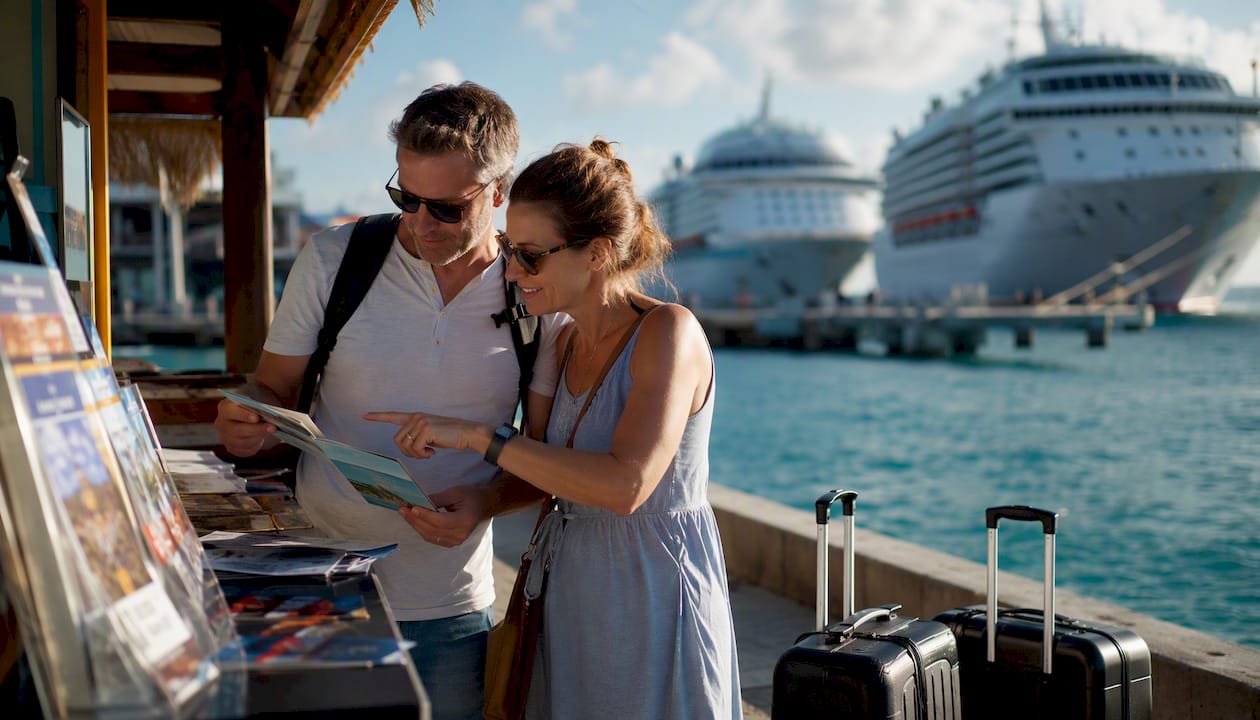
For a balanced approach that keeps costs down while preserving special experiences, travel planners consistently recommend one priority paid experience per itinerary — the Blue Lagoon in Iceland, a whale watch in Alaska — and self-guided days everywhere else.
Pro Tip: When booking independent operators, confirm three things before paying: a clear cancellation/refund policy, a pickup location within easy walking distance of the pier, and a return time that gives you at least 60 minutes of buffer before all-aboard. Missing the ship on an independent tour means paying your own way to the next port.
For families weighing budget-friendly local options, budget boat tour guides for families can help identify vetted operators and realistic pricing before you arrive at the dock.
Checklist for researching independent operators:
- Recent reviews on TripAdvisor or Google (within the last 6 months)
- Pickup location confirmed as pier-side or within a short walk
- Certified or licensed guides where required (diving, wildlife tours)
- Clear written refund policy for weather cancellations
- Operator's phone number or WhatsApp for day-of contact
3. Pre-cruise travel: when a hotel+parking package actually pays off
If you're flying to your departure port, the day-before hotel is not a luxury — it's insurance against a missed ship. The math gets even better when that hotel bundles parking.
Park-and-cruise hotel packages usually outperform separate hotel + on-site parking for sailings of 7 nights or longer, particularly when you already planned an overnight stay. Here's why: a hotel near the port charging $120/night that includes 8 days of parking effectively gives you parking for free, since you'd pay $120–$280 for that parking separately at the port garage. The package beats the sum of its parts.
The math on transfers is similarly worth running. Cruise-line transfers from the airport to the port are convenient but priced at a premium — often $30–$50 per person each way. For two people, that's $120–$200 round-trip. An Uber or Lyft for the same route at most major ports runs $20–$40 total. Unless the ship's transfer includes luggage handling that genuinely matters to you, the ride-share wins.
Timing rules that save money:
- Book flights and hotels 8–12 weeks out for peak cruise season (December–March, summer school breaks). Waiting until 3–4 weeks out in peak season typically means paying 20–40% more for the same hotel.
- For off-peak sailings, 4–6 weeks out is usually fine.
- Always check hotel cancellation policies before booking — a free-cancellation rate is worth a few extra dollars if your plans might shift.
4. Onboard extras that quietly inflate your bill
Most cruisers save money by skipping the full drink package unless they're confident they'll drink enough to hit the break-even threshold. For everything else — specialty dining, Wi-Fi, photos, spa — the same logic applies: buy selectively, not in bulk.
The drink package math
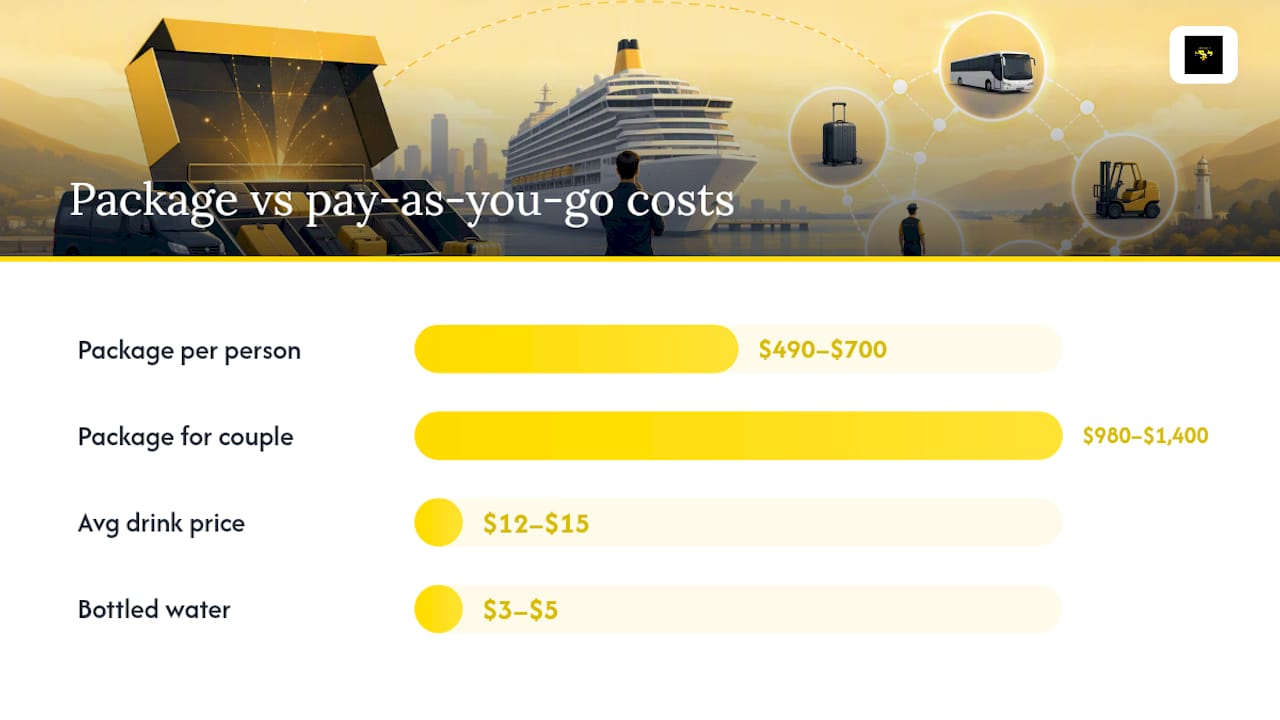
A typical 7-night per-person drink package runs $70–$100/day, or $490–$700 per person for the sailing. At an average drink price of $12–$15 on board, you need to consume 5–7 drinks per day, every day, to break even. For a couple, that's a $980–$1,400 commitment upfront. If either of you has a port day where you drink mostly ashore, or a sea day where you don't drink much, the package loses money.
Pay-as-you-go works better for moderate drinkers. A small drink bundle (10–15 drinks pre-purchased at a discount) suits occasional drinkers better than a full package.
Common extras and one saving tactic for each:
- Specialty dining: Pre-book online before sailing — most lines offer 10–20% off when booked in advance versus at the restaurant.
- Wi-Fi: Buy by the hour or use a single-device plan only when needed. Free Wi-Fi is available in most cruise terminals and many port cafes.
- Photos: The ship's photo packages are priced for impulse buyers. Bring a good phone camera and skip the package entirely.
- Spa: Book treatments on port days when demand drops and prices sometimes fall. Avoid embarkation-day spa promotions — they're full price dressed as a deal.
- Coffee: Skip the specialty coffee bar on port days and grab a local espresso ashore for a fraction of the price.
Statistic: Pre-booking specialty dining before your sailing can save 10–20% compared to booking onboard — and the best time slots fill up fast on popular ships.
Bring a refillable water bottle where the cruise line permits it. Most ships have water stations, and buying bottled water at $3–$5 per bottle adds up over a week.
5. Packing and baggage: the fees you can avoid entirely
Packing light is the most reliable way to cut pre-cruise transport costs and speed up your embarkation morning. A carry-on-only strategy eliminates airline checked-bag fees, removes the need for a porter at the terminal, and lets you move faster through the embarkation line.
Pro Tip: If you're traveling with a family and carry-on-only isn't realistic, consolidate into the fewest bags possible and use a travel rewards credit card that waives checked-bag fees. Cards like the Chase Sapphire Preferred or Delta SkyMiles Gold waive the first checked bag on eligible flights — on a family of four, that's $120–$200 saved on a single round-trip.
A practical packing checklist for a 7-night cruise:
- 4–5 layered outfits (mix formal dinner nights with casual port days)
- Travel-size toiletries (buy a refill kit rather than full-size bottles)
- A small day bag or packable tote for port days
- Duplicate phone charger and a portable battery pack
- Printed copies of your booking confirmation, passport photo page, travel insurance, and parking reservation
- Any prescription medications in carry-on, never checked luggage
On the document side: an expired passport or a missing visa can mean denied boarding with no refund. Check your passport expiration date — many countries require 6 months of validity beyond your travel dates. Travel insurance confirmation should be accessible on your phone and in print.
For a deeper look at preparing for a sailing trip, including packing frameworks and safety checklists, practical sailing guides cover the overlap between port-day readiness and general travel preparation well.
6. Tipping, porter fees, and incidentals to budget at the port
Account for gratuities as a fixed line item per person rather than hoping loose change covers it. Port-day tipping is predictable if you plan for it.
Typical tip ranges to budget:
- Port porter (embarkation): $1–$2 per bag, typically $5–$10 for a couple with two bags
- Shuttle driver (off-site lot): $2–$5 per trip, per driver
- Hotel bell staff: $1–$2 per bag
- Taxi or ride-share driver: 15–20% of fare (Uber/Lyft tips are optional but customary for good service)
- Cruise line gratuities (onboard): Most lines charge $16–$20 per person per day, billed automatically — budget this separately from port-day tips
Sample port-day tipping total:
For a family of four at embarkation: $10 for the porter (4 bags), $10 for the shuttle driver (round-trip), $5 for hotel bell staff, $8 for the taxi from the hotel. That's roughly $33 in cash tips before you board. A solo traveler runs $10–$15 for the same stops.
Keep $40–$50 in small bills in your carry-on specifically for port-day tips. Running to an ATM on embarkation morning adds stress and sometimes fees.
Watch for incidental fees that appear at parking checkout: oversized-vehicle surcharges (common for trucks and SUVs, often $5–$15/day extra), per-person shuttle fees disclosed only at payment, and holiday surcharges during peak dates. These hidden fees are the most common reason a "cheap" lot ends up costing more than the port garage.
7. A simple timeline and sample budget for port-prep costs
3-step timing checklist:
- 2–4 weeks before departure: Book parking or transfers. Experts recommend this window to balance price and availability at busy ports. For peak season sailings, book earlier.
- 1 week before: Confirm hotel reservations, transfer bookings, and parking. Verify shuttle pickup times and locations. Pre-book any specialty dining or excursions you haven't locked in.
- 48–72 hours before: Reconfirm all bookings. Check parking lot hours and shuttle schedule. Download boarding passes and parking confirmation to your phone.
Sample budget for a 7-night cruise (per couple)
| Line item | Low estimate | High estimate | Notes |
|---|---|---|---|
| Flights (round-trip, 2 people) | $300 | $100–$200 | Book 8–12 weeks out for best rates |
| Pre-cruise hotel (1 night) | $90 | $180 | Look for hotel+parking packages |
| Parking (8 calendar days, off-site) | $65–$90 | $120 | $8–$15/day off-site rate |
| Parking (8 calendar days, on-site) | $160 | $280 | $20–$35/day port garage rate |
| Airport/hotel transfer (ride-share) | $20 | $60 | Versus $120–$200 for cruise-line transfer |
| Shore excursions (2 paid, 2 DIY) | $90 | $200 | Independent operators vs ship pricing |
| Port-day tips (embarkation) | $30 | $50 | Porter, shuttle, hotel, driver |
| Contingency | $50 | $100 | Surge pricing, last-minute needs |
Simple formula for your total port-prep cost:
Base cabin fare + port-prep total (parking + hotel + transfers) + onboard extras + contingency = true trip cost.
Run this before you book anything. Most cruisers who do are surprised how much the port-prep line rivals the cabin fare itself.
Day-of checklist:
- Arrive at the parking lot or hotel at least 90 minutes before your scheduled embarkation window.
- Keep your passport, boarding pass, parking confirmation, and travel insurance in your carry-on — never in checked luggage.
- Take a photo of your parked car's location (lot sign, row number, space number) before you board the shuttle.
- Confirm the shuttle return pickup location and hours before you leave the lot.
8. How to pick a parking provider: the questions that matter
The right provider shows you an all-inclusive checkout price upfront, has recent reviews, gives clear shuttle pickup and dropoff instructions, and has visible security measures. Any provider that can't answer basic questions about shuttle logistics or pricing before you pay deserves skepticism.
Questions to ask before booking:
- Is the shuttle included in the quoted price, or is it a separate per-person fee?
- How are charges calculated — by calendar day or 24-hour period?
- Is there an oversized-vehicle surcharge for trucks, SUVs, or vans?
- What is the cancellation and refund policy if my sailing is delayed or canceled?
- What are the lot's operating hours, and is there 24-hour access for early departures or late returns?
- Is the lot covered or outdoor? Is there surveillance?
Red flags to walk away from:
- No reviews dated within the last 6 months
- Per-person shuttle fees disclosed only at the payment screen
- Ambiguous pickup instructions ("meet near the terminal" with no specific address)
- No clear statement about security, surveillance, or insurance
- Cancellation policy buried in fine print or absent entirely
When you arrive at any off-site lot, document the condition of your vehicle before leaving it. Take photos of all four sides, note any existing damage, and keep your receipt. This protects you if anything is disputed on return.
Use the nearby cruise parking facilities checklist to verify each of these points systematically before committing to a reservation.
9. When paying a premium for secure parking actually makes sense
A premium parking option — secure indoor storage, 24/7 surveillance, guaranteed reserved spots — is worth the extra cost in three specific scenarios: you're leaving a high-value vehicle, you're sailing for 10+ nights, or you cruise frequently enough that a membership amortizes across multiple trips.
For occasional cruisers on short sailings, a well-reviewed off-site lot with a free shuttle covers the basics. But for frequent cruisers, the math shifts. If a VIP parking membership costs $X per year and saves $Y per trip versus daily rates, the break-even point arrives quickly for anyone sailing three or more times annually. The guaranteed reserved spot also eliminates the risk of arriving on embarkation morning to find the lot full — a scenario that happens at busy ports during peak season.
What to verify when evaluating a premium provider:
- Indoor or covered parking (protects against weather damage and reduces theft risk)
- 24/7 surveillance with cameras and on-site staff
- Guaranteed spot reservation for cruise days, not just "availability pending"
- Priority shuttle service with confirmed pickup times
- Clear cancellation and refund policy for membership fees
- Recent customer reviews that specifically mention security and shuttle reliability
Asphaltlotsva is a veteran-owned facility located 15 minutes from Norfolk's cruise terminal. It offers secure indoor parking with 24/7 surveillance, guaranteed reserved spots on cruise days, and a free shuttle to the terminal. The VIP Unlimited Parking Membership is built for frequent cruisers: reserved spots, priority shuttle, and guaranteed availability on sailing days. For long-term needs — military deployments, extended travel — the facility also offers long-term vehicle storage. For cruisers sailing out of Norfolk who want predictability over price-hunting, this is the kind of provider the criteria above describe. See the full breakdown of unsecured parking risks to understand what's at stake when you skip the security premium.
The real lesson most port-prep guides skip
Most articles on cruise port preparation focus on finding the cheapest daily parking rate. That's the wrong starting point. The actual question is: what is the all-in cost of getting your vehicle to the port and back, with zero surprises on embarkation morning?
A lot advertising $8/day that adds per-person shuttle fees, an oversized-vehicle surcharge, and a holiday surcharge can easily land at $180 for a 7-night trip. A lot charging $15/day with a genuinely free shuttle, no surcharges, and a clear cancellation policy lands at $120. The cheaper headline rate cost more.
The same logic applies to shore excursions. Cruisers who book every port through the ship's excursion desk aren't buying experiences — they're buying convenience at a steep markup. The cruisers who come home having spent the least and enjoyed the most are the ones who did one or two genuinely special paid experiences and spent the rest of their port days walking, eating locally, and exploring on their own terms.
Planning 2–4 weeks out, running the all-in math before booking, and keeping $50 in small bills for port-day tips — these aren't complicated moves. They're just the ones most people skip because they're focused on the cabin fare and not the total trip cost. The port-prep bill is where the real savings live.
Secure indoor cruise parking near Norfolk: what Asphaltlotsva offers
For cruisers sailing out of Norfolk, the parking decision is straightforward when you know what you're getting. Asphaltlotsva offers secure indoor parking with 24/7 surveillance, a free shuttle to the cruise terminal, and guaranteed reserved spots on sailing days — no showing up to a full lot, no shuttle surprises.
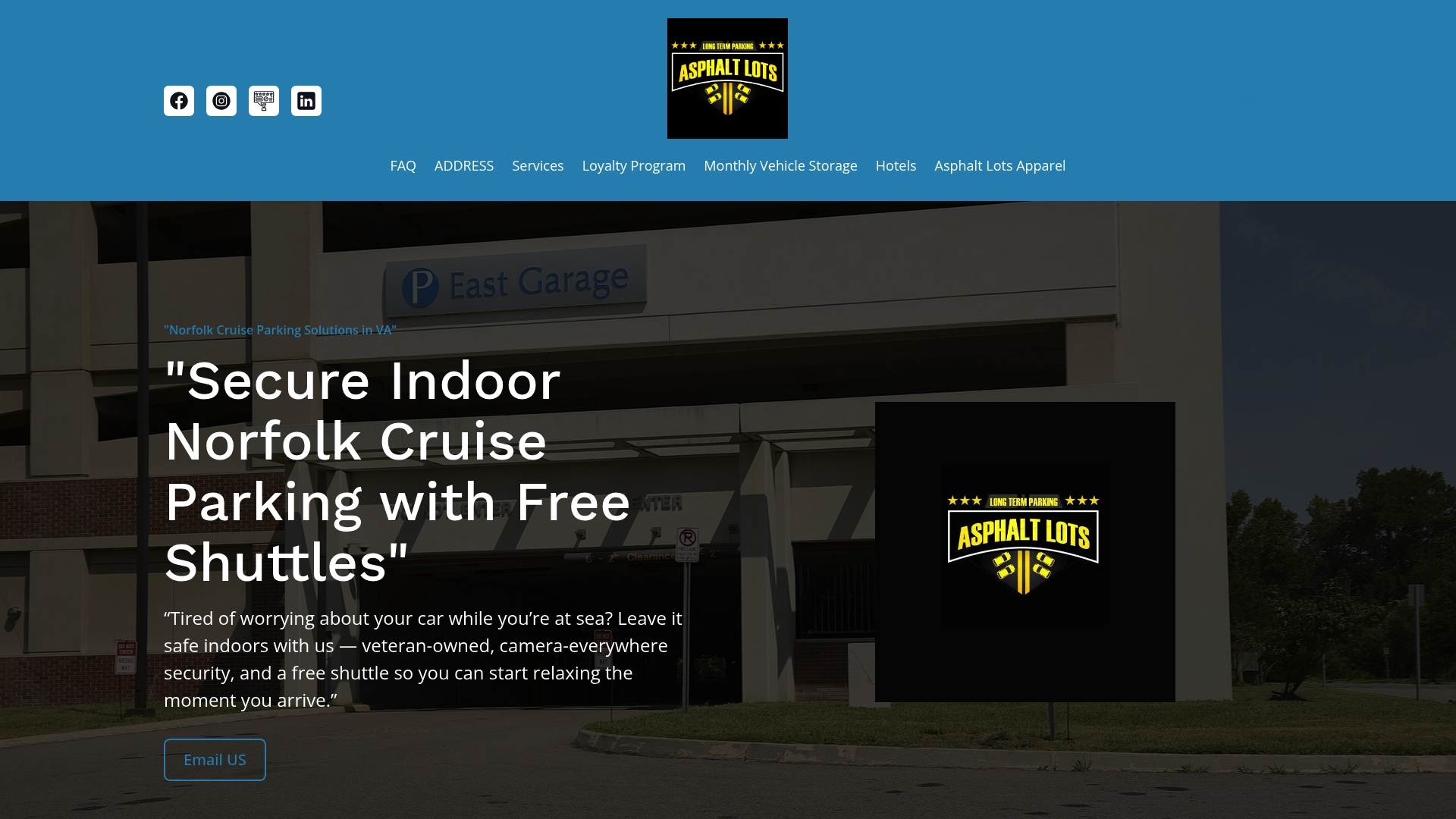
The VIP Unlimited Parking Membership is built for frequent cruisers: reserved spots every time, priority shuttle service, and guaranteed availability regardless of how busy the port gets. For a one-off sailing, daily reservations are available with the same security and shuttle service. Military personnel on deployment can book long-term vehicle storage with the same indoor, surveilled facility.
Before you book any off-site lot, compare the final all-inclusive price — shuttle, taxes, and any surcharges included. Then compare that number against what Asphaltlotsva charges for a guaranteed indoor spot with a free shuttle 15 minutes from the terminal. For frequent cruisers, the VIP membership math tends to close quickly.
Reserve your spot at Asphaltlotsva before your next sailing and skip the embarkation-morning guesswork entirely.
Sources
These are the most reliable places to price and book parking, transfers, and excursions before your next sailing. Always verify the final checkout total — including all fees and surcharges — before confirming any reservation.
Parking aggregators and port guides:
- Cruise Port Parking Costs in 2026: Every Major Port Compared
- PortMiami Cruise Parking: Why Cheap Lots Cost More Time
- How Much Is a Cruise? The 10 Hidden Costs of Cruising and How to Save Money on Them
- Complete guide to parking at major cruise ports | Cruise Ship Tracking
Research sources used in this article:
A final note: reviews age fast at parking lots. Check dates on any review you read — a lot that was excellent two years ago may have changed ownership or shuttle reliability. Prioritize reviews from the last 6 months when making your final decision.