Public cruise lots are defined as high-volume, short-window parking environments where thousands of vehicles compete for limited space during a single embarkation day. That combination of intense demand and compressed timing is the core reason why public cruise lots cause stress for travelers before a single bag is loaded. Port Canaveral invested $93 million in a 13-story garage specifically because 80% of cruisers drive to port, illustrating just how severe the volume problem is. The stress is not imaginary. It is the predictable result of a parking model that was never designed for leisure travel at this scale.
Why public cruise lots cause stress: the core operational breakdown
The single biggest driver of cruise parking anxiety is concentrated arrivals. Thousands of vehicles show up within a 2–4 hour window, and facilities struggle to process 400 to 600 vehicles per hour during peak turnover. No standard parking garage is built for that kind of throughput. The result is gridlock at the entrance, backed-up lanes on access roads, and travelers watching their boarding time tick closer.
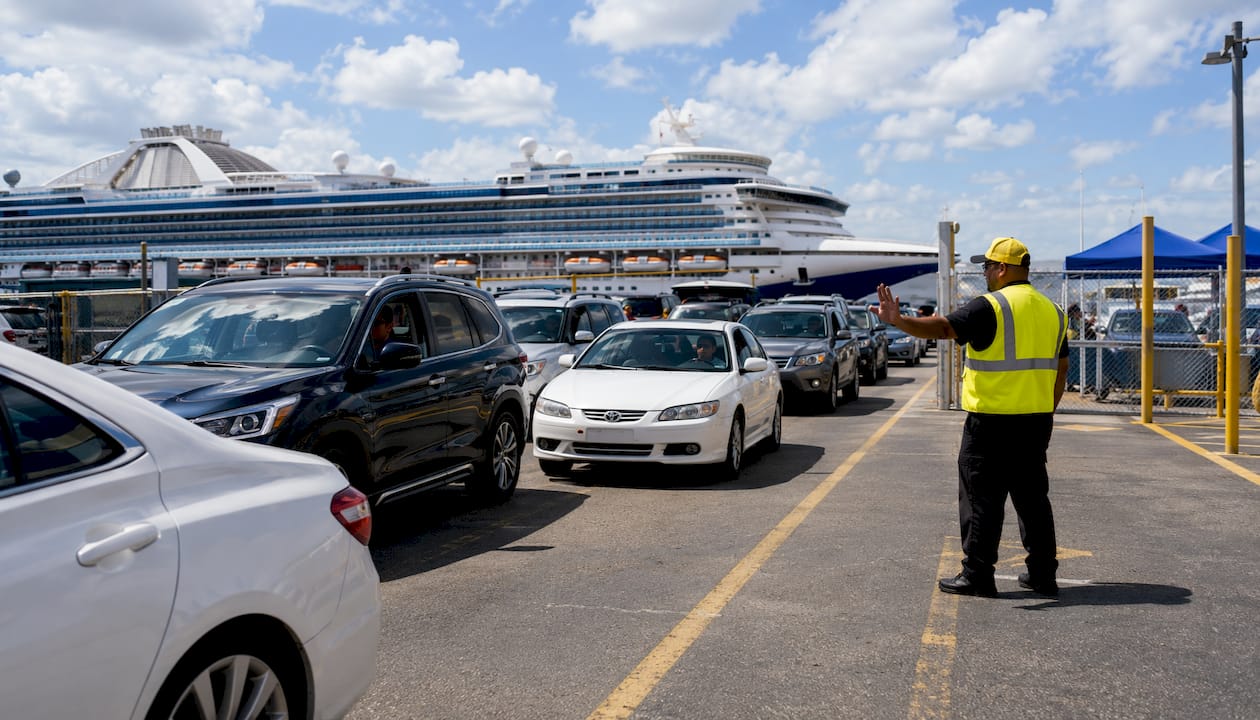
Cruise parking is operationally unlike any other parking model. Processing 300 vehicles per hour during embarkation while managing vehicle stays of 7 to 14 days requires specialized systems, coordinated staffing, and real-time communication with the cruise line. Most public lots lack all three. When those systems fail, the chaos lands directly on the traveler.
Simultaneous embarkation and disembarkation make the problem worse. Returning passengers retrieving their vehicles collide with departing passengers dropping off luggage, creating competing traffic flows at the same curb. Ports lacking dedicated ride-share and taxi lanes turn this into a genuine bottleneck. Shuttle pickup zones become crowded and confusing, and travelers with heavy luggage have no clear path forward.
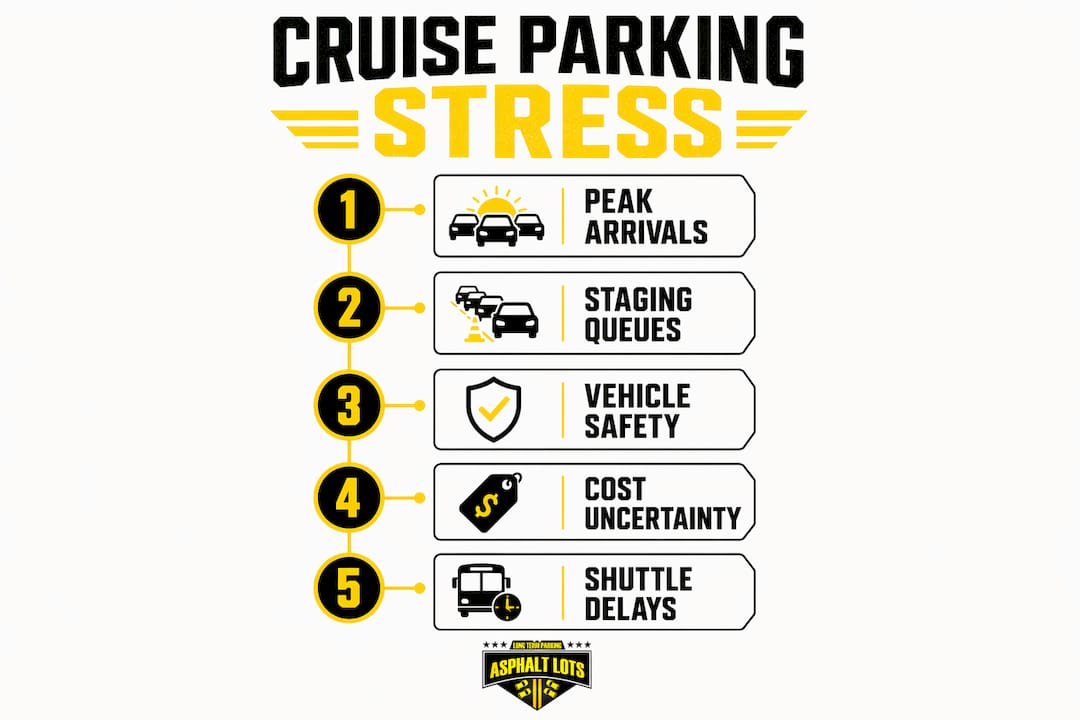
Key stressors in public cruise lots include:
- Entrance congestion caused by simultaneous arrivals from multiple cruise lines
- Unclear shuttle pickup zones that force travelers to guess where to wait
- Staging areas that look like blocked lots but are actually traffic management tools
- Understaffed facilities that cannot handle peak-hour volume
- No real-time space availability information posted at the entrance
Pro Tip: If you see a line of cars stopped before the lot entrance, that is almost certainly a staging hold, not a full lot. Wait it out rather than leaving to find an alternative.
How does timing affect cruise parking anxiety?
Timing is the variable travelers control most directly, and most get it wrong. Peak traffic congestion around cruise ports occurs between 10:00 AM and 12:00 PM on embarkation days. Arriving during that window means joining the worst of the congestion with no benefit in boarding priority.
The timing trap works in both directions. Arriving too early puts you in a staging queue because the terminal is not ready to receive vehicles. Arriving too late drops you into peak congestion with the added pressure of a boarding deadline. Ports recommend balancing arrival windows for smooth parking and baggage handling, but that guidance is rarely specific enough to be useful.
Roadwork and terminal relocations add a layer of unpredictability that no amount of early planning fully addresses. Philadelphia and Galveston passengers face mandatory off-site check-in and reroutes to avoid terminal gridlock. A detour that adds 20 minutes to your drive is manageable on a normal day. On embarkation day, with luggage in the car and a boarding window closing, it becomes a genuine source of panic.
A practical arrival strategy looks like this:
- Check your cruise line's recommended arrival window and note the earliest time the terminal accepts vehicles.
- Add a 30-minute buffer to account for port access road congestion.
- Avoid the 10:00 AM to 12:00 PM peak by arriving before 9:30 AM or after 12:30 PM when possible.
- Check local traffic apps the morning of departure for roadwork alerts near the terminal.
- Confirm your parking lot's shuttle schedule the day before so you are not waiting blind at the curb.
Why do public lots frustrate travelers over vehicle safety and cost?
Vehicle safety concern is the emotional toll of cruise parking that travelers rarely anticipate until it is too late. Lower-cost off-site lots have earned poor reputations for vehicle damage, unreliable shuttles, and hidden fees. A $3 per day premium for a better-reviewed facility is widely recognized as one of the most effective ways to reduce risk. That small daily difference adds up to less than $25 on a week-long cruise, which is a reasonable price for peace of mind.
Cost unpredictability is a separate but related problem. Cruise parking fees are based on calendar days, not 24-hour periods, so a 7-night cruise typically generates 8 days of parking charges. Travelers who do not know this rule arrive expecting one total and pay another. That surprise amplifies the stress of an already complicated day. You can review multi-day parking rate structures before you book to avoid the shock at checkout.
Overflow lots add a third layer of frustration. Carnival Cruise Line advises travelers to prepare for redirection to off-site lots without pre-disclosed locations, meaning you may not know where your car will actually be parked until you are already at the terminal. That lack of transparency is a direct driver of cruise parking anxiety. Travelers who planned for a specific lot suddenly face an unknown facility with no time to research it.
| Parking type | Vehicle security | Cost transparency | Shuttle reliability |
|---|---|---|---|
| Official port garage | High | Moderate | High |
| Well-reviewed off-site lot | High | High | High |
| Budget off-site lot | Low to moderate | Low | Variable |
| Overflow/undisclosed lot | Unknown | Low | Variable |
Pro Tip: Read recent reviews specifically for shuttle wait times, not just overall ratings. A lot can score well overall while consistently failing on shuttle reliability, which is the part that matters most on embarkation day.
What practical strategies reduce stress in public cruise lots?
The most effective way to reduce stressful public parking on cruise day is to treat parking as part of your travel plan, not an afterthought. Travelers who book parking in advance, confirm shuttle schedules, and arrive outside peak hours report significantly less friction than those who decide on the day. The nearby cruise parking facilities checklist is a useful starting point for comparing options before you commit.
Practical strategies that consistently reduce cruise lot crowd issues:
- Book in advance. Lots near major ports fill up weeks before popular sailings. Waiting until the week before limits your options to whatever is left.
- Choose official port lots for proximity when your priority is walking distance to the terminal and you want to skip shuttle logistics entirely.
- Choose well-reviewed off-site lots for savings when you are comfortable with a short shuttle ride and want to pay less per day.
- Understand staging procedures before you arrive. Staging areas prevent dangerous terminal overcrowding and improve overall flow, even though they feel like delays. Knowing this in advance removes the anxiety of sitting in a queue.
- Consider shuttle alternatives. Services like cruise transfer shuttles eliminate parking entirely for travelers who prefer to be dropped off directly at the terminal.
- Confirm your lot's security setup. Ask specifically about surveillance coverage, lighting, and whether staff are on-site overnight.
The types of cruise port parking available at most major ports range from on-site garages to remote lots with shuttle service. Each option involves a different trade-off between cost, convenience, and security. Knowing those trade-offs before embarkation day is the single best cruise terminal parking tip available.
Key Takeaways
Public cruise lots cause stress because they combine high vehicle volume, compressed arrival windows, and poor cost transparency into a single high-pressure experience that most travelers are not prepared for.
| Point | Details |
|---|---|
| Peak congestion window | Arriving between 10:00 AM and 12:00 PM on embarkation day puts you in the worst traffic. |
| Staging areas are not blockages | Controlled staging holds prevent dangerous overcrowding and improve terminal flow. |
| Calendar-day billing surprises | A 7-night cruise typically costs 8 days of parking fees due to calendar-day billing. |
| Premium lots reduce risk | Paying a modest daily premium for a well-reviewed lot lowers the risk of vehicle damage and shuttle delays. |
| Advance booking is the top strategy | Booking parking weeks ahead secures better options and removes day-of decision pressure. |
What I have learned from watching cruise parking go wrong
Every time I talk to a traveler who had a bad embarkation experience, the parking lot comes up within the first two minutes. Not the traffic, not the check-in line. The parking lot. That tells you something important about where the emotional toll of cruise parking actually lands.
The part that frustrates me most is how avoidable most of it is. Staging areas are not a failure of the system. They are the system working correctly. A single problematic embarkation day can damage guest satisfaction and port relationships long term, which is why ports use staging in the first place. But because no one explains this to travelers before they arrive, a controlled queue feels like chaos.
The vehicle safety concern is the one I take most seriously. I have seen travelers return from a 10-day cruise to find a door ding, a cracked mirror, or a dead battery because the lot had no covered storage and no overnight staff. That is not a minor inconvenience. It is the last memory of a vacation that cost thousands of dollars. Paying a few extra dollars per day for a facility with real security infrastructure is not a luxury. It is basic risk management.
My honest recommendation is to treat your parking choice the same way you treat your cabin choice. You research the cabin. You read reviews. You think about what matters to you. Do the same for parking, and most of the stress disappears before you ever leave your driveway.
— Martin
Stress-free cruise parking near Norfolk with Asphaltlotsva
Travelers who want to skip the chaos of public lot logistics have a direct alternative with Asphaltlotsva, located just 15 minutes from Norfolk. The facility offers secure indoor parking with round-the-clock surveillance, so your vehicle is protected from the moment you drop it off until you return.
The VIP Unlimited Parking Membership guarantees a reserved spot on cruise days, priority shuttle service to the terminal, and no surprises at checkout. For frequent cruisers, that guaranteed availability alone removes the single biggest source of cruise parking anxiety. Asphaltlotsva is veteran-owned and built specifically for travelers who want their vacation to start at the parking lot, not after it.
FAQ
Why do public cruise lots cause more stress than regular parking?
Public cruise lots process thousands of vehicles within a 2–4 hour window, which overwhelms standard parking infrastructure. The combination of concentrated arrivals, shuttle logistics, and simultaneous embarkation and disembarkation creates congestion that regular lots never face.
What time should I arrive at a cruise port to avoid parking stress?
Arrive before 9:30 AM or after 12:30 PM to avoid the peak congestion window between 10:00 AM and 12:00 PM. Arriving outside that window reduces wait times and lowers the risk of missing your boarding slot.
Why is my cruise parking bill higher than I expected?
Cruise parking fees are charged by calendar day, not by 24-hour period. A 7-night cruise typically generates 8 days of parking charges, which catches many travelers off guard at checkout.
What is a staging area at a cruise port?
A staging area is a controlled holding zone where vehicles wait until terminal space opens. It prevents dangerous overcrowding at the curb and improves overall traffic flow, even though it can feel like an unexplained delay.
Is off-site cruise parking safe for my vehicle?
Safety varies significantly by facility. Well-reviewed off-site lots with surveillance, covered storage, and on-site staff offer strong protection. Budget lots with poor reviews and no overnight staff carry a higher risk of vehicle damage and shuttle delays.