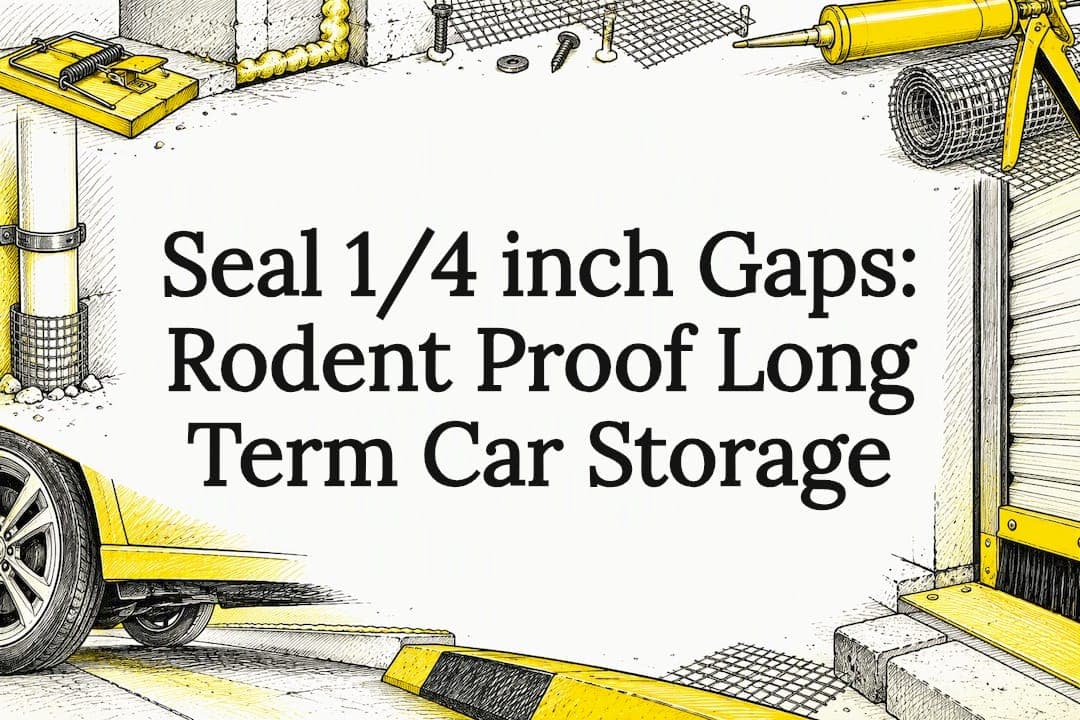
The most effective way to protect a stored car from rodents is to combine three actions: remove anything that attracts mice and rats, physically seal entry points, and keep monitoring traps in place. Store the car indoors or under a sealed cover, close gaps with steel wool or hardware cloth, and set snap traps nearby before you walk away for an extended period.
TL;DR:
- Sealing gaps with steel wool or hardware cloth is crucial, as rodents can enter through openings as small as a quarter inch, especially around air filters and wiring.
- Regular inspection and trap checking are necessary, with weekly monitoring recommended and detailed logs to detect patterns of rodent activity.
- Combining indoor or sealed-cover storage with physical exclusion prevents rodents from accessing the vehicle, which significantly reduces damage risk.
- Scent repellents like peppermint oil and mothballs provide only short-term protection and should be used as supplementary measures, not primary deterrents.
- After signs of rodent activity, proper cleanup involves airing out the car, disinfecting droppings, and inspecting wiring for gnaw marks to prevent serious health and mechanical issues.
Table of Contents
- Your pre-storage checklist and inspection schedule
- Finding and sealing the entry points rodents use
- Choosing traps and monitoring without attracting more pests
- What repellents and covers can realistically do
- Cleaning and safety steps after signs of rodent activity
- Comparing storage options by rodent risk
- What years of watching stored cars taught us
- Why indoor storage with Asphalt Lots solves this problem
- FAQ
- Sources
Your pre-storage checklist and inspection schedule
Rodents look for food, warmth, and a quiet place to nest, so the week before storage matters as much as the storage itself.
- Clear the interior. Remove all food wrappers, crumbs, and pet treats, then vacuum the seats, floor mats, and trunk thoroughly.
- Strip out nesting material. Take out loose fabric, cardboard, paper floor mats, or anything soft that a mouse could shred for a nest.
- Check the mechanical side. Inspect the air intake, cabin air filter, and engine air filter for droppings or chew marks; if the cabin filter looks contaminated, replace it before storing the car.
- Set a perimeter defense. Place snap traps and glue boards around the vehicle and near the storage entrance, and clear food sources like birdseed or trash from the surrounding area.
- Mark your calendar. Plan a first check within a week of storing the car, then monthly visits after that.
During each visit, look for fresh droppings, chewed insulation, or a strong ammonia smell, any of which signal rodent presence even if traps are empty.
Pro Tip: Keep a small notebook or phone log of trap checks and findings so you can spot a pattern, like repeated activity near one wheel well, instead of relying on memory.

Finding and sealing the entry points rodents use

Mice can squeeze through gaps as small as a quarter inch, and rats need only slightly more room, which means almost every stored car has a vulnerable spot somewhere. Rodents can gain entry through openings as small as 1/4 inch, according to Consumer Reports, so a visual walk-around is not enough. Run a hand along likely spots to feel for drafts or loose seals; rodents can gain entry through openings as small as 1/4 inch.
Common entry points include:
- Air intake ducts and the gap around the air filter housing
- Weatherstripping seams around doors and the hood
- Wiring conduits that pass through the firewall
- Trunk and taillight seams where panels meet
For sealing, coarse steel wool and galvanized hardware cloth work well because rodents cannot chew through metal fibers easily. Sheet metal edge guards protect larger gaps, and capsaicin-treated electrical tape adds a layer of deterrence directly on wiring. Avoid soft foam or caulk alone, since rodents chew through both without much resistance. Keep any patch material clear of moving parts, belts, and anything that gets hot, and make sure you can still remove the patch for routine maintenance. If an entry point sits deep in the engine bay or near sensitive electronics, have a mechanic handle the exclusion work rather than risk damaging a sensor or hose.
Choosing traps and monitoring without attracting more pests
Snap traps placed around a stored vehicle or inside a garage are recommended as the most effective way to catch rodents before they reach the car, and Consumer Reports specifically cautions against food-based bait, which can draw in more rodents than it catches. Glue boards serve as a useful backup in tight spaces where a snap trap will not fit.
- Place traps along the garage perimeter, under the vehicle in safe zones away from exhaust components, and near any suspected entry point.
- Keep traps away from areas children or pets can reach, or use covered trap housings designed for that purpose.
- Check traps weekly at minimum; reset snap traps immediately after a catch and dispose of the animal following local guidance.
- Wear gloves when handling a trapped rodent and avoid direct contact with droppings or nesting material.
If you find repeated activity despite consistent trapping, or signs of a larger infestation like extensive chewing or a strong odor throughout the vehicle, call a licensed pest control professional rather than continuing DIY efforts.
What repellents and covers can realistically do
Smell-based repellents like peppermint oil and mothballs offer only temporary protection. Repellents wear off and must be reapplied, while exclusion yields longer-lasting protection, which is why pest management sources treat them as a supplement, not a primary defense.
- Reapply peppermint oil every few days, since it evaporates quickly, especially in a warm garage.
- Capsaicin-treated electrical tape wrapped around exposed wiring adds a chemical deterrent rodents avoid chewing through.
- Standard car covers block some access but leave gaps near the ground; sealed-base covers that cinch at the wheels close that gap.
- For outdoor storage, a full tarp-wrap method that seals at ground level creates a more continuous barrier than a loosely draped cover.
Pro Tip: Check covers and tape monthly for tears or loosened seals, since a single gap undoes most of the protection a cover provides.
Cleaning and safety steps after signs of rodent activity
Finding droppings or nesting material in a stored car calls for a careful, specific process, not just a quick wipe-down. The CDC outlines step-by-step inspection and disinfecting procedures that reduce health risk during cleanup.
- Open the doors and windows and let the car air out for at least 30 minutes before starting any cleaning.
- Disconnect the battery before working near wiring or the engine bay.
- Put on gloves and, if the contamination is heavy, a mask rated for particulates.
- Soak droppings and nesting material with a disinfectant rather than sweeping or vacuuming them while dry, since dry debris can release airborne particles.
- Bag and dispose of the waste according to local guidelines, then disinfect the surrounding surfaces.
- Replace any contaminated air filters rather than attempting to clean them.
Do not vacuum or sweep rodent droppings or nesting material until the area has been thoroughly soaked with disinfectant.
This matters because dried rodent waste can carry hantavirus, a serious respiratory illness tied to airborne exposure to the virus. After disinfecting, inspect wiring harnesses and hoses for gnaw marks; small nicks in insulation often precede a failure, so cover any exposed wiring temporarily and have a mobile mechanic assess whether a full harness replacement is needed before you drive the car again.
Comparing storage options by rodent risk
Where you store the car matters as much as how you prepare it. Fully enclosed indoor storage offers the strongest protection because it removes the dark, undisturbed corners rodents prefer and limits their access to food sources nearby.
- Confirm the facility does not store bagged feed, trash, or other attractants near parked vehicles.
- Ask whether walls and loading areas are sealed against rodent entry, not just locked for security.
- Check how often the facility cleans and inspects for pest activity, not just how often it's patrolled for theft.
- For outdoor storage, rely on sealed-base covers or the tarp-wrap method, and manage vegetation and food sources within several feet of the vehicle.
The extra cost of indoor storage is easiest to justify once you weigh it against rodent damage to wiring and hoses that can cost thousands of dollars to repair. Before committing to any provider, ask directly what their pest prevention policy covers and how they handle an incident if one occurs.
What years of watching stored cars taught us
We have seen the same pattern repeat: a car left untouched in a corner for weeks becomes the first one with chewed insulation, while cars parked in actively monitored indoor spaces rarely show any sign of rodent activity. Keeping a facility's trap stations checked and attractants cleared out does more than any single repellent.
For readers managing storage over several months, our guide to storing a car safely for months and our notes on humidity control during storage cover the mechanical side in more depth.
— Martin
Why indoor storage with Asphalt Lots solves this problem
Everything above comes down to one principle: rodents need access and attractants, and indoor storage removes both. We built Asphalt Lots around exactly that idea for cruise travelers and long-term storage customers who don't want to think about mice while their car sits unattended for days or weeks.

- Our indoor facility keeps vehicles out of the open, reducing the dark, undisturbed exposure rodents look for.
- We provide 24/7 surveillance, so unusual activity near stored vehicles gets noticed quickly rather than discovered weeks later.
- Our Deployment & Long-Term Parking option is built for exactly the multi-week and multi-month timelines where rodent risk climbs.
- Our Unlimited VIP Cruise Parking Membership at $100 per month adds guaranteed reserved spots and priority shuttle service for frequent cruisers.
If pest prevention is a concern for your specific vehicle or storage timeline, reach out through our FAQ page and ask directly about our pest-control practices before you book. Daily parking is available for cruise travelers who need shorter coverage; current prices are on the pricing page.
This article is general information, not a substitute for advice from a qualified doctor. Consult a qualified healthcare professional about your own circumstances before acting on anything here.
FAQ
How to keep rodents out of a car in storage?
Remove food and nesting material from inside the car, seal gaps with steel wool or hardware cloth, and set snap traps around the vehicle rather than relying only on scent repellents. Combine indoor or sealed-cover storage with regular inspection, since rodents can enter through openings as small as a quarter inch.
How do the Amish get rid of mice?
There's no documented, specific method tied to Amish farming practices in reliable sources, so treat this as folklore rather than a verified technique. The prevention steps that extension services and pest management sources actually recommend, exclusion, attractant removal, and trapping, work the same way for any household or stored vehicle.
What is a good rodent barrier for a car?
Coarse steel wool and galvanized hardware cloth make effective barriers because rodents struggle to chew through metal fibers, unlike soft foam or caulk. For wiring specifically, capsaicin-treated electrical tape can protect exposed sections when applied correctly.
What will keep rodents away from my car?
Snap traps placed around the vehicle, combined with removing food sources and sealing entry points, provide the most reliable protection. Scent-based repellents like peppermint oil offer only temporary deterrence and need frequent reapplication, so they work best as a supplement rather than a standalone solution.
What should I do if I find rodent droppings in my car?
Air out the vehicle, disconnect the battery, and wear gloves before cleaning. Soak droppings and nesting material with disinfectant before removing them, and avoid vacuuming or sweeping while the debris is dry, since dried waste can pose a hantavirus exposure risk.
Sources
- How to clean up after rodents | CDC
- Best way to store a car for an extended period | Consumer Reports