Book secure, reputable parking in advance and document your car before you walk away from it. That single habit heads off the five costliest first cruise parking mistakes: oversized-vehicle surcharges, trusting a headline daily rate that balloons at checkout, getting stuck in a return-day shuttle line, arriving without a reservation during peak season, and having no proof of your car's condition if something goes wrong.
TL;DR:
- Always measure your vehicle's size and check clearance limits before booking to avoid oversized-vehicle surcharges that can add $25 to $40 per day.
- Calculate the full checkout cost by adding all fees and surcharges to the daily rate, as advertised prices often do not include shuttle, processing, or peak season fees.
- Reserve parking as soon as you book your cruise, especially during peak seasons, to secure a spot and avoid expensive walk-up premiums or full lots.
- Read recent reviews to ensure shuttle reliability and security, since star ratings alone do not reveal actual service quality during busy periods.
- Photograph and record your vehicle’s condition and exact location before leaving to protect against damages and facilitate dispute resolution.
Table of Contents
- The Most Common Cruise Parking Mistakes (and How to Fix Each One)
- On-Site, Off-Site, or Park-and-Cruise Hotel: How to Choose
- Why Asphalt Lots Is Built Around These Exact Mistakes
- Parking Cancellation and Refund Policies You Should Check First
- What Passengers Should Know About Valet and Attended Parking
- What to Do If Your Parking Lot Changes or Overbooks
- Getting the Most Out of Parking Discounts and Loyalty Programs
- When to Pay for Convenience and When to Save
- Book Guaranteed Parking Before You Ever Leave Home
- Where to Verify Port-Specific Parking Rules and Costs
- Sources
- FAQ
The Most Common Cruise Parking Mistakes (and How to Fix Each One)
First-time cruise parking mistakes tend to repeat themselves for a simple reason: nobody warns new cruisers until after they've already paid for the lesson. Here's the full list, in the order that tends to cost people the most.
1. Ignoring oversized-vehicle rules
Trucks, vans, and anything towing gear routinely get hit with surcharges that never show up in the advertised rate. Height and length limits exist because most garages are built for sedans, not full-size SUVs with roof boxes. Oversized fees can run $25 to $40 per day at some U.S. ports and considerably more at overflow lots, and garage clearance is often around 7 feet.
The fix: Measure your vehicle's height, length, and width before you book anything. Call or check the lot's website for its clearance and length caps, not just its general parking page.
2. Trusting the advertised daily rate
A rate that says $12 a day looks great until checkout adds a facility fee, a shuttle fee, a card-processing fee, and a "peak season" surcharge. Off-site lots typically run $8 to $18 a day compared with $15 to $35 a day at official port garages, but the gap only matters if you compare the full checkout total, not the number on the homepage.
The fix: Multiply the daily rate by your actual number of parking days, then add every listed fee before you compare two options. A lot that looks $5 cheaper per day can end up pricier once shuttle and processing fees are added.
3. Not booking ahead during peak season
Spring break weeks, summer, and the days around major holidays fill lots fast. Show up without a reservation during one of those windows and you're choosing between a walk-up premium, a lot that's already full, or both. Prebooking when you book your cruise itself usually locks in the lowest rate available. Two weeks of lead time is often enough in shoulder season; peak season calls for booking as soon as your cruise dates are set.
The fix: Reserve parking the same day you book your cruise, not the week before you sail.
4. Picking the cheapest off-site lot without reading recent reviews
Price alone tells you nothing about whether the shuttle actually runs on schedule or whether the lot has real security. Traveler reviews are a much better predictor of shuttle reliability than anything on a provider's own marketing page. Look specifically for recent comments about shuttle wait times and how the lot handled the return-day rush, not just star ratings.
The fix: Read reviews from the last three to six months, and search for the lot's name plus "shuttle" or "return" to see how it performs when things get busy.
5. Failing to document vehicle location and condition
This is the mistake that turns a minor scratch into a dispute you can't win. Experts recommend photographing your parking row, level, and space number, plus a quick video walk-around of your car before you leave it. Simple timestamped photo and video documentation dramatically cuts your odds of losing a damage dispute, because you have proof of the car's condition and exact location before you ever handed over the keys.
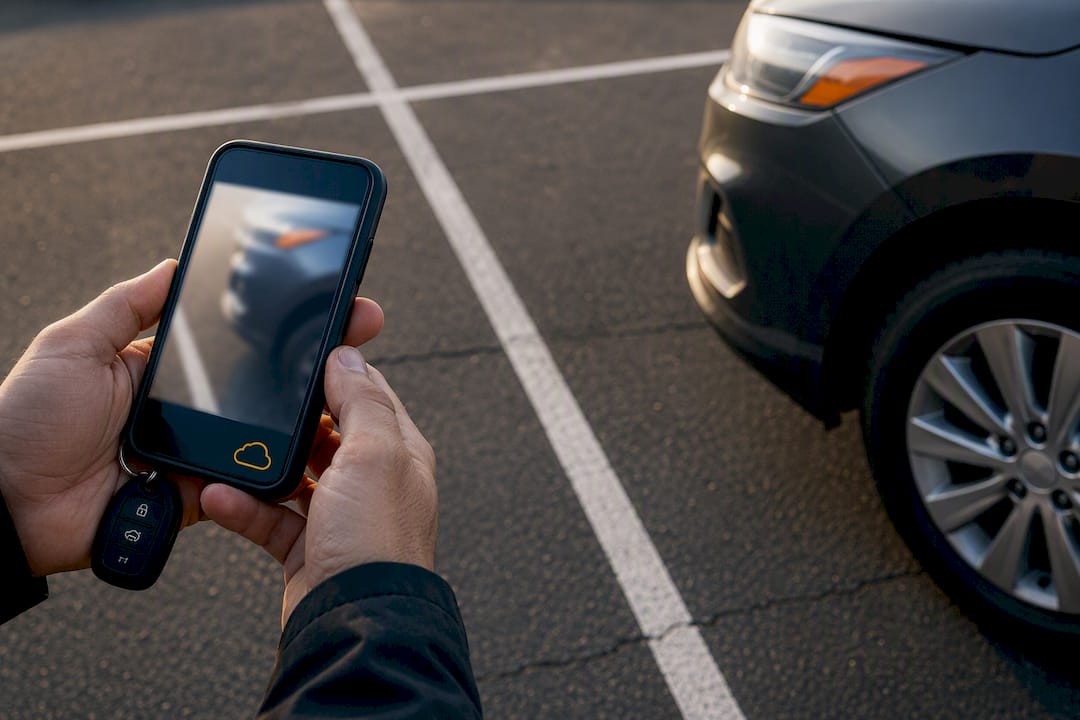
The fix: Take four photos (front, back, both sides) and a 15-second walkthrough video right before you board the shuttle. Store them in a cloud folder, not just your phone, in case your phone gets lost too.
6. Not planning for return-day shuttle delays
Embarkation morning shuttles run smoothly because everyone arrives on a staggered schedule. Disembarkation morning is the opposite: thousands of passengers get off the ship within a two-hour window and all want a ride at once. A shuttle trip that took 15 minutes on the way in can stretch to 45 to 75 minutes on the way back because of volume and traffic.
The fix: If you have a flight or tight commitment on return day, build in at least 90 minutes of buffer between disembarkation and your next departure, or choose on-site parking to skip the shuttle entirely.
7. Leaving valuables in the car or leaving a dash cam running
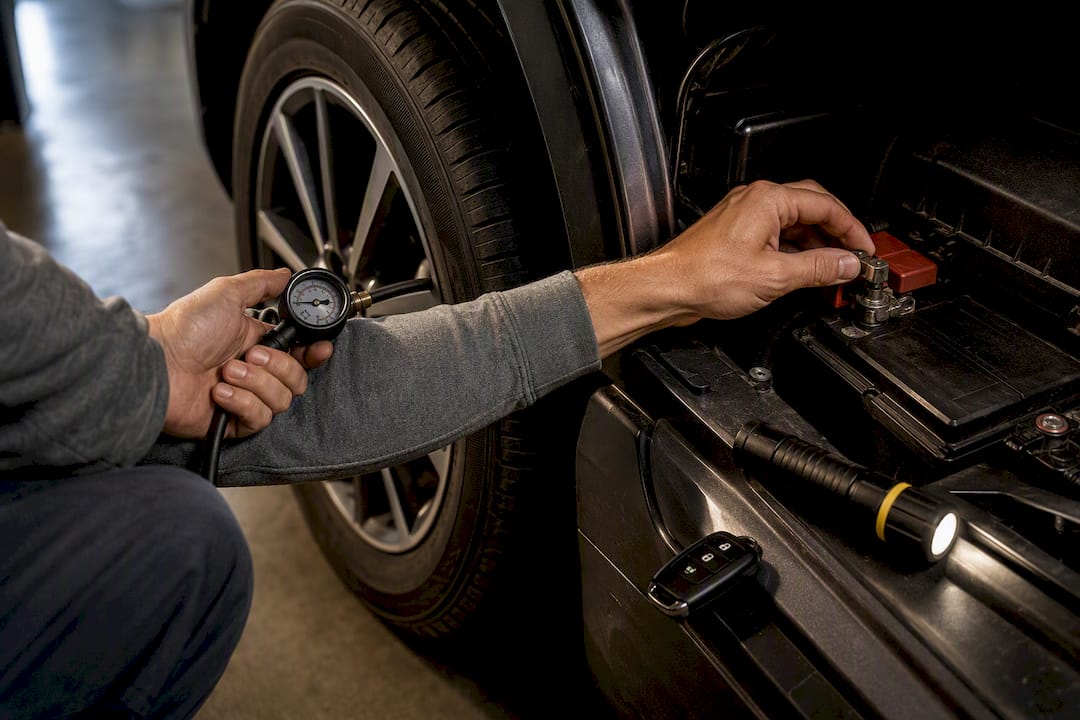
An idle car with a dash cam stuck in parking mode can drain the battery over a week-long cruise, leaving you with a dead battery on top of everything else. Storage prep matters more than most first-timers realize: disable dash-cam parking modes, check tire pressure and battery health, and avoid setting the parking brake for long outdoor storage if wheel chocks are available instead.
The fix: Do a five-minute walk-through before you lock up: dash cam off, valuables in your cabin bag instead of the glovebox, tires checked, battery terminals clean.
8. Mishandling curbside drop-off and luggage
Drop-off lanes move fast, and fumbling for documents while a line forms behind you is how people leave bags, chargers, or boarding passes behind. Keep your cruise documents, ID, and a small day bag within reach instead of buried in a suitcase.
The fix: Pack a small "curbside kit" the night before: passport or ID, boarding documents, phone charger, and any medication you'll need before luggage arrives in your cabin.
9. Assuming a reservation guarantees a spot everywhere
Not every port parking system works the same way. Many ports use entry tickets and charge on exit rather than requiring a prepaid reservation, and some cap daily cruise rates around $20 while others don't cap them at all. On-site garages are frequently first-come, first-served unless you've booked a service that guarantees the spot.
The fix: Confirm your terminal number and payment method (cash, card, app) before you arrive, and don't assume "I have a confirmation email" means the same thing at every port.
10. Skipping long-trip vehicle prep
A car sitting for a week or two needs a bit more than a locked door. Fuel left too low can cause condensation issues over time, and a battery that was already weak won't survive a cold week outdoors.
The fix: Leave at least a quarter tank of fuel, check tire pressure, and have your battery tested if it's more than three years old.
Pro Tip: Screenshot your parking confirmation, lot address, and customer service number before you leave home Wi-Fi. Cell service around some port areas is spotty, and you don't want to be searching for a lot's phone number with one bar of signal.
On-Site, Off-Site, or Park-and-Cruise Hotel: How to Choose
The right parking type depends less on price and more on your trip length, your vehicle, and how much shuttle time you're willing to tolerate.
Three rules of thumb:
- Short cruise, local drive (3 to 5 nights, under two hours from home): On-site parking usually wins on convenience even at a higher rate, since it offers the best convenience-to-value balance for short trips and skips the shuttle wait entirely.
- Longer cruise or you're flying in: Off-site or a park-and-cruise hotel package usually saves more, since the daily savings compound over more days.
- 7+ nights or you were already planning an overnight stay pre-cruise: A hotel package is often the best value, since these packages frequently bundle 7 to 14 days of parking into one rate. Always confirm which direction the shuttle runs and how many parking days are actually included.
Before booking anything, run through this checklist:
- Confirm your vehicle's height, length, and width against the lot's posted limits.
- Add up the full checkout total, including shuttle and processing fees, not just the daily rate.
- Ask how often the shuttle runs and whether there's a fee for it.
- Read the late-return and lost-ticket policy before you need it.
- Search recent reviews for shuttle and security complaints.
- Check for oversized-vehicle surcharges specifically, since these rarely appear on the main pricing page.
Off-site lots often run 20 to 40 percent cheaper than official port parking, but that gap only holds if the shuttle is reliable and there's no hidden fee eating into it.
For embarkation morning itself, arrive 30 to 45 minutes before your scheduled parking drop-off window, not your boarding time. That buffer covers slow curbside lanes, a full shuttle, or a longer walk from your assigned row than you expected.
Why Asphalt Lots Is Built Around These Exact Mistakes
Martin has spent enough time studying port parking failures to notice a pattern: nearly every complaint traces back to one of the ten mistakes above. That's the thinking behind how Asphaltlotsva structured its own facility near Norfolk.
- Guaranteed reserved spots through a VIP Unlimited Parking Membership solve the walk-up shortage problem during peak cruise weeks.
- Indoor parking removes the weather and fuel-evaporation risk that outdoor lots carry over a week-long trip.
- Round-the-clock surveillance provides a security layer that generic reviews try to help you find blindly.
- Free shuttle service with priority access for members helps reduce the return-day wait that catches many first-timers off guard.
If you want to go deeper on timing your booking or comparing parking types before you commit, Martin's planning guide on when to book cruise parking and the cruise port parking type breakdown cover both in more detail.
Parking Cancellation and Refund Policies You Should Check First
Plans change, and cruise parking policies vary widely on what happens when they do. Some lots offer full refunds up to 24 or 48 hours before your scheduled arrival, others charge a cancellation fee, and a few treat any booking within peak season as nonrefundable once confirmed.
Read the cancellation window before you pay, not after your plans shift. Look specifically for three things: how many hours or days before arrival you can cancel for a full refund, whether date changes are treated differently from cancellations, and whether the policy changes during holiday or peak-season bookings.
If your cruise itself gets rescheduled (which happens more than most first-timers expect), a flexible parking provider that lets you shift your date without a penalty is worth more than a slightly lower base rate. Screenshot the cancellation policy at the time you book, since some providers update their terms between seasons and a saved copy protects you if there's ever a dispute about what you agreed to.
What Passengers Should Know About Valet and Attended Parking
Some cruise terminals and off-site lots offer valet-style service where an attendant parks your car for you instead of you walking to a self-park space. This can genuinely save time on a tight embarkation morning, since you skip the walk from your parking spot to the terminal with luggage in tow.
The trade-off is that you lose direct control over exactly where and how your car is parked. If valet service is offered, ask whether the lot documents vehicle condition before taking the keys, since that protects both sides if a dispute comes up later. A reputable valet operation will do a quick walk-around with you present, not just wave you toward a curb.
If a lot offers both self-park and valet at similar prices, self-park generally gives you more certainty because you're the one placing the car and can photograph the exact spot yourself. Valet earns its price mainly when you're traveling with mobility challenges, small children, or heavy luggage where every extra minute of walking matters.
What to Do If Your Parking Lot Changes or Overbooks
Overbooking happens more at off-site lots than most people expect, particularly during holiday weekends when demand spikes past what a facility can actually hold. If you show up to find your reserved lot full or redirected to an overflow area, don't panic, but do act fast.
First, ask for the reservation confirmation number and get the name of whoever is handling the redirect. A legitimate lot experiencing overflow should offer you an alternative at the same rate you booked, plus transportation to the terminal that doesn't cost you extra time compared to your original plan. If the alternative adds real delay, ask for compensation or a partial refund on the spot rather than after the fact.
Second, keep your original booking confirmation and any correspondence, since that's your proof of what you were promised versus what you got. This is exactly where the documentation habit from earlier pays off twice: once for your car's condition, and once for holding a provider accountable to the terms you agreed to.
A facility that guarantees reserved spots through a membership structure, rather than general first-come availability, removes this risk almost entirely, since your spot exists before you ever pull in.
Getting the Most Out of Parking Discounts and Loyalty Programs
Frequent cruisers leave money on the table by rebooking parking at full price every single trip instead of signing up for a loyalty or membership program. Many providers offer meaningfully lower effective rates for repeat customers once you factor in the value of guaranteed availability during peak weeks.
Look for three things when comparing loyalty options: whether the discount applies to peak-season dates (some programs exclude the busiest weeks, which defeats the purpose), whether there's a minimum number of trips required to break even on a membership fee, and whether perks beyond price, like priority shuttle boarding, are included.
If you cruise more than two or three times a year, a membership model with guaranteed reserved spots tends to pay for itself through avoided walk-up premiums alone, on top of any direct discount. Casual, once-a-year cruisers usually do better with a simple prebooked reservation rather than a subscription they won't use enough to justify.
When to Pay for Convenience and When to Save
Not every parking decision needs the same answer, and the right call depends on your specific risk tolerance for a given trip. A tight flight connection on return day, a full-size SUV, or a family of five with heavy luggage all shift the math toward paying more for certainty rather than chasing the lowest daily rate.
If your return-day plans involve a flight within four hours of disembarkation, build in extra buffer beyond the standard shuttle wait, since return trips run far slower than embarkation-day shuttles. Oversized vehicles should always confirm clearance and surcharges before booking rather than after arriving and getting turned away. Larger families benefit most from on-site or guaranteed-spot parking simply because coordinating a shuttle with kids and multiple bags eats far more time than it does for a solo traveler.
For readers who want a deeper framework on timing these decisions, Martin's guide on cruise port logistics for first-timers walks through the arrival-window math in more detail.
— Martin
Book Guaranteed Parking Before You Ever Leave Home
Asphaltlotsva exists because every mistake on this list traces back to the same root problem: uncertainty. You don't know if a spot will be available, you don't know what your car will look like when you get back, and you don't know if the shuttle will show up when you need it.
Here's how Asphalt Lots addresses each one directly:
- Reserved spots through the VIP Unlimited Parking Membership mean you're never gambling on walk-up availability during peak weeks.
- Indoor parking with 24/7 surveillance removes the weather damage and theft risk that outdoor lots carry for a week or more.
- Free, priority shuttle service helps cut the return-day wait that catches many first-time cruisers off guard.
- A location near Norfolk, run by a veteran-owned team, means you're not navigating an unfamiliar off-site lot for the first time on cruise morning.
If you'd rather compare port and off-site parking economics independently before deciding, ZapCruise offers tools to weigh schedules and add-on costs across options. When you're ready to lock in a guaranteed spot instead of hoping one's available, check availability and book your parking before your cruise date fills up.
Where to Verify Port-Specific Parking Rules and Costs
Port rules, oversized-vehicle fees, and shuttle schedules change by location, so it pays to verify details directly rather than relying on secondhand summaries.
- Port Everglades parking guide: garage rates, terminal numbers, and payment methods for one of the busiest U.S. cruise ports.
- Cruise port parking guide 2026: a cost comparison across major ports, including off-site versus official rates.
- Cruise port parking mistakes breakdown: a closer look at oversized surcharges and shuttle delay data.
- How to prepare a car for storage: practical mechanical prep steps for any multi-day parking stretch.
Sources
- Cruise parking savings guide
- 5 Cruise port parking mistakes that cost you hundreds
- Cruise port parking guide 2026: costs & tips for every major port | Cruise Ship Tracker
- Port Everglades parking guide: garages, prices & shuttles
FAQ
What are the most common mistakes first-time cruise passengers make with parking?
The biggest ones are trusting an advertised daily rate without adding fees, skipping a reservation during peak season, ignoring oversized-vehicle surcharges, and not documenting the car's condition before walking away from it.
Why should I take photos of my car before leaving it at a cruise lot?
Photos and a short walk-around video give you timestamped proof of your car's condition and exact parking spot, which protects you if a damage dispute comes up later.
How early should I arrive on embarkation morning?
Arrive 30 to 45 minutes before your scheduled parking drop-off window, not your boarding time, to allow for curbside lines, shuttle waits, or a longer walk to your assigned spot.
Why does return-day shuttle timing matter so much?
Disembarkation shuttles handle far more passengers at once than embarkation shuttles, and trips that took 15 minutes on the way in can stretch to 45 to 75 minutes on the way back.
Is on-site or off-site parking better for a first cruise?
For short cruises close to home, on-site parking usually wins on convenience; for longer trips or if you're flying in, off-site or a park-and-cruise hotel package tends to save more without adding much hassle.
Does booking parking through a membership guarantee a spot?
A guaranteed-availability structure, like Asphaltlotsva's VIP Unlimited Parking Membership, reserves your spot ahead of time instead of leaving it to first-come availability, which removes the peak-season shortage risk entirely.