Shuttle-based event parking is the right call whenever a venue has limited onsite parking or heavy congestion is likely near the gates. You trade a few extra minutes on a bus for lower cost, easier exit, and less circling for a spot. The tradeoff is real: you're now on someone else's schedule, so confirm the shuttle frequency and the last-return time before you pay for anything.
TL;DR:
- Confirm the last-return time and shuttle schedule at least a day before the event to prevent missing the shuttle and being stranded.
- Reserve your parking spot in advance with a provider that publishes exact headways and clear pickup maps for better reliability.
- Expect shuttle headways to be more frequent during peak arrival and departure times, which can significantly reduce wait and transfer times.
- ADA accessible shuttles and reserved spaces are not always standard, so verify these accommodations before booking.
- Total door-to-door time, including shuttle ride and walking, outweighs proximity to the venue, especially if mobility issues or weather are considerations.
Table of Contents
- What Is Event Parking With Shuttle, and When Does It Make Sense?
- How to Find, Compare, and Reserve Shuttle Parking
- What to Expect on Event Day
- Shuttle Parking vs. On-Site or Garage Parking
- Your Event-Day Shuttle Parking Playbook
- What a Trustworthy Shuttle Parking Provider Actually Discloses
- The One Habit That Actually Matters
- Secure, Shuttle-Ready Parking for Cruise Travelers
- Sources
What Is Event Parking With Shuttle, and When Does It Make Sense?
Event parking with shuttle, often called park-and-ride, works by placing a lot or garage away from the venue and running buses or vans to ferry attendees the last mile. You park once, ride in, and ride back out without fighting venue-adjacent traffic on either end.
This setup shows up most at stadiums, music festivals, marathons, and any sold-out downtown show where the venue simply can't fit everyone's car within walking distance. It also solves a problem most drivers never think about until they're stuck in it: the exit. Federal transportation researchers have documented what they call a throttling effect, where shuttle and park-and-ride systems ease post-event gridlock by releasing traffic in controlled waves instead of dumping every car onto the same two exit roads at once.
Who actually runs these programs matters more than most attendees realize:
- Venues often manage their own official lots and shuttle fleets, publishing routes on their transportation pages.
- Cities run park-and-ride programs for large public events, sometimes tied to transit authorities.
- Private operators fill the gap for events without enough dedicated capacity, especially recurring events like cruise departures or seasonal festivals.
Knowing which one you're dealing with tells you who to call when the schedule changes.
How to Find, Compare, and Reserve Shuttle Parking
Start with the venue's own transportation page. Most major venues, including SoFi Stadium, publish pickup locations, schedules, and reservation links directly. From there, expand your search to three other sources: city-run park-and-ride portals, authorized private lots near the venue, and parking marketplaces that aggregate listings for one-off events.
Once you've found a few options, work through this before you book:
- Check the posted shuttle frequency. A lot with buses every 10 minutes beats a cheaper lot running every 30.
- Look for a pickup map. If you can't tell where the shuttle stop actually is, that's a problem you'll be solving in the dark after the event.
- Confirm the last-return time. This is the single most important number on the page, because missing it means you're arranging your own ride home.
- Ask about ADA access. Reserved accessible spaces and lift-equipped shuttles aren't universal.
- Read the cancellation policy and lock in the exact price. Some lots quote a base rate then add fees at the gate.
Cities like Orlando have moved most of this online, letting you reserve and pay for event parking in advance with a scannable pass for entry and exit. That's the standard to look for. Treat the absence of a posted schedule, vague pickup instructions, or a "pay on arrival only" policy with no capacity guarantee as a red flag. It usually means the lot hasn't thought through what happens when 400 cars show up at once.
Pro Tip: Book the lot that publishes exact headways over the one that just says "frequent shuttles." Vague scheduling language is often a sign the operator hasn't committed to a real timetable.
What to Expect on Event Day
Shuttle service for events typically ramps up well before showtime. A common pattern, used at venues like Nissan Stadium, is continuous shuttle service starting 90 minutes before kickoff, with return buses running for about an hour after the event ends—as seen in organized shuttle tours such as the Bridestowe Lavender Farm Shuttle Launceston. During peak arrival and departure windows, expect headways that are frequent; outside peak, waits may stretch longer.
A few things to plan around:
- Vehicles range from full-size buses to smaller shuttle vans, depending on lot size and event scale.
- ADA boarding usually means a designated ramp or lift-equipped vehicle and a reserved space near the front of the line, but policies vary by operator, so confirm before you arrive.
- Pricing follows common models such as a flat roundtrip shuttle fee, a rate bundled into the parking cost, a fare included in the event ticket, or free service at official city and venue lots.
Signage is often the weakest link in the whole system. Even well-organized shuttle programs can leave riders wandering a parking field looking for the pickup point, so don't count on staff or arrows to guide you. Scout the pickup location yourself as soon as you park, before the lot fills in around you and staff get pulled toward crowd control instead of directions.
Shuttle Parking vs. On-Site or Garage Parking
Shuttle lots win on a few fronts that matter more than sticker price. They're usually cheaper than venue-adjacent garages, they get you out faster because of that throttling effect on exit traffic, and monitored lots tend to offer better security than scattered street parking. There's also a real environmental upside: shared shuttle vehicles produce lower emissions per passenger than dozens of individual cars idling near the gates.
The tradeoffs are just as real:
- You add transfer time on both ends of your trip.
- You're dependent on someone else's schedule, not your own.
- Shuttle stops can get crowded right at the final headliner or the final whistle.
- Weather exposure during the wait and transfer is a genuine discomfort factor.
The smarter comparison isn't distance to the venue. It's total door-to-door time: parking industry playbooks recommend budgeting shuttle ride time on top of parking time, not treating the walk from a garage and the ride from a shuttle lot as equivalent. If you have mobility needs, you're traveling in bad weather, or you have a hard departure deadline right after the event, a garage or on-site lot is often the better call despite the higher price.
Your Event-Day Shuttle Parking Playbook
Getting shuttle-based parking right comes down to timing and having a backup plan. Here's the sequence that keeps most trips smooth:
- Reserve your spot in advance. Drive-up rates often run higher, and popular lots fill before gates even open.
- Confirm headways and last-return time again the morning of the event. Schedules occasionally shift for weather or attendance changes.
- Build your arrival buffer around the shuttle, not just the parking lot. A useful rule of thumb: add your expected shuttle ride time, plus roughly half the scheduled headway for waiting, plus 10 to 15 minutes for walking and boarding. That buffer is what separates a relaxed arrival from a sprint to the gate.
- Bring your pass in a form that works without cell signal. A screenshot or printed copy beats relying on a data connection in a crowded lot.
- Pick a specific meet-up spot for your group before you split up, near a landmark you'll recognize after dark.
- Have a backup plan for the last shuttle. If you miss it, know your rideshare pickup zone in advance rather than figuring it out in a panic.
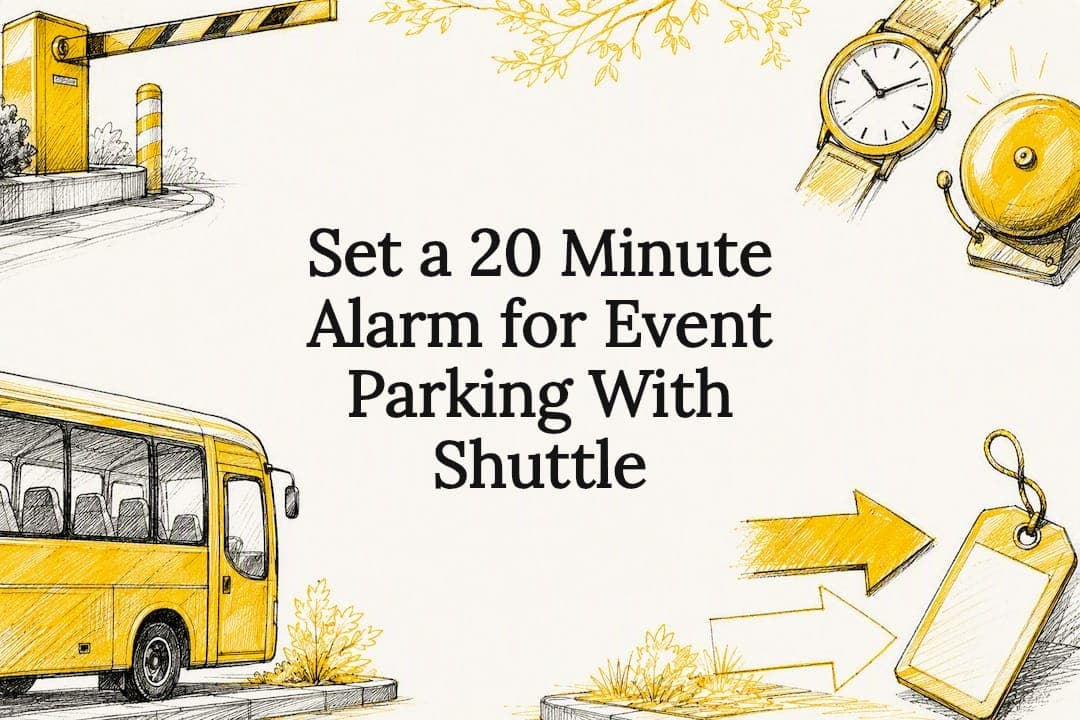
Pro Tip: Set a phone alarm for 20 minutes before the last-return time. That's usually enough buffer to walk back to the pickup point without running.
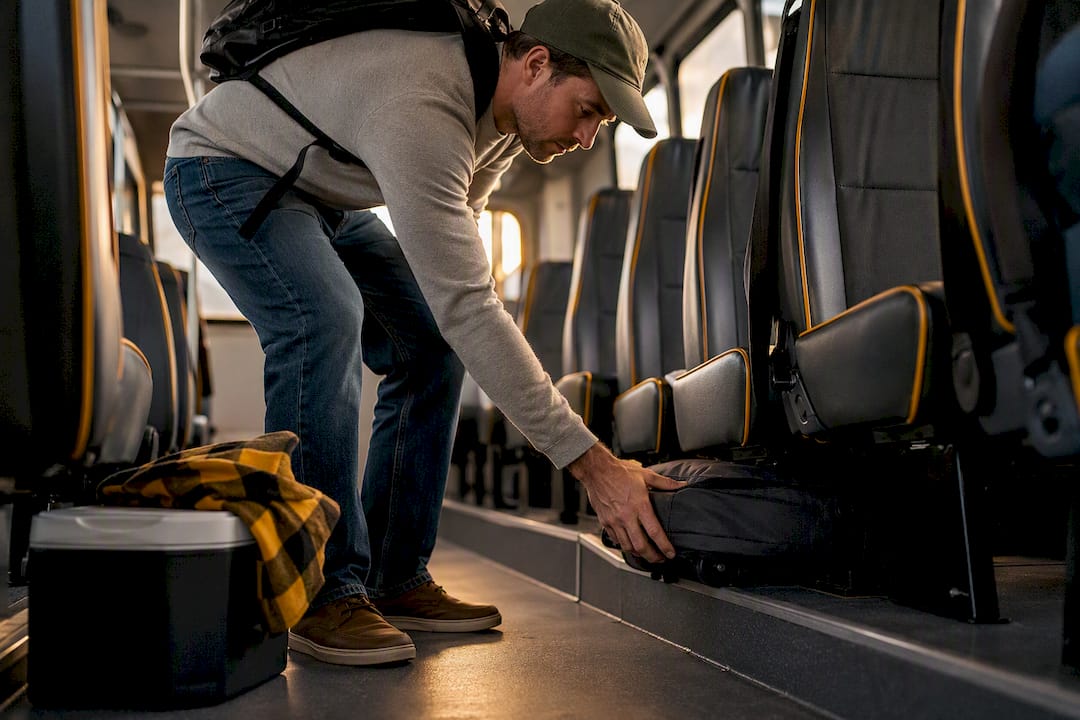
Small luggage, coolers, or gear bags are usually fine on shuttles, but oversized items can slow boarding for everyone else, so travel light when you can.
What a Trustworthy Shuttle Parking Provider Actually Discloses
The gap between a good shuttle lot and a frustrating one usually comes down to what the operator tells you upfront. Look for a provider that publishes real schedules and pricing rather than vague promises.
- Posted shuttle frequency and hours, not just "regular service."
- A pickup map showing exactly where to board and where to be dropped off.
- Reserved spot guarantees, so you're not gambling on the lot filling before you arrive.
- Clear ADA accommodations spelled out in advance.
- Transparent pricing and cancellation terms with no surprise gate fees.
Asphalt Lots, a veteran-owned facility near Norfolk, builds its cruise parking model around exactly this kind of disclosure: secure indoor parking with round-the-clock surveillance, a free shuttle to the terminal, and a VIP Unlimited Parking Membership that guarantees a reserved spot and priority shuttle service on travel days.
Reserved spots and priority shuttle access remove the two biggest sources of day-of stress: wondering if the lot will fill and wondering if you'll make the next shuttle.
That combination, a guaranteed space plus a shuttle that doesn't leave you waiting behind other travelers, is the standard every shuttle parking provider should be measured against.
The One Habit That Actually Matters
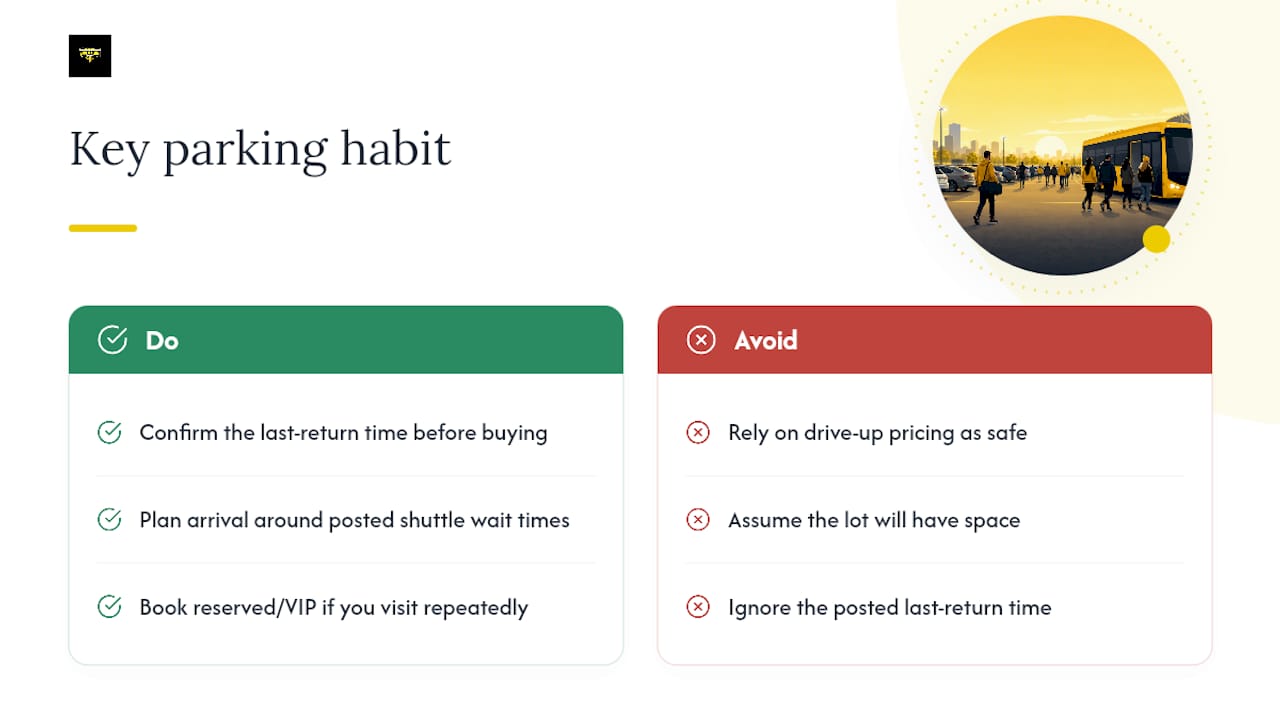
Shuttle parking is the smart pick whenever a venue's own lot can't handle the crowd, or when getting out fast after the event matters more than parking close. The whole system runs on one number: the last-return time. Confirm it before you buy, plan your arrival around the posted shuttle wait times, and treat drive-up pricing as a sign you waited too long to book.
If you travel to the same venue or port repeatedly, reserved or VIP-tier parking earns its cost fast. Guaranteed availability removes the one variable that ruins an otherwise well-planned trip: showing up to a full lot.
— Martin
Secure, Shuttle-Ready Parking for Cruise Travelers
This facility offers frequent cruisers a guaranteed parking spot instead of a gamble. The facility provides secure indoor parking, shuttle service to the cruise terminal, and long-term vehicle storage options.
One available option is a VIP Unlimited Parking Membership, which includes a reserved spot on cruise days and priority shuttle service. It's built for people who cruise often enough that guessing whether there's room left in the lot stops being an acceptable risk. Daily parking and monthly plans are also available for less frequent travelers who still want the same shuttle reliability and security.
Check availability and book your spot at Asphalt Lots before your next cruise date fills up.
Sources
- FHWA: Managing Travel for Planned Special Events (appendix discussion of throttling effect)
- Event Day Parking Playbook: Reserve, arrive, exit fast
- Parking & Transportation Guide | Nissan Stadium