Traffic near cruise ports is the single most underestimated variable in cruise travel planning. Ships depart on a fixed schedule, and they do not wait for passengers stuck in congestion. Understanding why traffic near cruise ports matters can mean the difference between boarding your ship and watching it leave without you. Port cities like Miami, Galveston, and Norfolk see massive vehicle surges on cruise days, and those surges follow predictable patterns that every traveler should know before departure day.
Why traffic near cruise ports matters for embarkation timing
Cruise port congestion is not random. It follows a predictable surge pattern tied directly to ship departure schedules. When multiple ships depart the same port on the same day, every passenger, rideshare driver, and shuttle bus converges on the same road network within a narrow time window. The result is a crowd wave that can add 30 to 90 minutes to what looks like a short drive on a map.
Carnival's 2026 PortMiami weekend alert is the clearest recent example. The port had 17 ships with heavier-than-normal traffic and issued detours requiring passengers to arrive earlier than usual. That is not an anomaly. That is what a busy multi-ship weekend looks like at any major American cruise port.
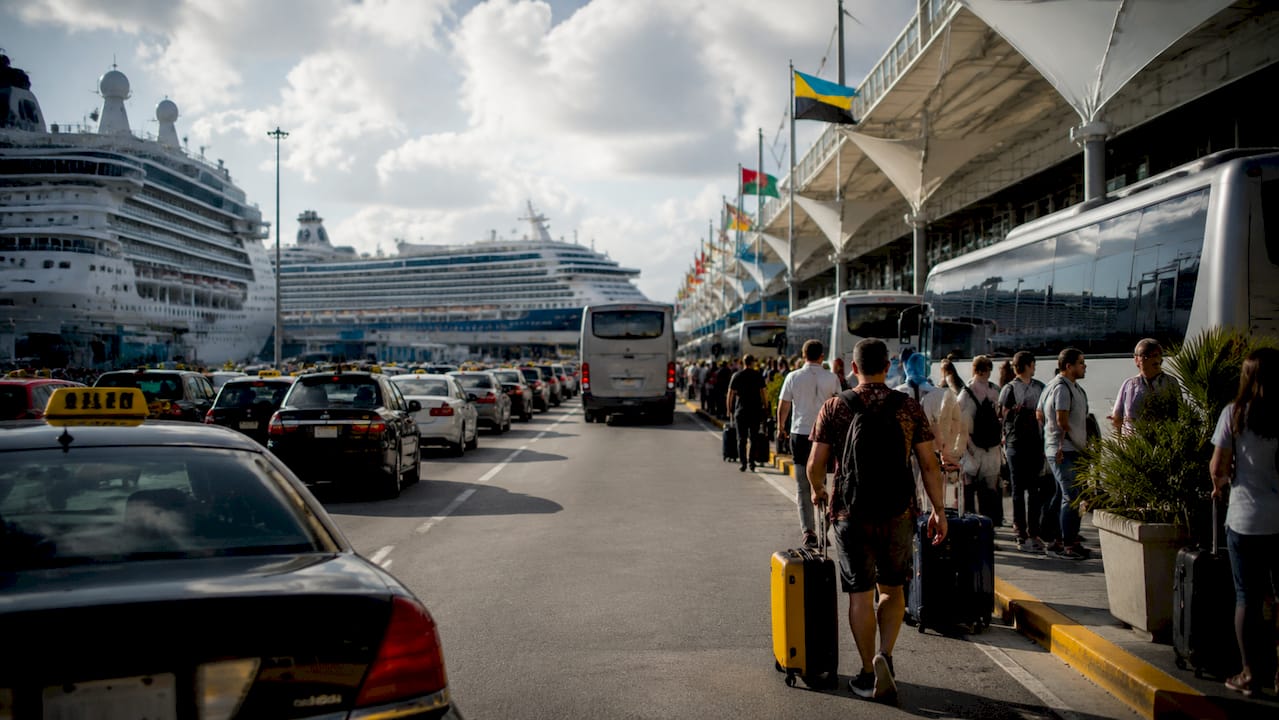
The critical detail most travelers miss: the ship's departure time is fixed. Carnival's alert confirmed that passengers must arrive early despite traffic, because the ship will not delay its departure. Missing the embarkation cutoff means missing the cruise entirely, regardless of the cause.
Pro Tip: Check your cruise line's port traffic alerts in the week before departure. Lines like Carnival publish specific detour notices when multi-ship weekends are expected. Build at least 90 extra minutes into your arrival plan on those days.
Peak traffic versus ship departures: what the numbers look like
| Port | Typical weekend ships | Traffic impact | Recommended extra arrival buffer |
|---|---|---|---|
| PortMiami | Up to 17 ships | Detours, heavy congestion | 90+ minutes |
| Port of Galveston | Multiple simultaneous | Shuttle-only access zones | 60+ minutes |
| Port of Norfolk | Moderate volume | Shuttle routes, road surges | 45+ minutes |
Ports that routinely host multiple ships simultaneously experience the most severe crowd-driven traffic effects. The more ships docked at once, the more compressed the passenger flow becomes on surrounding roads.
How port infrastructure shapes your access on cruise day
Port infrastructure directly controls how travelers reach their terminal. Construction projects, lane closures, and designated entry points mean that driving straight to the terminal door is often not an option. Travelers who assume they can drop off luggage curbside and park nearby frequently discover that the port has other plans.
The Port of Galveston is a clear example. Passengers must park and take shuttles with luggage due to construction near terminals 25 and 28. What looks like a five-minute drive becomes a shuttle-and-luggage transfer that adds meaningful time to your morning. Ports publish specific entry and exit routes to handle demand beyond what the surrounding road network can absorb.
Transit agencies make similar adjustments. GoHRT issues cruise-day transit reroutes and detour notices to help passengers navigate congestion periods around the Port of Norfolk. Bus stops move. Routes change. Travelers relying on public transit need to confirm altered stops before they leave home.
- Designated drop-off zones replace curbside terminal access at many ports during peak days.
- Shuttle workflows add 15–30 minutes to terminal access time when parking lots are located away from the pier.
- Entry and exit street assignments differ by terminal, so the route that worked last cruise may not apply this time.
- Transit reroutes affect bus and light rail stops adjacent to port areas during embarkation and disembarkation windows.
Pro Tip: Download your port's official traffic route map before cruise day. The Port of Galveston and similar ports publish updated PDFs each season. Knowing your assigned entry street eliminates the guesswork that causes last-minute detours.
Typical access protocols by port type
| Port type | Vehicle access | Shuttle required | Transit changes |
|---|---|---|---|
| High-volume urban port | Restricted drop-off zones | Often required | Frequent reroutes |
| Mid-size regional port | Designated entry lanes | Sometimes required | Occasional reroutes |
| Smaller homeport | More flexible access | Rarely required | Minimal changes |
The pattern is consistent: the larger and busier the port, the more layers of traffic management stand between you and your terminal. Planning for those layers is not optional.
What temporal overcrowding means and how it affects your day
Temporal overcrowding is the term analysts use to describe what happens when thousands of passengers arrive or depart a destination within a very short window. It is not the same as general tourist crowding. It is a concentrated surge that overwhelms roads, transit, restaurants, and local amenities within hours of a ship's arrival or departure.
A 2026 analysis describes temporal overcrowding impacting historic districts and local transport within hours of cruise arrivals. A single large ship can carry over 4,000 passengers. When those passengers disembark simultaneously and head for the same waterfront neighborhoods, taxis disappear, restaurant wait times triple, and road congestion spikes sharply.
For travelers, the practical implication is timing. Passenger traffic surges cluster around embarkation and disembarkation windows, so any shore transport or sightseeing plan should avoid those windows for a smoother experience. If your ship docks at 7:00 a.m. and 4,000 passengers all want a taxi by 8:00 a.m., you will wait.
- Avoid scheduling rideshares or taxis during the first 60–90 minutes after a large ship docks.
- Pre-book ground transportation with a confirmed pickup time rather than hailing on demand.
- If exploring the port city before embarkation, arrive before the prior ship's disembarkation surge begins.
- Shore excursions that return passengers to the port just before departure create a second surge. Build buffer time into your return.
Understanding temporal overcrowding reframes how you plan your entire cruise day, not just the drive to the terminal.
The financial and emotional cost of missing your ship
Missing a cruise departure because of traffic is not just stressful. It is expensive. Cruise bookings are largely non-refundable, and a car-service guide warns that delays can mean thousands lost in non-refundable bookings if passengers miss embarkation deadlines. Flights, hotels, and excursions booked around the cruise often carry their own cancellation penalties on top of that.
The emotional cost compounds the financial one. Cruise travel is typically a planned, anticipated event. Arriving at the port to find your ship gone is a different category of travel disruption than a delayed flight. There is no next departure in two hours.
Reliable ground transportation is the most direct way to reduce this risk. Pre-booked car services with professional drivers who know port routes and traffic patterns remove the variables that cause late arrivals. For tips on planning smooth cruise transportation, the key factors are departure time buffers, route knowledge, and confirmed pickup logistics.
- Book ground transportation at least two weeks before departure to secure experienced drivers familiar with port routes.
- Set your departure time from home based on worst-case traffic, not average drive time.
- Confirm your port's current entry routes and any active construction detours the week before you travel.
- Have a contingency plan: know the nearest hotel to your port in case an unexpected delay forces an overnight stay before catching the ship at its next port.
- Consider parking facilities with included shuttle service to eliminate the separate parking and transit steps entirely.
Pro Tip: If you are driving to the port, choose a parking facility that offers a dedicated shuttle to the terminal. This removes the parking-to-terminal leg from your personal logistics and puts it in the hands of people who run that route every cruise day.
Key Takeaways
Traffic near cruise ports directly determines whether travelers board on time, and planning around predictable congestion patterns is the most reliable way to protect a cruise investment.
| Point | Details |
|---|---|
| Ships do not wait | Fixed departure times mean traffic delays cause missed embarkations with no refund. |
| Multi-ship weekends spike congestion | Ports with 10 or more ships departing simultaneously create crowd waves lasting hours. |
| Infrastructure forces shuttle use | Construction and lane closures at ports like Galveston require shuttle transfers, adding time. |
| Temporal overcrowding affects timing | Thousands disembarking at once overwhelm local transit and roads for 60–90 minutes. |
| Early arrival is non-negotiable | Port authorities and cruise lines consistently advise arriving 90+ minutes before departure on busy days. |
What I've learned watching travelers get this wrong
Most travelers treat cruise day like a normal travel day. They check Google Maps the night before, see a 25-minute drive, and feel confident. That confidence is the problem.
Port traffic does not behave like regular city traffic. It spikes sharply at predictable times, then clears just as fast. The travelers who miss ships are almost never the ones who ignored traffic entirely. They are the ones who checked traffic at 9:00 p.m. the night before and made a plan based on that. By 10:00 a.m. the next morning, the port road looked nothing like what they expected.
The other pattern I see repeatedly: travelers who underestimate the shuttle step. They account for drive time but not for parking, waiting for a shuttle, loading luggage, riding to the terminal, and then checking in. That sequence can easily add 45 minutes to what felt like a solved problem. Ports like Galveston make the shuttle mandatory. There is no workaround.
The travelers who consistently have smooth cruise days share one habit: they plan for the worst-case version of the morning and treat anything better as a bonus. That mindset is not pessimism. It is the only rational response to a deadline that does not move.
— Martin
Asphaltlotsva: parking that removes the traffic variable
For Norfolk cruise travelers, the biggest source of cruise-day stress is not the ship. It is the combination of finding parking, navigating port roads, and getting to the terminal on time. Asphaltlotsva addresses all three in one step.
Located 15 minutes from Norfolk's cruise terminal, Asphaltlotsva provides secure indoor parking with round-the-clock surveillance and a dedicated shuttle to the pier. The VIP Unlimited Parking Membership guarantees a reserved spot on cruise days, priority shuttle service, and no last-minute scramble for availability. For travelers who cruise frequently, that guarantee eliminates the single biggest logistical variable in the entire trip. Reserve your spot at Asphaltlotsva's Norfolk cruise parking before your next departure date fills up.
FAQ
Why do ships leave without passengers stuck in traffic?
Cruise ships operate on fixed port schedules tied to maritime regulations, tidal windows, and subsequent port arrivals. Delaying departure for late passengers would cascade into schedule failures across the entire itinerary.
How early should I arrive at a cruise port on a busy weekend?
Port authorities and cruise lines consistently recommend arriving at least 90 minutes before your assigned boarding time on multi-ship weekends, and earlier when active detours are in place.
What is temporal overcrowding at cruise ports?
Temporal overcrowding occurs when thousands of passengers disembark simultaneously, overwhelming local roads, transit, and amenities within a short window after arrival.
Do I need a shuttle at every cruise port?
Not every port requires a shuttle, but ports undergoing construction or managing high passenger volumes, like the Port of Galveston, direct passengers to use shuttles from designated parking areas rather than allowing direct terminal access.
How can I check for cruise-day traffic alerts before I travel?
Check your cruise line's official website and your port authority's traffic page in the week before departure. GoHRT publishes cruise-day reroutes for the Norfolk area, and PortMiami issues specific detour notices for high-volume weekends.