
Cruise parking anxiety is the single biggest logistical fear first-time cruisers report before embarkation day. The worry is grounded in real problems: limited spaces, unpredictable costs, vehicle security concerns, and the kind of transport layering failure that turns a simple parking task into a stressful ordeal. Ports like Port Canaveral and Long Beach routinely face demand that outstrips supply, especially on multi-ship days. Understanding why first cruisers worry about parking, and what actually solves it, puts you in control before you ever leave your driveway.
Why first cruisers worry about parking at cruise ports
Parking anxiety for first-time cruisers comes from one core problem: uncertainty. You do not know if a spot will be available, how much it will cost, or whether your car will be safe for seven or more days. That uncertainty compounds quickly on embarkation day when you add port traffic, large crowds, and unfamiliar roads to the mix.
The compounded stress of port arrival is what experts call "transport layering failure." It describes what happens when traffic congestion, passenger volume, and unexpected events all hit at once. For a first-timer who has never driven to a cruise terminal before, this is genuinely disorienting. Veteran cruisers know to expect it. First-timers do not.
Cost uncertainty adds another layer. Most first-time cruisers budget for the cruise fare, excursions, and meals. Parking fees rarely make the list until the last minute. When they discover that Port Canaveral charges around $20 per day plus tax, billed for both embarkation and disembarkation days, the total can reach $160–$180 or more for a seven-night cruise. That surprise stings.
What are the main parking options at cruise ports?
First-time cruisers face three primary choices: official on-site port parking, off-site private lots with shuttle service, and rideshare or drop-off arrangements. Each has a different risk and reward profile.
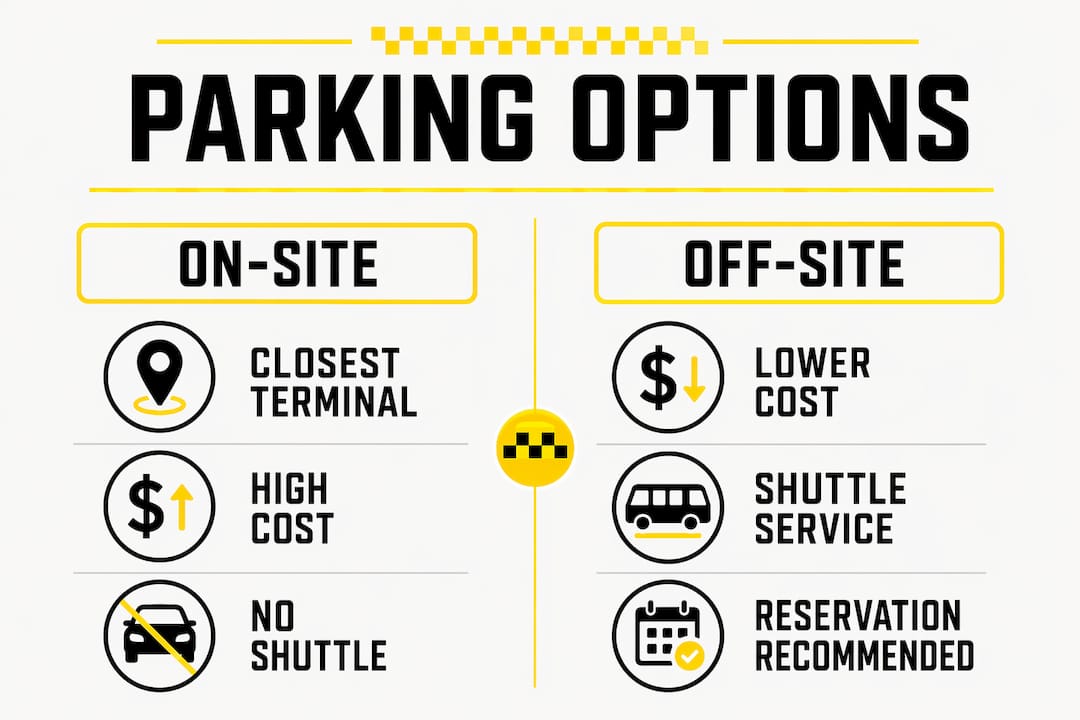
Official on-site parking places your car closest to the terminal. The convenience is real. The drawbacks are cost and availability. Most port garages do not accept reservations, which means you arrive and hope a space is open. At Long Beach, the terminal garage holds 1,450 spaces but serves thousands of passengers on multi-ship days. Carnival has explicitly warned guests not to assume parking will be available.
Off-site private lots typically cost less and many accept advance reservations. The trade-off is a shuttle ride to the terminal. That shuttle adds 10–20 minutes under normal conditions, and up to an hour during peak embarkation days when overflow lots miles from the terminal fill up fast. The key advantage is certainty. A reserved spot at an off-site lot beats an unreserved spot at an on-site garage every time.
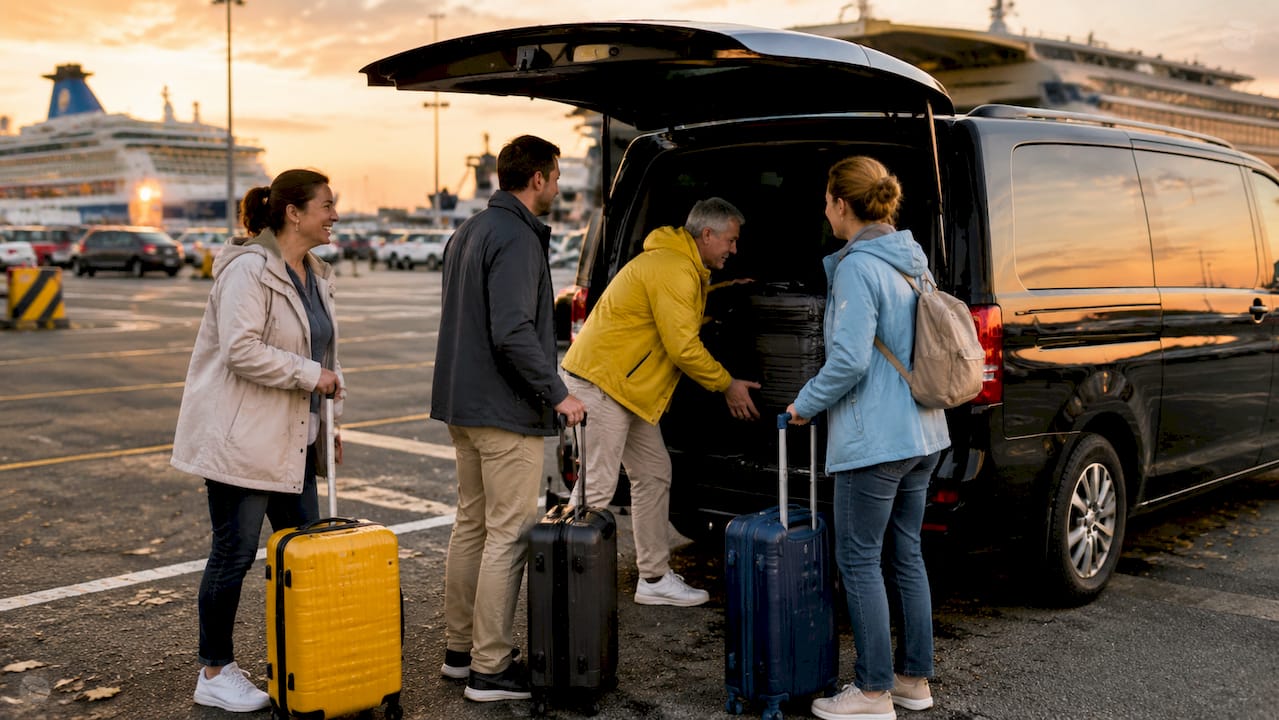
Rideshare and drop-off eliminates the parking problem entirely but introduces a different one: you need a reliable ride back on disembarkation day, often at an early hour with luggage.
| Option | Avg. Daily Cost | Reservation Available | Security Level | Shuttle Needed |
|---|---|---|---|---|
| On-site port garage | ~$20 plus tax | Rarely | Monitored | No |
| Off-site private lot | $10–$18 | Yes | Varies | Yes |
| Rideshare/drop-off | Variable | N/A | N/A | No |
Pro Tip: Veteran cruisers consistently choose off-site lots with reservations over on-site garages without guarantees. Certainty beats proximity when you are leaving your car for a week.
How does parking availability affect your embarkation day?
Parking scarcity is not a rare edge case. It is a documented, recurring problem at major cruise ports. Long Beach's 1,450-space garage faces demand from up to 7,000 passengers on days when multiple ships depart simultaneously. The math does not work. Overflow parking becomes mandatory for hundreds of guests, not a backup plan.
The downstream effects of overflow parking are significant:
- Shuttle wait times of 30–60 minutes are common during peak hours
- Overflow lots may be located miles from the terminal entrance
- Arriving late to the terminal can mean missing your embarkation window
- Stress from parking delays carries into the first hours of your cruise
Experienced cruisers plan a buffer of 1–2 hours beyond their embarkation window specifically to absorb these delays. That is not pessimism. That is experience talking.
Port traffic compounds the problem. Urban ports like Long Beach sit inside dense city grids. A fender bender or a road closure can add 20–30 minutes to your drive time with no warning. First-time cruisers who plan to arrive exactly at their embarkation window leave themselves no margin for error.
Pro Tip: Treat your port arrival like an airport departure. Add a 90-minute buffer beyond your embarkation window. You will either use it or spend it relaxed at the terminal.
Is your car actually safe in a cruise port parking lot?
Vehicle security is one of the most common first cruise parking worries, and it is also one of the most overstated. Official port parking areas are monitored facilities. Port Canaveral, Long Beach, and most major terminals use security measures in monitored lots that include cameras, regular patrols, and controlled access. Theft and vandalism do happen, but they are not common in well-run port facilities.
The real security risk comes from complacency. Leaving valuables visible in your car, parking in an unmonitored overflow lot, or choosing the cheapest off-site option without checking its security credentials are the actual vulnerabilities. The lot matters more than the location.
"Pre-booked spots in monitored private lots provide the same peace of mind as on-site parking, often at a lower cost and with the added benefit of a guaranteed space." — Cruise Port Parking Guide
Private off-site lots that offer 24-hour surveillance and indoor storage actually exceed the security level of many open-air port garages. Indoor parking protects your vehicle from weather damage, a concern that open-air lots cannot address. For a week-long cruise, that distinction is worth considering.
Here is what to look for when evaluating any parking facility:
- 24-hour camera surveillance covering all entry and exit points
- Controlled access with gated entry
- On-site staff or security personnel
- Indoor or covered parking options
- Clear reservation confirmation with contact information
What practical steps reduce cruise parking anxiety?
The most effective way to reduce parking stress is to remove uncertainty before embarkation day. Every step below targets a specific source of anxiety.
-
Reserve your parking spot in advance. Pre-booking guaranteed parking is the single most effective way to reduce embarkation day stress. Do this at the same time you book your cruise, not the week before departure.
-
Check your vehicle's dimensions against port garage restrictions. Large trucks and vehicles with roof boxes are frequently denied entry to port garages due to height restrictions. Discovering this in the parking line on embarkation day is a genuine crisis. Check the garage specifications when you book.
-
Arrive 30–45 minutes before your embarkation window. Arriving early accounts for shuttle wait times, security queues, and port traffic. This is the minimum buffer. Add more if you are traveling during peak season or a holiday weekend.
-
Confirm shuttle schedules before you arrive. Off-site lots run shuttles on fixed intervals. Know the schedule so you are not standing in a lot wondering when the next bus leaves.
-
Budget parking costs into your total trip expense. Use a cruise expense breakdown to account for parking fees before you finalize your budget. Surprises on embarkation day are avoidable.
Pro Tip: Pack your parking confirmation, shuttle schedule, and lot address in a printed document. Cell service near busy port areas can be unreliable, and you do not want to be searching your email in a parking lot.
How should you budget for cruise port parking costs?
Parking costs are a predictable expense that first-time cruisers consistently underestimate. The billing structure at ports like Port Canaveral makes this worse. A seven-night cruise billed for eight parking days at $20 per day plus tax totals approximately $160–$180. Most cruisers do not account for the disembarkation day charge.
| Port | On-Site Daily Rate | Off-Site Daily Rate | Notes |
|---|---|---|---|
| Port Canaveral | ~$20 plus tax | $10–$15 | Billed for both departure and return days |
| Long Beach | ~$20 plus tax | $12–$18 | Overflow risk on multi-ship days |
| Norfolk | ~$18 plus tax | $10–$14 | Indoor options available nearby |
Off-site lots consistently run $5–$10 per day cheaper than on-site garages. On a seven-night cruise, that difference adds up to $35–$70 in savings, enough to cover a shore excursion. The value of certainty over proximity is why experienced cruisers favor reserved off-site lots even when on-site spaces are available.
Cruise lines place parking responsibility on passengers, not on the port. If you arrive and the garage is full, the cruise line will not hold the ship. Budget for parking early and book it the same day you book your cruise.
Key takeaways
Pre-booking a reserved parking spot is the single most effective action a first-time cruiser can take to eliminate embarkation day parking stress.
| Point | Details |
|---|---|
| Book parking early | Reserve your spot the same day you book your cruise to guarantee availability. |
| Budget for extra days | Port billing includes both embarkation and disembarkation days, adding one full day to your total cost. |
| Arrive with buffer time | Plan to arrive 90 minutes before your embarkation window to absorb traffic and shuttle delays. |
| Check vehicle dimensions | Confirm your vehicle meets port garage height restrictions before embarkation day. |
| Prioritize monitored lots | Choose facilities with 24-hour surveillance and controlled access over the cheapest available option. |
What i've learned after watching hundreds of first-timers stress over parking
I have seen the same pattern repeat itself more times than I can count. A first-time cruiser does everything right: books the cruise early, packs perfectly, plans the excursions. Then they leave parking until the last week and show up on embarkation day hoping for the best. It almost never goes smoothly.
The anxiety around cruise parking is not irrational. It comes from a real information gap. Nobody tells you that Port Canaveral bills you for the day you return. Nobody warns you that Long Beach's garage fills up before 9 a.m. on multi-ship days. You find out when you are already in the parking line with your family in the car and a ship that will not wait.
My honest advice: treat parking like a ticket, not an afterthought. The best parking options for cruises are the ones you book in advance, not the ones you find on the day. Indoor, monitored, reserved parking with a reliable shuttle is not a luxury. It is the baseline for a stress-free start to your trip.
The cruisers I see arrive relaxed are the ones who solved parking weeks before departure. They know exactly where they are going, what the shuttle schedule is, and what their car is protected by. That peace of mind carries into the entire trip. Start there.
— Martin
Start your cruise without the parking stress
First-time cruisers near Norfolk have a straightforward solution for every parking concern covered in this article. Asphaltlotsva is a veteran-owned facility located just 15 minutes from the Norfolk cruise terminal, offering secure indoor parking with round-the-clock surveillance and a free shuttle to the terminal.
The VIP Unlimited Parking Membership guarantees your reserved spot on cruise days, so availability is never a question. Priority shuttle service means you are not waiting in a lot when you should be boarding. Asphaltlotsva handles the parking and shuttle logistics so your embarkation day starts exactly the way your cruise should: without stress. Book your spot at Asphaltlotsva before your cruise date fills the calendar.
FAQ
Why do first-time cruisers worry about parking so much?
First-time cruisers face genuine uncertainty about availability, cost, and vehicle security at busy ports. The combination of unfamiliar roads, port traffic, and no guaranteed spot creates anxiety that experienced cruisers have already learned to plan around.
How much does cruise port parking typically cost?
Most major cruise ports charge around $20 per day plus tax for on-site parking. A seven-night cruise at Port Canaveral is billed for eight days, bringing the total to approximately $160–$180 or more.
What is the best way to find cruise parking in advance?
Reserve a spot at an off-site private lot with shuttle service at the same time you book your cruise. Guaranteed reserved parking reduces embarkation day stress more than any other single action.
Is it safe to leave your car at a cruise port for a week?
Official port lots and reputable private facilities use monitored security with cameras and controlled access. Indoor private lots often provide stronger protection than open-air port garages, especially against weather damage.
What should i do if my vehicle is too large for the port garage?
Check the port garage's height and dimension restrictions before embarkation day. Large vehicles with roof boxes are frequently denied entry, so confirm your vehicle qualifies and book an alternative lot in advance if it does not.