
Full-service parking is defined as comprehensive vehicle management where professional staff, digital infrastructure, facility maintenance, and security surveillance work together to protect your car from drop-off to retrieval. For cruise travelers leaving their vehicles for days or weeks, understanding what does full-service parking include is the difference between a relaxed vacation and a stressful one. The industry term for this model is "full-service parking management," and it covers 100% of operational functions including staffing, technology, maintenance, and insurance. This is not a simple lot with a gate. It is a hospitality-grade service built around your peace of mind.
What does full-service parking include operationally?
Full-service parking management covers every step of the vehicle's journey from the moment you pull in to the moment you drive away. The process is structured, documented, and staffed by trained attendants who follow a defined protocol.
Here is what the operational process looks like at a reputable facility:
- Vehicle receipt and inspection: An attendant greets you, walks around the car, and notes any existing damage on a condition report before touching the keys.
- Claim ticket issuance: You receive a numbered or barcoded ticket. Physical tickets remain the standard contract of custody, meaning that ticket is your legal proof of ownership during the stay.
- Key storage: Keys go into locked cabinets or a secured key management system. Podiums typically secure 100–300 keys during active operations, so organization is critical.
- Monitored parking: Your vehicle is parked in a designated, surveilled area, not just wherever space opens up.
- Digital infrastructure: License plate recognition (LPR) cameras, AI security systems, and digital payment integration are standard features at full-service facilities.
- Facility maintenance: Lot sweeping, snow removal, lighting upkeep, and signage maintenance are all included. These are not optional add-ons.
- Insurance coverage: Reputable providers bundle general liability and garage keeper's insurance into the service quote, protecting both you and the operator from financial loss due to damage or theft.
Pro Tip: Ask your parking provider to show you their key storage system before you hand over your keys. A locked cabinet with numbered hooks is a good sign. A bowl on a desk is not.
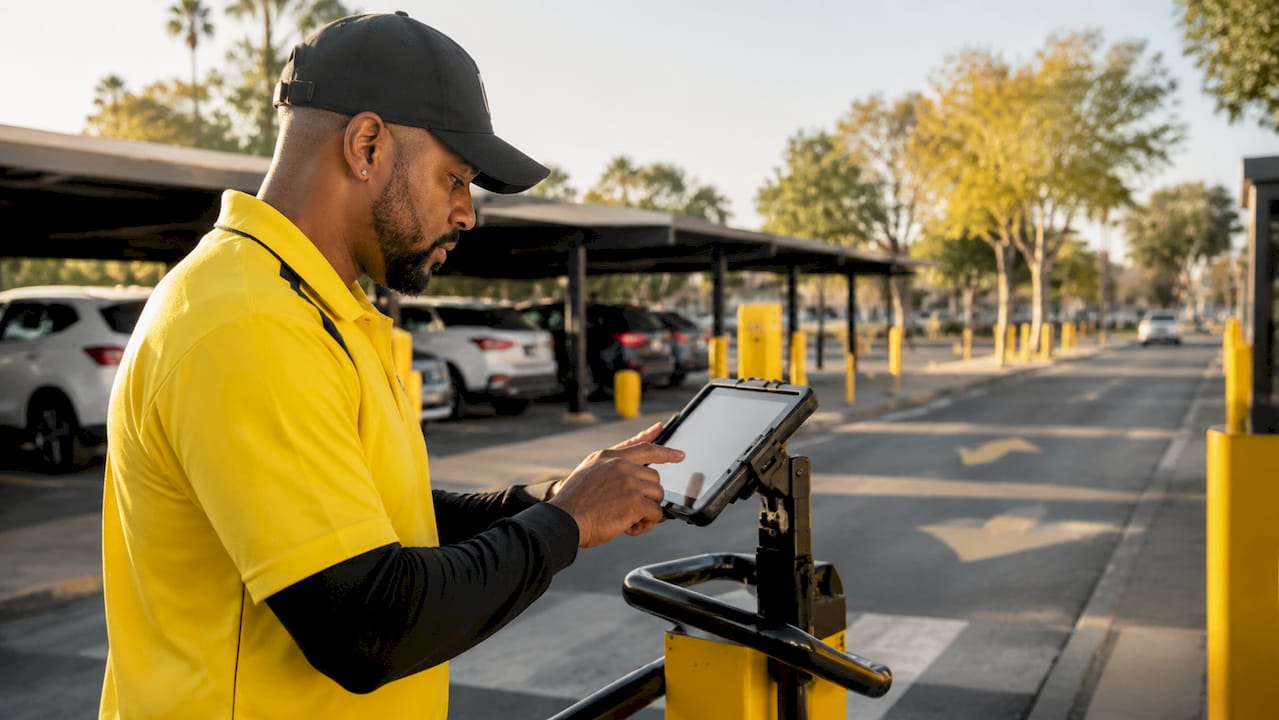
The technology layer matters more than most travelers realize. AI surveillance does not just record. It flags anomalies in real time, alerting staff to unauthorized access or unusual activity around vehicles. LPR cameras log every entry and exit automatically, creating a digital record that supports dispute resolution if anything goes wrong.
How does full-service parking protect your vehicle and your sanity?
Security is the core promise of full-service parking, and it is delivered through multiple overlapping systems rather than a single measure.
Comprehensive security measures at full-service facilities typically include AI surveillance, perimeter lighting, enforcement staff, and written policies that govern unauthorized access. Enforcement staff do more than watch. They conduct patrols, issue citations to unauthorized vehicles, and coordinate towing when necessary. That active presence is what separates a managed lot from an unattended one.
The full-service parking benefits for cruise travelers specifically include:
- Eliminated self-parking stress: No circling for spots, no worrying about tight spaces, no returning to find your car boxed in.
- Controlled vehicle movement: If the facility uses stack parking, your vehicle may be moved during your trip. This is normal and safe. Staff track every move with the claim ticket system.
- Unauthorized access prevention: Trained attendants recognize who belongs in the facility and who does not.
- Clear retrieval process: When you return from your cruise, you present your ticket, and your vehicle is brought to you. No hunting through a lot after a long voyage.
Pro Tip: Keep your claim ticket in your carry-on bag, not your checked luggage. Losing a ticket causes delays requiring additional ID verification, which is the last thing you want after disembarking.
Full-service parking is also considered a hospitality-grade experience, and that framing matters. Industry experts describe parking as the first and last impression at travel hubs. A well-run facility sets the tone for your entire trip and closes it on a positive note.
Full-service vs. self-parking: which makes sense for cruise travelers?
The differences between full-service and self-parking go beyond convenience. They affect security, cost transparency, and the overall experience of leaving your vehicle for an extended period.
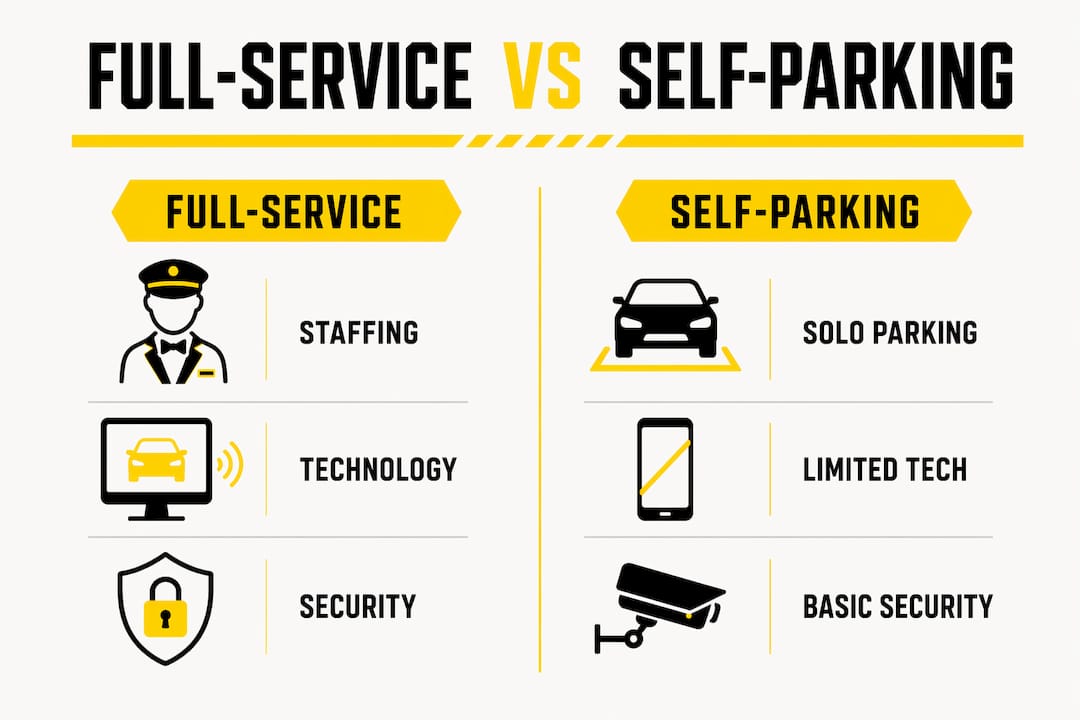
| Feature | Full-Service Parking | Self-Parking |
|---|---|---|
| Staffing | Professional attendants on-site | No attendant present |
| Vehicle inspection | Documented at arrival | None |
| Security | AI surveillance, enforcement patrols | Basic cameras, if any |
| Insurance | Bundled into service fee | None provided |
| Pricing transparency | Single inclusive fee | Often adds technology or access fees |
| Shuttle integration | Frequently included | Rarely included |
| Capacity management | Stack parking adds 25%–50% more spaces | Fixed capacity only |
Stack parking systems can increase a facility's capacity by 25%–50%, which matters during peak cruise seasons when demand spikes. That extra capacity means you are far less likely to arrive and find the lot full.
Pricing transparency is where many travelers get caught off guard. Full-service pricing should include staffing, technology, maintenance, and insurance in a single fee with no hidden charges. Some operators advertise low base rates and then add separate technology fees, insurance surcharges, or access charges at checkout. Always ask for an all-in quote before booking.
For cruise travelers specifically, the long-term storage element changes the calculus entirely. A self-parking lot with no attendant and no insurance is a real risk over seven or fourteen days. A full-service facility with documented inspection, surveillance, and bundled insurance is a different product entirely.
How to choose the right full-service parking provider before your cruise
Picking the right facility takes about fifteen minutes of research and can save you significant stress. Here is what to check before you commit.
- Verify insurance coverage. Ask specifically whether the quote includes garage keeper's liability and general liability. Industry-standard contracts differentiate between these two types. Garage keeper's liability covers damage to your vehicle while it is in their care. General liability covers broader incidents on the property.
- Request an all-in price. Ask the provider to confirm that staffing, technology, maintenance, and insurance are all included. If they hesitate or start listing add-ons, that is a red flag.
- Ask about vehicle movement policies. If the facility uses stack parking, confirm that every move is logged and tied to your claim ticket. This is standard practice at reputable facilities.
- Check for shuttle service. Full-service facilities near cruise terminals often include shuttle transportation to and from the port. This eliminates the cost and hassle of a separate rideshare.
- Inspect the technology. LPR cameras, digital payment systems, and AI monitoring are markers of a professionally managed facility. Ask what surveillance tools they use.
- Prepare your vehicle. Remove valuables, note your fuel level, and prepare your car properly before drop-off. A clean, documented handoff protects both you and the attendant.
- Guard your claim ticket. Treat it like a boarding pass. Losing it complicates retrieval and can delay your departure from the port.
The best facilities make this process feel effortless. You pull in, hand over your keys with confidence, and walk away knowing exactly what is covered and who is responsible.
Key takeaways
Full-service parking management is the most reliable vehicle storage option for cruise travelers because it combines professional staffing, documented security, and transparent pricing into a single, accountable service.
| Point | Details |
|---|---|
| Operational coverage | Full-service includes staffing, technology, maintenance, insurance, and surveillance in one package. |
| Claim ticket importance | Your physical ticket is the legal contract of custody; guard it like a boarding pass. |
| Security layers | AI surveillance, enforcement patrols, and access control work together to protect your vehicle. |
| Pricing transparency | Always request an all-in quote that covers staffing, technology, and insurance with no add-ons. |
| Capacity advantage | Stack parking systems can increase facility capacity by 25%–50% during peak cruise season. |
Why full-service parking changed how i think about travel logistics
I have spoken with hundreds of travelers over the years, and the ones who regret their parking choice almost always made the same mistake. They booked the cheapest lot they could find near the port and assumed all parking was roughly the same. It is not.
The difference between a managed, full-service facility and an unattended lot is not just about amenities. It is about accountability. When a professional attendant inspects your vehicle, issues a claim ticket, and stores your keys in a locked system, there is a clear chain of custody. If something goes wrong, there is documentation, insurance, and a responsible party. In an unattended lot, there is none of that.
What surprises most travelers is how much the hospitality framing matters in practice. A good full-service facility treats your arrival like a hotel check-in. Staff are present, the process is clear, and you leave feeling confident rather than anxious. That confidence carries into your cruise. You are not mentally checking on your car from the ship.
The misconception I hear most often is that full-service parking is only worth it for luxury travelers or short trips. The opposite is true. The longer you leave your vehicle, the more valuable the insurance, surveillance, and documented inspection become. A two-week cruise is exactly the scenario where full-service parking earns its cost back in peace of mind alone.
My honest advice: treat parking as part of your travel budget, not an afterthought. Book a facility that gives you a written quote, shows you their security setup, and has a clear process for vehicle retrieval. You will thank yourself when you step off the ship.
— Martin
Secure your vehicle with Asphaltlotsva before your next cruise
Cruise travelers departing from Norfolk have a purpose-built option that checks every full-service box.
Asphaltlotsva is a veteran-owned facility located just 15 minutes from the Norfolk cruise terminal. It offers secure indoor parking with round-the-clock surveillance, professional staffing, and a free shuttle to the port. Pricing is fully transparent with no hidden technology or insurance fees added at checkout. The VIP Unlimited Parking Membership guarantees a reserved spot on cruise days, priority shuttle service, and exclusive perks for frequent cruisers. If you want full-service parking that actually delivers on its promise, Asphaltlotsva is the facility to book before your next departure.
FAQ
What is included in full-service parking?
Full-service parking includes professional staffing, vehicle inspection at arrival, claim ticket issuance, secured key storage, AI surveillance, facility maintenance, and bundled insurance coverage. These components together create a documented, accountable vehicle storage experience.
How does valet parking work at a cruise facility?
An attendant receives your vehicle, documents its condition, issues a numbered claim ticket, stores your keys securely, and parks the car in a monitored area. When you return, you present your ticket and the attendant retrieves your vehicle.
Is full-service parking more expensive than self-parking?
Full-service parking typically costs more upfront, but transparent providers bundle all costs into a single fee. Self-parking lots often add technology, access, or insurance fees separately, which can close the price gap significantly.
What happens if i lose my parking claim ticket?
Losing your ticket requires additional ID verification and proof of vehicle ownership before retrieval, which can cause delays. Keep your ticket in your carry-on bag throughout your cruise to avoid this situation.
Do full-service facilities move your vehicle during your trip?
Yes, facilities using stack parking may move your vehicle multiple times during your stay. This is a standard practice that maximizes capacity and is tracked through the claim ticket system to maintain vehicle safety and accountability.