For cruise travelers and service members with oversized vehicles, the safest practical option near Norfolk is secure indoor reserved parking with guaranteed shuttle service. Asphalt Lots' VIP plans deliver exactly that. If you're leaving a truck, van, or trailer behind for a week or a nine-month deployment, reserve your spot in advance and confirm the facility can handle your vehicle's dimensions before you drive up.
TL;DR:
- Indoor reserved parking offers guaranteed space and better security, especially for vehicles longer than a standard truck or trailer.
- Booking your spot in advance is essential during peak seasons to avoid sellouts, with memberships providing priority and guaranteed availability.
- Confirm vehicle dimensions beforehand with the facility to prevent surprises, particularly for large trailers or RVs that may not fit standard stalls.
- Comprehensive insurance coverage is recommended for long-term storage because it protects against theft, vandalism, and weather damage during extended absences.
- Reviews indicate indoor, staffed lots with 24/7 surveillance greatly improve the parking experience compared to open surface lots with uncertain security.
Table of Contents
- What Are Your Parking Options for Oversized Vehicles Near Norfolk?
- How Do You Choose and Book the Right Parking Spot?
- How Should You Prepare an Oversized Vehicle for Long-Term Storage?
- What Does Oversized Vehicle Parking Cost, and When Should You Book It?
- Do You Need Insurance for a Parked Oversized Vehicle?
- What Do Norfolk Parking Customers Actually Say About Their Experience?
- Why Reserved Indoor Storage Is the Right Call for Oversized Vehicles
- Reserve Your Spot With Asphalt Lots Before Your Next Sailing
- Sources
- FAQ
What Are Your Parking Options for Oversized Vehicles Near Norfolk?
Norfolk cruisers and deploying service members generally choose from three setups, and each one trades convenience for cost or security in a different way.
Official port parking at Cedar Grove sits about 1.5 miles from the terminal, runs $15 per day for a standard vehicle, and includes luggage check-in and ADA-accessible shuttles. It's the shortest walk to convenience. The catch: it's an open surface lot built for typical passenger cars, not for trucks, trailers, or anything with dimensions that push past a standard parking stall. Ports like PortMiami do carve out designated oversized vehicle spaces in some cases, but availability isn't guaranteed and Norfolk's own port-area lots follow a similar first-come model.
Off-site private lots typically cost less. Cruise parking guides put the savings at 20 to 40 percent versus official port rates, and many bundle in a shuttle ride. The trade-off is that quality varies widely. Some lots are fenced and covered; others are gravel with a chain-link fence and no attendant after dark. You're trusting a stranger's security setup for however long you're gone.
Dedicated indoor storage with reserved spots is the option built for exactly this problem. Instead of hoping a lot has room for your oversized vehicle when you arrive, you book the space ahead of time, park indoors, and get a shuttle straight to the terminal.
- Choose on-site port parking if you want the shortest possible walk and you're only gone a few days.
- Choose an off-site lot if saving money matters and you've personally verified its security setup.
- Choose indoor reserved storage if you're gone for a week-long cruise, a full deployment, or you simply don't want to gamble on availability.
How Do You Choose and Book the Right Parking Spot?
Run through this checklist before you commit to any lot, official or private:
- Check the security setup. Ask directly whether the facility is indoor, fenced, or covered by 24/7 video surveillance, and whether staff are on-site around the clock.
- Confirm the reservation is guaranteed. A "reserved spot" that isn't actually held for you on cruise day isn't reserved. Look for a membership or booking system that promises availability, not a waitlist.
- Ask about shuttle logistics. Find out shuttle frequency, whether the vehicle can handle luggage for a full family or unit, and how terminal drop-off actually works on a busy sailing day.
- Read the reservation terms. Cancellation policy, any vehicle dimension limits, and what identification or proof of ownership you'll need at check-in.
- Document everything before you leave the vehicle. Photograph all sides, note the mileage, and get written confirmation of your parking spot or row/space number in case of any dispute later.
Pro Tip: Call ahead and describe your vehicle's exact length and height, even if the website says "oversized vehicles welcome." A facility built for pickup trucks may not have room for a full-size travel trailer, and finding that out in the driveway on sailing morning is not a fun conversation.
For a side-by-side look at what official, off-site, and hotel-package parking each actually include, this guide to cruise port parking types breaks it down further.
How Should You Prepare an Oversized Vehicle for Long-Term Storage?
Vehicles sitting still for weeks or months develop problems that active driving prevents. A little prep work before you hand over the keys saves you a dead battery or a flat spot on move-in day back.
Battery: AAA recommends testing the battery before storage and either using a trickle charger or disconnecting it entirely for anything longer than a few weeks. A deployment-length stay practically demands one of the two.
Tires: Add a few extra pounds of pressure above the recommended level. Sitting in one spot for months causes flat spots that regular driving pressure won't prevent.
Fuel: Keep the tank at least half full. A low tank invites moisture buildup inside the fuel system, which causes headaches you won't discover until you're trying to leave port.
Documentation: Photograph all four sides of the vehicle and the odometer reading before you walk away. Remove any visible GPS units, toll transponders, or valuables from the cabin.
Pest prevention: Clear out food wrappers and crumbs. For extended indoor storage, some technicians even recommend a piece of steel wool in the tailpipe opening to block rodents from finding a way in through the exhaust.

Travel experts note that cruisers increasingly weigh peace-of-mind features like 24/7 surveillance and guaranteed spots more heavily than a dollar or two in daily savings, and that shift shows up clearly once you've been burned once by an unattended lot.
What Does Oversized Vehicle Parking Cost, and When Should You Book It?
Official port rates give you a clean benchmark: Cedar Grove charges $15 per day for a standard vehicle, though oversized vehicles may not fit the lot's standard stalls at all. Off-site lots typically undercut that by 20 to 40 percent, though the exact savings depend on the lot and how far ahead you book.
Timing matters more than most travelers expect:
- Peak cruise season and deployment rotations both create demand spikes, and lots fill up fast during those windows.
- A membership or standing reservation acts as a hedge against sellouts, since you're not competing with everyone else booking the same week.
- Build in extra time for shuttle pickup when you're driving something oversized. Load and unload simply take longer with a larger vehicle, especially with families and luggage in tow.
- Prepaying online and keeping a documented confirmation protects you if there's ever a dispute about your reservation.
If you're mapping out a trip on a budget, this Norfolk cruise parking checklist walks through the timing and cost trade-offs in more detail.
Do You Need Insurance for a Parked Oversized Vehicle?
Your standard auto insurance policy typically stays active whether the vehicle is parked at home, at a private lot, or in indoor storage, as long as you keep the policy current and don't let it lapse during a long deployment or extended trip. Comprehensive coverage, specifically, is what protects you against theft, vandalism, fire, or weather damage while the vehicle sits unattended for weeks or months.
If you're carrying only liability coverage, a parked vehicle has no protection against theft or damage at all. That's worth reconsidering before a multi-week cruise or a deployment, since liability-only coverage exists to protect other people and property, not your own vehicle.
Ask your insurer two specific questions before you leave the vehicle anywhere: does coverage change based on where the vehicle is stored, and does a facility's own security measures (fencing, indoor storage, surveillance) ever qualify you for a discount. Some insurers offer reduced premiums for vehicles stored in monitored, covered facilities rather than left on the street or in an open lot, since the claim risk drops accordingly.
For RVs, trailers, and other larger vehicles specifically, check whether your policy has a duration clause. A handful of policies reduce coverage or require a specific storage endorsement once a vehicle sits idle past a certain number of consecutive days. That detail rarely comes up until you're filing a claim, so it's worth a five-minute phone call before you commit to any long-term parking arrangement.

What Do Norfolk Parking Customers Actually Say About Their Experience?
The complaints that show up most often about public and lower-cost private lots near Norfolk center on the same handful of issues: unclear shuttle timing, lots that feel unattended after dark, and uncertainty over whether an oversized vehicle even fits the space reserved.
Facilities that solve those specific complaints tend to build a different kind of reputation. Reviews for indoor, staffed, and monitored lots tend to focus on the opposite experience: knowing exactly where the vehicle will be, seeing surveillance in action, and getting picked up on schedule without standing around wondering if the shuttle is coming. That difference in tone between reviews of open-surface lots and reviews of secure indoor facilities is consistent enough that it's become one of the clearer signals to watch for when choosing where to leave a vehicle for a week or longer.
Some indoor, staffed, and monitored lots have built a reputation around solving those pain points by offering round-the-clock surveillance and a service model addressing issues common with other providers. For cruisers and service members comparing options, the presence or absence of a genuine reservation guarantee is usually the detail that separates a good review from a bad one.
Why Reserved Indoor Storage Is the Right Call for Oversized Vehicles
Cruise travelers and deploying service members share the same problem: they're leaving a vehicle behind for long enough that "hope it's fine" isn't an acceptable plan. Some nearby parking facilities have built their model around the specific anxieties of cruise travelers and deploying service members leaving vehicles behind for extended periods. Secure indoor parking, 24/7 surveillance, and a free shuttle turn a stressful drop-off into a five-minute handoff.
Some facilities offer a VIP Unlimited Parking Membership designed for frequent cruisers or those deploying on a schedule. Such memberships include guaranteed reserved spots and priority shuttle service to ensure availability on required days. For anyone comparing lots near the port, that guarantee is the single biggest difference between peace of mind and a gamble.
— Martin
Reserve Your Spot With Asphalt Lots Before Your Next Sailing
Asphalt Lots solves the one problem every oversized vehicle owner near Norfolk actually has: not knowing if there'll be room when you show up. Instead of gambling on an open-surface lot or hoping an off-site provider's security holds up for a nine-month deployment, you book a guaranteed indoor spot ahead of time and skip the uncertainty entirely.
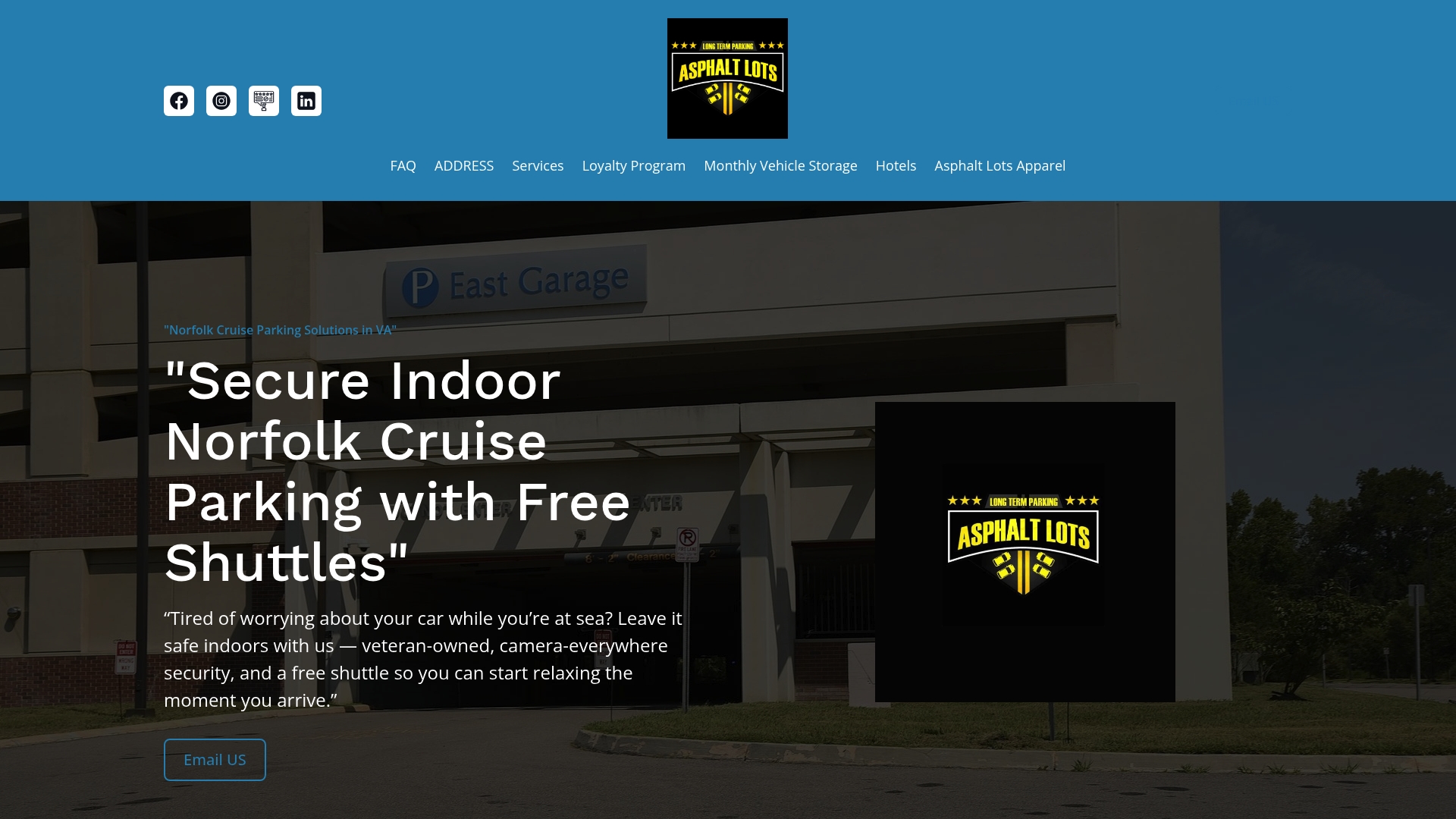
The lineup covers most situations travelers and service members run into: Norfolk Carnival Cruise Parking at $10 per day for standard cruise trips, Monthly Parking and Deployment & Long-Term Parking for extended stays, Daily Parking for shorter trips, and a Reliable Shuttle Service that gets you to the terminal without the stress of hauling luggage across a lot. Frequent cruisers and deploying personnel should look hard at the Unlimited VIP Cruise Parking Membership, priced at $100 per month, which guarantees a reserved spot on cruise days and priority shuttle service every time.
Before you book, confirm your vehicle's dimensions with the team so there's no surprise at drop-off. Check current service details and reservation options and lock in your spot before your next sailing date fills up.
Sources
This article draws on AAA's vehicle storage guidance for battery, tire, and documentation steps; official Norfolk cruise parking details for Cedar Grove rates and shuttle service; and a cruise port parking cost guide for comparative off-site pricing. Vehicle owners looking for extra protection against weather and grime before storage can also check this car protection guide.
- Tips for Parking and Storing Your Car for Extended Periods | Via
- Cruises
- Cruise Port Parking Guide 2026: Costs & Tips for Every Major Port | Cruise Ship Tracker
FAQ
What Size Vehicles Qualify as Oversized for Parking Near Norfolk?
There's no single universal cutoff, but most lots consider anything longer or taller than a standard pickup truck, including trailers, RVs, and cargo vans, to be oversized. Always confirm your exact dimensions with the facility before arrival rather than assuming your vehicle fits standard signage.
Is Indoor Parking Better Than Outdoor Lots for Long-Term Storage?
Indoor storage protects a vehicle from weather, reduces tire and paint wear from sun exposure, and typically comes with tighter security than an open surface lot. For deployments or multi-week cruises, indoor storage with round-the-clock surveillance is generally the safer choice.
How Far in Advance Should I Book Parking for a Cruise or Deployment?
Book as early as possible for peak sailing season or common deployment rotation windows, since lots near Norfolk fill quickly during those periods. A standing membership removes the booking-deadline pressure entirely by guaranteeing a reserved spot ahead of time.
Does My Car Insurance Cover a Vehicle in Long-Term Storage?
Most standard auto policies remain active while a vehicle sits parked, as long as the policy stays current, and comprehensive coverage specifically protects against theft or weather damage during storage. Liability-only policies don't cover damage to your own parked vehicle, so it's worth confirming your coverage type before an extended trip.