Vacation parking reservations are online bookings that guarantee your vehicle a space in a specific facility during your travel dates. You select your dates, pay in advance, and receive a QR code that controls your entry and exit. This system applies to both cruise port parking and airport parking, and understanding how vacation parking reservations work saves you money, eliminates guesswork, and removes one of the most stressful parts of any trip. Facilities like those managed by the SFMTA in San Francisco and the Tucson Airport Authority have built their entire parking programs around this model.

How does the vacation parking reservation process work?
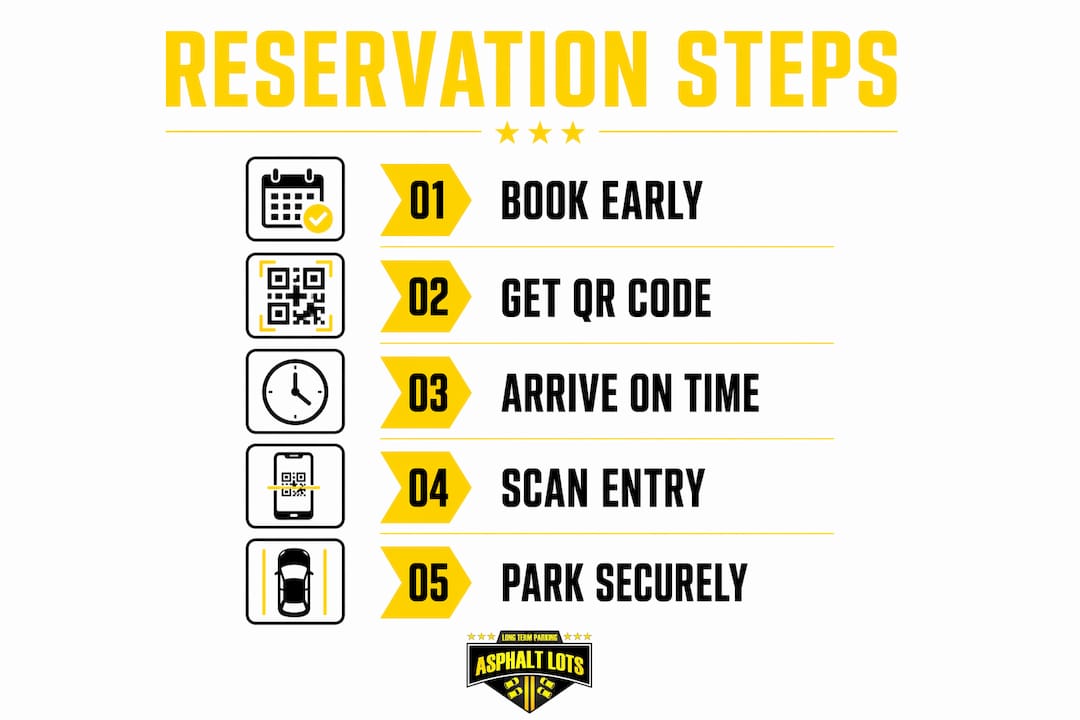
The reservation process follows a clear, repeatable sequence. Knowing each step prevents mistakes that can cost you time or your spot.
-
Select your dates and times. Enter your arrival and departure dates along with the specific times you expect to arrive and leave. Accuracy matters here. The Tucson Airport Authority uses a 5-step online system where date and time selection is the first and most critical input.
-
Choose your facility type. Most systems offer options such as covered garage, surface lot, or economy parking. Each comes with different pricing and distance from your terminal or port. Pick based on your vehicle size, trip length, and budget.
-
Enter your vehicle and personal details. You will provide your license plate number, vehicle make and model, and contact information. These details authenticate you at the gate. Systems use this data to prevent double bookings and verify your identity on arrival.
-
Complete payment and receive confirmation. After paying, you receive a confirmation email. That email contains your reservation reference number and a QR code. The SFMTA reservation system allows bookings up to 6 months in advance, with QR code entry used at city-owned garages.
-
Manage or cancel online. Most platforms let you modify or cancel your booking through your account or a guest link. Cancellation windows vary. London Stansted Airport, for example, allows amendments up to 72 hours before your parking begins.
Pro Tip: Screenshot your QR code and save it to your phone's camera roll before you leave home. If your email app fails to load at the gate, the saved image still works.
How does the QR code system work at parking gates?
The QR code is your digital key. It replaces paper tickets and removes the need to interact with a booth attendant.
- At entry: Pull up to the gate and hold your QR code against the scanner. The system reads your booking, confirms your reservation window is active, and raises the barrier.
- At exit: Repeat the same scan at the exit gate. The system checks that you are leaving within your booked time frame and releases the barrier.
- Timing is non-negotiable. Melbourne Airport's QR parking system states that exit gates only open if you are within your booking window. Arriving or leaving outside that window can trigger non-reservation traffic rules, which may prevent correct entry or exit.
- Phone brightness matters. Low screen brightness is one of the most common reasons a QR scan fails. Set your brightness to maximum before you reach the gate.
- Position the code correctly. Hold the code on the driver's side window, flat against the glass, centered on the scanner. Melbourne Airport specifically instructs drivers to place the code visibly on the driver-side window for reliable scanning.
Pro Tip: Add your QR code to your phone's mobile wallet or Apple Wallet before your trip. It loads instantly without needing a data connection, which is useful in underground garages with poor signal.
One frequently overlooked failure point is vehicle detail mismatches. Your license plate on file must match the plate on your car. If you recently changed vehicles or have a rental, update your reservation details at least 72 hours before arrival to avoid gate denial.
Cruise port parking vs. airport parking: what is the difference?
These two contexts operate under very different rules. Confusing them is one of the most common mistakes cruise travelers make.
| Feature | Cruise port parking | Airport parking |
|---|---|---|
| Reservation required | Often not required at official port lots | Almost always required for guaranteed access |
| Payment method | Typically pay on arrival | Prepaid online at booking |
| Spot guarantee | First-come, first-served | Capacity guaranteed within booked window |
| Shuttle service | Varies; usually walk-in distance | Common at off-site lots |
| Sold-out risk | High during peak sailings | Low with advance reservation |
| Pricing predictability | Rate may vary on arrival | Rate locked at booking |
Port Canaveral's official lots operate on a pay-on-arrival, no-reservation basis. That sounds convenient, but it means you can arrive on embarkation day and find the lot full. Off-site cruise parking lots near Port Canaveral do require reservations and include shuttle service. They also sell out, especially during holiday sailings.
Airport parking systems like those run by SFMTA and the Tucson Airport Authority work differently. Reservations secure capacity in a specific facility and time window, but not a numbered spot. You are guaranteed entry. You are not guaranteed bay 14B. That distinction matters because travelers sometimes expect a specific space and feel confused when they arrive to an open lot.
Off-site cruise parking lots near major ports follow the airport model more closely. They require advance booking, confirm via QR code or license plate, and run scheduled shuttle transfers to the terminal. Knowing which type of lot you are booking prevents day-of surprises. For travelers using the local shuttle service near a cruise terminal, confirming the shuttle schedule at booking time is critical.
Why do parking reservations prevent overpaying and reduce stress?
Booking in advance locks your rate. That single fact is the strongest financial argument for reserving parking before any trip.
Airport reservation systems lock in rates and availability ahead of time, reducing price uncertainty during peak travel periods. Holiday weekends and summer sailings push walk-in rates significantly higher than pre-booked rates at the same facility. Travelers who book early pay the standard rate. Travelers who show up without a reservation pay whatever the market demands that day.
Beyond cost, reservations remove the mental load of parking logistics on travel day. Consider what happens without a reservation on a busy cruise morning:
- You circle the lot looking for an open space.
- You discover the lot is full and must find an alternative.
- You park farther away, pay more, and scramble to catch your shuttle.
- You board your cruise already stressed.
With a confirmed reservation, you drive directly to the facility, scan your code, and park. The SFMTA emphasizes that their reservation system eliminates the uncertainty of finding parking entirely. That is not a marketing claim. It is a structural feature of how the system works.
Pro Tip: Book parking at the same time you book your cruise or flight. Rates are lowest earliest, and availability at quality facilities disappears fast during peak seasons.
Travelers who understand what happens to their car during a cruise also tend to choose facilities with surveillance and indoor storage, which adds another layer of peace of mind that walk-in lots rarely provide.
Key takeaways
Vacation parking reservations work by locking your rate and guaranteeing facility access during your travel window, with QR codes controlling entry and exit at the gate.
| Point | Details |
|---|---|
| Book early, lock your rate | Advance reservations prevent peak-season price spikes and guarantee your spot. |
| QR code is your entry key | Scan at entry and exit gates; prepare it before arrival to avoid gate delays. |
| Cruise and airport parking differ | Port lots often take walk-ins; off-site cruise lots and airport garages require reservations. |
| Vehicle details must match | Your license plate on file must match your car or the gate system may deny entry. |
| Reservations guarantee capacity, not a spot | You are guaranteed access to the facility, not a specific numbered parking bay. |
What I have learned after years of watching travelers get this wrong
Parking is the last thing most travelers think about and the first thing that derails their trip. I have watched people miss shuttle cutoffs because they spent 40 minutes circling a full lot. I have seen families pay double the going rate at a walk-in lot because they assumed availability was guaranteed. These are not edge cases. They happen on nearly every major sailing weekend at busy cruise ports.
The technology behind reservation systems is genuinely good now. QR code entry at facilities like Melbourne Airport and SFMTA garages works reliably when travelers prepare correctly. The failures I see are almost never system failures. They are preparation failures. Someone forgot to screenshot their code. Someone booked the wrong date. Someone assumed the port lot took reservations when it does not.
My honest advice: treat parking as a travel booking, not an afterthought. Reserve it the same day you book your cruise. Choose a facility with indoor storage and 24-hour surveillance if your trip runs more than two days. And read the cancellation policy before you pay, because a 72-hour amendment window like London Stansted's is very different from a 24-hour window at a smaller operator.
The travelers who arrive calm on embarkation day are almost always the ones who handled parking weeks in advance. That correlation is not a coincidence.
— Martin
Asphaltlotsva: reserved cruise parking near Norfolk
Cruise travelers departing from Norfolk have a straightforward option for secure, reserved parking.
Asphaltlotsva is a veteran-owned facility located 15 minutes from Norfolk, offering indoor parking with round-the-clock surveillance and a free shuttle to the cruise terminal. The VIP Unlimited Parking Membership gives frequent cruisers a reserved spot on every sailing day, with priority shuttle access and guaranteed availability. No circling. No walk-in uncertainty. You book online, confirm your reservation, and your space is waiting. For travelers who want long-term cruise parking handled before they leave the driveway, Asphaltlotsva delivers exactly that.
FAQ
What does a vacation parking reservation actually guarantee?
A reservation guarantees you access to the facility during your booked time window. It does not guarantee a specific numbered spot. SFMTA confirms that reserved capacity means availability, not an assigned bay.
Can I change or cancel my parking reservation?
Most systems allow changes or cancellations online. Amendment windows vary by operator. London Stansted Airport permits changes up to 72 hours before your parking start time, while other facilities may require 24 hours notice.
Do cruise port lots require reservations?
Official port-run lots like those at Port Canaveral operate on a first-come basis with no reservations required. Off-site cruise parking lots near the same ports do require reservations and often include shuttle service.
What happens if my QR code does not scan at the gate?
Low screen brightness and incorrect positioning are the most common causes of scan failure. Set your brightness to maximum and hold the code flat against the driver-side window. If the scan still fails, contact the facility's on-site attendant immediately.
How far in advance should I book vacation parking?
Book as early as possible. SFMTA's system accepts reservations up to 6 months in advance. For cruise sailings during holidays or summer, quality off-site lots sell out weeks ahead of departure.