Secure vehicle storage, the industry term for protected long-term parking, is how parking facilities keep cars safe through layered physical controls, environmental design, and active monitoring working together. A facility that relies on cameras alone misses the point. The strongest protection combines controlled access, surveillance, and patrols into a single coordinated system. For travelers leaving their vehicles for days or weeks at a time, understanding these layers is the difference between peace of mind and a bad surprise at pickup.
What physical security measures do parking facilities use to protect vehicles?
Physical security is the first line of defense in any well-run parking facility. Access control, CCTV, and visible security presence work together to deter incidents before they happen. No single measure is enough on its own.
Controlled entry points are the most visible feature. Gates, credential readers, and ticket systems limit who can enter and exit. License plate recognition (LPR) technology goes further by logging every vehicle that passes through, creating a timestamped record that supports both deterrence and investigation. LPR systems generate entry/exit logs that hold drivers accountable and give operators a clear picture of who is on the property at any given time.
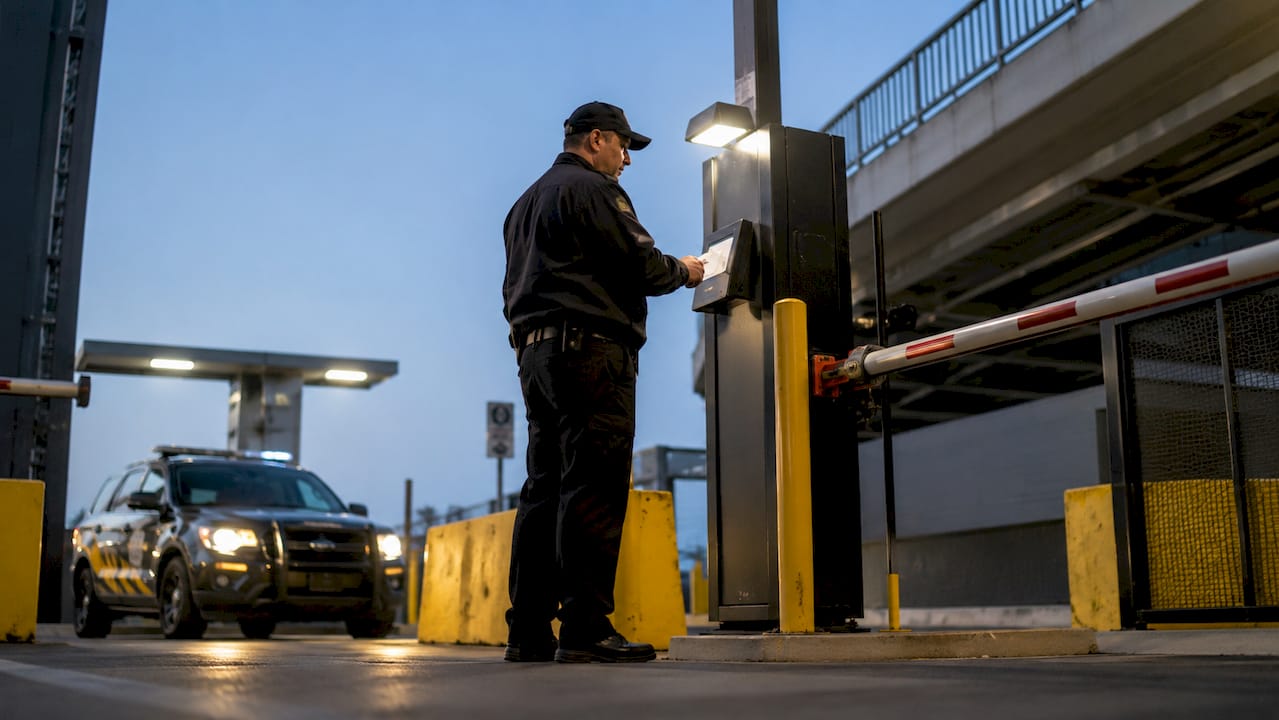
Physical barriers do more than direct traffic. Bollards protect pedestrian zones from vehicle intrusion and create defined lines that surveillance cameras can cover more effectively. Concrete wheel stops, raised curbs, and lane dividers reduce the chance of accidental collisions while also limiting the paths a criminal can take to escape quickly.
Key physical security features in a well-designed facility include:
- Gated entry and exit lanes with credential or ticket verification
- License plate recognition cameras at all access points
- Bollards and barriers separating pedestrian walkways from vehicle lanes
- Perimeter fencing or walls that limit unauthorized foot access
- Clearly marked one-way lanes that reduce confusion and improve camera coverage
Pro Tip: Ask the facility operator whether their LPR system logs are stored offsite. Onsite-only logs can be lost if equipment is damaged during a break-in.
How does lighting contribute to vehicle safety in parking facilities?
Lighting is the single most important Crime Prevention Through Environmental Design (CPTED) feature a parking facility can install. Uniform illumination eliminates shadowed blind spots where criminals can conceal themselves or work undetected. A well-lit lot signals active management. Darkness signals opportunity.
Municipal codes in many jurisdictions set minimum lighting standards. Spokane's code requires a 4:1 uniformity ratio and full cut-off fixtures to prevent glare while maintaining even coverage. That ratio means the brightest point in a lit zone cannot be more than four times brighter than the darkest point. Even coverage matters more than peak brightness.
The four lighting practices that define a safe parking facility:
- IESNA-compliant fixtures installed at heights and angles that eliminate shadows between vehicles
- Motion-activated LED lighting in lower-traffic areas to maintain visibility without constant full power
- Scheduled maintenance checks at least monthly to identify and replace burnt-out bulbs
- Prompt repair protocols so any lighting failure is corrected within 24 hours
"Uniform lighting coverage and maintenance signal attentive security. Shadows and darkness invite crime." Bay Alarm
Maintenance is where many facilities fail. Burnt-out bulbs and visual neglect increase criminal confidence by signaling that no one is watching. A single dark corner near a stairwell is enough to attract the wrong attention. Facilities that treat lighting as a set-and-forget installation rather than an ongoing responsibility create risk for every vehicle on the property.
What surveillance and monitoring technologies enhance car safety in parking lots?
Surveillance technology works best when it is placed strategically, not just abundantly. Camera placement at choke points like entry and exit lanes, stairwells, and elevator lobbies captures license plates, approach paths, and identities before a vehicle disappears into the lot. Cameras mounted too high or at wide angles miss the detail needed for identification.
AI-driven video analytics represent a meaningful upgrade over traditional closed-circuit television (CCTV). Standard CCTV records incidents. AI analytics detect them in real time by flagging loitering, unusual movement patterns, or forced entry attempts. That shift from passive recording to active detection creates what security professionals call a pre-incident detection window. The key point: cameras alone do not create this window. CPTED-compliant lighting and access control must be in place first.
| Technology | Primary function | Limitation without other layers |
|---|---|---|
| Standard CCTV | Records incidents for review | No real-time deterrence |
| AI video analytics | Detects and flags incidents live | Requires good lighting to function accurately |
| License plate recognition | Logs all vehicle entry and exit | Cannot prevent tailgating without physical gates |
| Emergency call stations | Connects users to security staff | Ineffective if no staff are monitoring |
Emergency call stations are an underrated feature. Placed at stairwells, elevator banks, and remote corners, they give travelers a direct line to security personnel. Their presence alone deters crime because they signal that help is close. A facility with call stations but no live monitoring staff defeats the purpose entirely.
Pro Tip: When touring a facility, test the emergency call station. If no one answers within 30 seconds, the monitoring operation is not staffed for real-time response.
How do operational practices and human presence improve vehicle security?
Technology and design set the stage. Human presence closes the gap. Uniformed security patrols during high-risk hours produce the most significant reductions in parking lot crime when combined with lighting and camera coverage. A patrol officer walking the lot at unpredictable intervals creates uncertainty for anyone with bad intentions. Cameras record. Patrols intervene.
Facility maintenance is a security measure, not just a housekeeping task. Broken lights, trash accumulation, and graffiti all signal neglect. That signal is read clearly by criminals. The Broken Windows Theory, well documented in urban crime research, applies directly to parking facilities. A clean, well-maintained lot communicates that management is attentive and enforcement is active.
Operational practices that directly reduce vehicle break-ins include:
- Visible security patrols on irregular schedules during evening and overnight hours
- Prompt removal of abandoned vehicles, which can mask criminal activity
- Signage reminding travelers not to leave valuables visible in their vehicles
- Staff training for incident response, including how to preserve camera footage for law enforcement
- Regular surface and lighting inspections logged and tracked for accountability
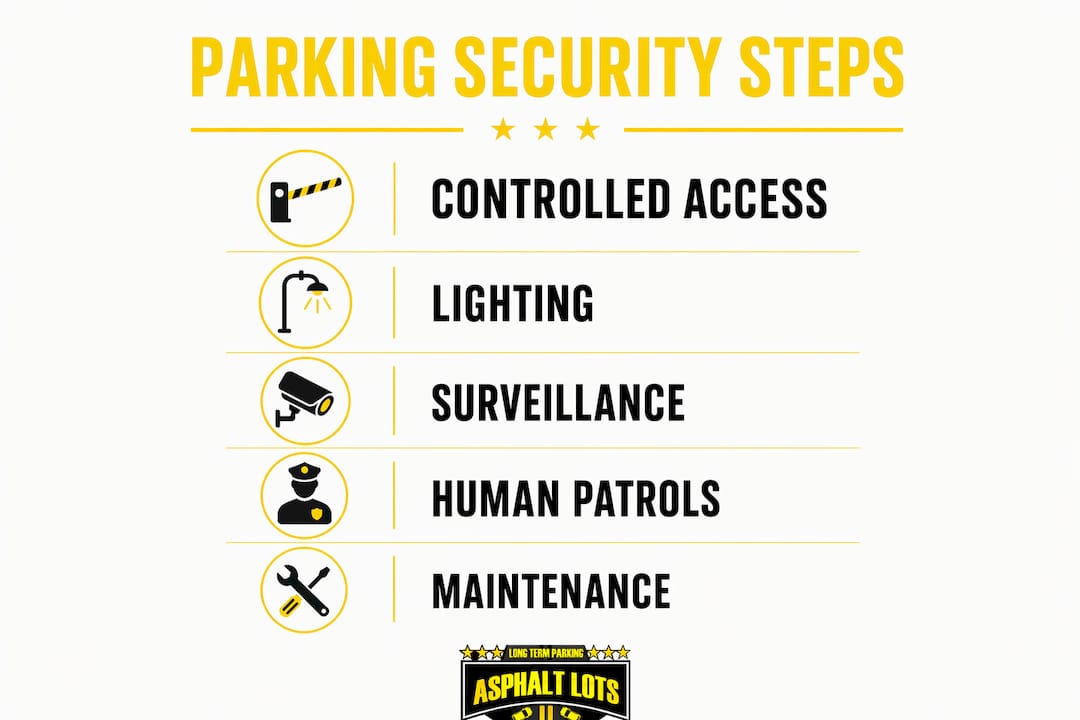
A multi-element approach combining lighting, cameras, patrols, and quick action on visible valuables delivers the strongest security results. No single element compensates for a missing one. Travelers leaving vehicles for extended periods should look for facilities where all four elements are present and documented.
What should you ask when choosing a secure parking facility for extended trips?
Choosing a parking facility for an extended trip requires more than a quick look at the lot. The right questions reveal whether a facility's security is real or just decorative. Ask whether the facility retains entrance/exit logs, has real-time response staff, and maintains footage for a defined period. These factors determine true response capability, not just recording capability.
Questions every traveler should ask before booking:
- Does the facility use LPR? If yes, how long are the logs retained and where are they stored?
- What are the lighting maintenance protocols? Ask for the inspection schedule, not just a yes/no answer.
- Are security patrols conducted? Ask for the hours and whether they are uniformed or plainclothes.
- How long is camera footage retained? Anything under seven days limits the facility's ability to support a police investigation.
- Is there live monitoring of cameras? Recording and monitoring are not the same thing.
- What is the process if my vehicle is damaged? A clear, documented answer indicates a professional operation.
Facilities that cannot answer these questions clearly are telling you something. Vague answers about "state-of-the-art security" without specifics mean the security program is not well-defined. For travelers using parking management systems that include digital entry logs and automated alerts, the answers to these questions should be easy to provide.
Key Takeaways
Secure vehicle storage requires layered security combining physical controls, lighting, surveillance, and active human presence. No single feature protects a vehicle effectively on its own.
| Point | Details |
|---|---|
| Layered security is the standard | Access control, lighting, cameras, and patrols must all be present to protect vehicles effectively. |
| Lighting quality matters most | IESNA-compliant, uniformly distributed lighting eliminates the blind spots criminals rely on. |
| LPR creates accountability | License plate recognition logs every vehicle entry and exit, deterring crime before it occurs. |
| Human patrols close the gap | Uniformed security patrols during high-risk hours deter crime in ways cameras alone cannot. |
| Ask specific questions | Travelers should verify footage retention, live monitoring, and patrol schedules before booking. |
What most travelers get wrong about parking security
The most common mistake I see travelers make is treating a camera as proof of security. A camera pointed at a dark corner records nothing useful. A camera mounted too high captures a car roof, not a face or a license plate. After years of studying how facilities design and operate their security programs, I am convinced that lighting is the variable most travelers never think to ask about. It is also the one that matters most.
The facilities that genuinely protect vehicles are the ones that treat security as an operational discipline, not a feature list. That means scheduled lighting checks, irregular patrol routes, and staff who know exactly what to do when an alert fires. I have walked through lots with impressive camera arrays and found burnt-out lights in three of the first five rows. That is not a secure facility. That is a liability waiting to happen.
My advice to any traveler leaving a vehicle for more than 48 hours: ask for the maintenance log. A professional facility keeps one. If the operator looks confused by the question, keep looking. The right facility treats your vehicle the way you would. That standard is achievable. You just have to know what to ask for.
— Martin
Asphaltlotsva: secure long-term parking near Norfolk for cruise travelers
Travelers heading out of Norfolk who want real answers to those security questions should look at what Asphaltlotsva offers. This veteran-owned facility provides indoor parking with round-the-clock surveillance, controlled access, and a free shuttle to the cruise terminal. The security practices align directly with the layered approach described throughout this article.
Asphaltlotsva's VIP Unlimited Parking Membership guarantees a reserved spot on cruise days, priority shuttle service, and consistent access to the same secure facility every trip. For frequent cruisers who want to skip the guesswork of evaluating a new lot each time, that consistency is the real value. You can also read the cruise parking preparation guide for practical tips on getting your vehicle ready before you leave.
FAQ
What makes a parking facility truly secure?
A truly secure parking facility combines controlled access points, IESNA-compliant lighting, strategically placed cameras, and uniformed security patrols. No single feature is sufficient without the others.
How do parking facilities prevent break-ins?
Facilities prevent break-ins by using license plate recognition at entry and exit points, eliminating dark areas with uniform lighting, and conducting regular security patrols during high-risk hours.
Why does lighting matter so much for car safety in parking lots?
Lighting eliminates the shadows and blind spots that criminals rely on for concealment. Facilities with uniform, well-maintained lighting signal active management and deter opportunistic crime.
How long should a parking facility retain camera footage?
A facility should retain footage for at least seven days to support a police investigation if a vehicle is damaged or stolen. Shorter retention periods limit the facility's ability to respond to incidents effectively.
What is the best way to protect your car in a parking facility?
Choose a facility with gated access, LPR logging, live camera monitoring, and documented security patrols. Ask specific questions about footage retention and maintenance schedules before booking for an extended trip.