
Preparing your car for a family cruise means completing thorough mechanical checks, securing long-term parking near the port, and organizing travel logistics well before departure day. Families who skip this process risk breakdowns on the highway, unavailable parking spots, and chaotic embarkation experiences. The good news is that knowing how families prepare cars for cruises gives you a clear checklist to follow. Get these three areas right, and your cruise vacation starts the moment you leave your driveway, not the moment you finally board the ship.
What mechanical checks should families do before a cruise?
Car maintenance for cruising starts with a professional inspection, not a quick walk-around in the driveway. Schedule a full inspection at least two weeks before departure. That window gives your mechanic time to order parts and complete repairs without rushing.
A complete pre-trip inspection covers six priority systems. Work through them in this order:
- Battery load test. A visual check will not catch a failing battery. Heat shortens battery life to 30–36 months in warm climates, compared to 48–60 months in cooler regions. If your battery is older than two years and you park near a warm port like Norfolk or Port Canaveral, load test it before you go.
- Tire pressure and tread depth. Check pressure when tires are cold, using the PSI listed on the driver's door jamb, not the tire sidewall. Worn tread below 2/32 of an inch is a legal and safety failure.
- Brake system. Ask your mechanic to measure pad thickness and inspect rotors. Brake fade on a loaded family vehicle during a long highway descent is not a recoverable situation.
- Cooling system pressure test. Cooling system failures are among the top causes of summer roadside breakdowns during high-speed travel. A pressure test catches leaks that visual checks miss entirely.
- Fluid levels. Engine oil, transmission fluid, brake fluid, power steering fluid, and coolant all need to be at correct levels. Low fluid is often the first sign of a slow leak.
- All exterior and interior lights. Brake lights, turn signals, headlights, and reverse lights. A burned-out brake light on a loaded vehicle is a rear-end collision waiting to happen.
One item families consistently overlook is the radiator cap. Radiator caps should be replaced every 20,000–30,000 miles because they lose seal integrity over time. A failed cap cannot hold cooling system pressure during sustained highway driving, which leads to overheating even when coolant levels look fine.
Pro Tip: A clean cabin air filter and properly balanced tires reduce driver fatigue on long highway drives to the port. Both are inexpensive fixes that make a real difference over 200-plus miles.
Completing the full checklist takes 20–30 minutes of mechanic time. That small investment protects a vacation that likely cost your family thousands of dollars.
How and when should families book secure cruise port parking?
Parking is the most underplanned part of family road trip preparations for a cruise. Most families think about it the week before departure. That is too late.

Book long-term parking at least one month before your cruise departure date. Professional garages near busy ports like Norfolk fill up fast, especially during summer and holiday sailings. Waiting until the last week means choosing between overpriced public lots and unsecured street parking.
Here is what separates a professional parking garage from a public surface lot:
- Security. Professional facilities offer 24-hour surveillance, controlled access, and on-site staff. Public lots offer a painted line and a pay machine.
- Shuttle service. Quality garages include free shuttle transfers to the cruise terminal. Public lots require you to manage your own transport with luggage in tow.
- Vehicle protection. Indoor or covered parking protects your car from weather damage during a 7-day or 14-day cruise. An uncovered lot in a coastal city exposes your vehicle to salt air, sun, and storms.
- Guaranteed availability. Pre-booked facilities hold your spot. Public lots operate first-come, first-served.
Arriving one day early at the port city is one of the best tips for car trips and cruise departures combined. It gives your family a buffer for mechanical trouble, traffic delays, or a late shuttle. It also means you wake up rested on embarkation day instead of rushing from three hours away.
Pro Tip: Before you book, call the garage and confirm shuttle frequency on embarkation day. Some facilities run shuttles every 15 minutes during peak hours. Others run them every hour. That difference matters when you have kids, car seats, and six bags to manage.
What are the best strategies for managing logistics on cruise day?
Cruise day logistics separate families who arrive relaxed from families who arrive frazzled. The difference is almost always planning, not luck.
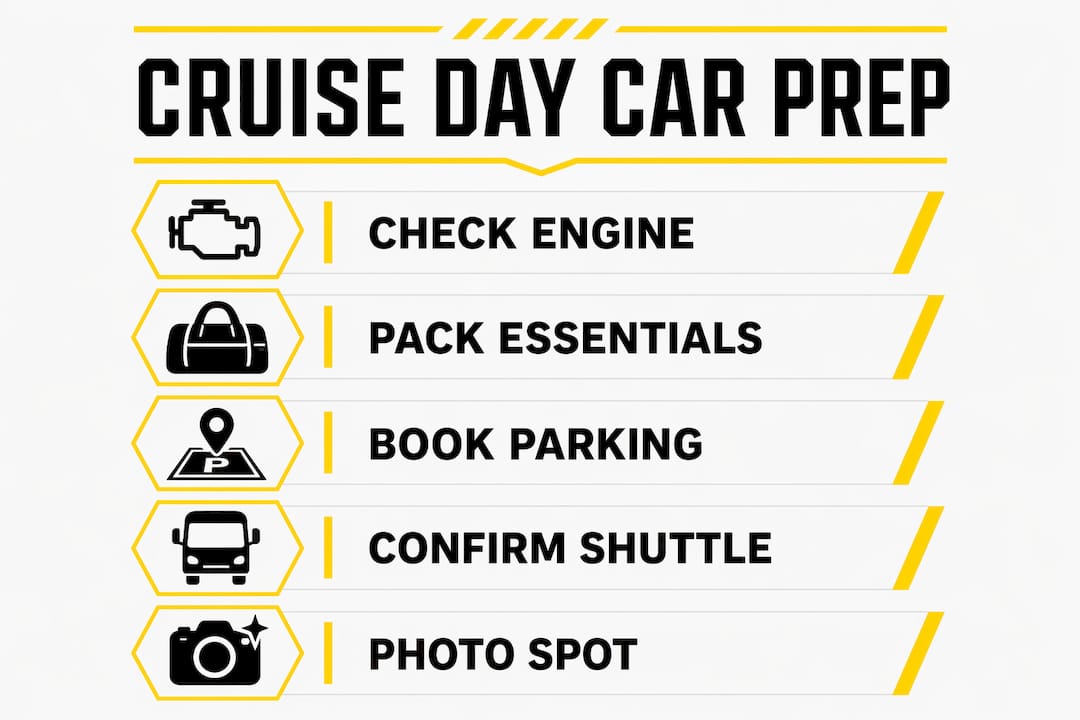
For large families, chauffeured van services are often more cost-effective and logistically easier than self-driving a rental van and paying separate parking fees. A chauffeured service drops your family at the designated terminal drop zone, handles the timing, and eliminates the parking search entirely. For groups of six or more, the math frequently favors the chauffeured option.
If you are driving your own vehicle, these strategies keep cruise day moving:
- Use designated drop zones. Most major cruise terminals have dedicated family drop-off areas. Pull in, unload bags, and let a porter tag them. This keeps your vehicle moving and your family together.
- Use porter-assisted luggage transfer. Porters at terminals like Port Canaveral and Norfolk's Half Moby Terminal move bags directly to your cabin. Tipping $2–$5 per bag is standard and worth every dollar.
- Time your arrival carefully. Arriving 90 minutes before your assigned boarding window avoids peak congestion. Arriving at the exact opening of embarkation means competing with every other family who had the same idea.
- Pack a carry-on with day-one essentials. Checked bags reach your cabin by mid-afternoon. Pack swimwear, medications, documents, and snacks in a bag you carry on yourself.
- Confirm parking shuttle timing the night before. Know exactly when the first shuttle runs from your garage to the terminal. Build 30 minutes of buffer into your morning schedule.
Packing essentials for family cruises also means keeping your car organized for the drive to the port. A packed trunk with no system creates a chaotic unloading experience at the terminal. Use labeled bags or packing cubes so each family member can grab their own luggage without a full unpack.
What mistakes do families make when getting their cars ready?
Most families who have a rough cruise departure trace it back to one of five avoidable mistakes. Recognizing them before you leave is the entire point of how to ready a car for vacations like this.
Skipping battery load testing. A battery that starts the car fine in your driveway can fail after sitting in a hot parking lot for seven days. Load testing detects failures that visual inspections cannot see. This is the single most skipped check and the most common cause of post-cruise breakdowns.
Ignoring the radiator cap. Families check coolant levels and assume the cooling system is fine. A worn radiator cap fails under sustained highway pressure even when coolant is full. Replace it if you are past 25,000 miles since the last swap.
Booking parking too late. Leaving parking arrangements until the week before departure results in limited options, higher prices, and facilities that may not meet your security standards. One month out is the minimum. Six weeks out is better.
Treating visual fluid checks as a full diagnostic. Visual-only fluid checks miss early signs of leaks and mechanical failure. A professional load test and pressure test catch what you cannot see with your eyes.
Forgetting documents and offline maps. Carry your insurance card, vehicle registration, and roadside assistance information in the car. Download an offline map of the route to the port using Google Maps or Apple Maps before you leave home. Cell coverage near coastal ports can be unreliable.
Pro Tip: Take a photo of your parked car at the garage before you board. Note the row, level, and any identifying markers. After a 10-day cruise, parking garages all look the same.
Key takeaways
Families who prepare their cars thoroughly and book secure parking at least one month in advance arrive at the cruise terminal relaxed, on time, and without mechanical surprises.
| Point | Details |
|---|---|
| Schedule inspection early | Book a professional mechanical check at least two weeks before departure to allow time for repairs. |
| Load test the battery | Heat shortens battery life in warm climates; load testing catches failures a visual check misses. |
| Book parking one month out | Professional garages near cruise ports fill quickly; early booking secures your spot and shuttle access. |
| Arrive one day early | Reaching the port city the day before departure eliminates travel-day stress and provides a buffer for delays. |
| Plan cruise day logistics | Use designated drop zones, porter assistance, and confirmed shuttle times to keep embarkation smooth. |
What i've learned after watching families prepare cars for cruises
Most families treat car prep as an afterthought. They spend weeks planning shore excursions and dining packages, then spend 20 minutes the night before departure checking tire pressure with a gas station gauge. That imbalance is where cruise day problems are born.
The mechanical issues that derail cruise departures are almost never dramatic. They are a battery that was borderline six months ago and finally gave out in a hot parking lot. They are a radiator cap that held pressure on city streets but failed at 70 miles per hour on I-64. These are not bad luck. They are skipped maintenance.
What I have found is that families who treat car preparation as part of their cruise checklist, not a separate task, have fundamentally different experiences. They book parking the same week they book the cruise. They schedule the mechanic appointment the same week they book flights. That parallel planning is what keeps departure day from becoming a crisis.
The other thing worth saying directly: secure parking is not a luxury. Leaving your vehicle in an unsecured public lot for 10 days near a busy port is a real risk. Professional facilities with surveillance, controlled access, and free shuttle service exist specifically because families need them. Use them.
— Martin
Secure your spot before you set sail
You have done the work on your car. Now make sure your parking is just as solid.
Asphaltlotsva is a veteran-owned indoor parking facility located just 15 minutes from Norfolk's cruise terminal. The facility offers 24-hour surveillance, controlled access, and free shuttle service to the port on embarkation day. For families who cruise regularly, the VIP Unlimited Parking Membership guarantees a reserved spot on every cruise day, priority shuttle boarding, and no availability surprises. Spots fill up weeks in advance during peak sailing season. Book your secure cruise parking early and check one more thing off your departure checklist.
FAQ
How far in advance should families book cruise port parking?
Book long-term parking at least one month before your departure date. Professional garages near major ports fill quickly during peak cruise seasons, and waiting until the final week limits your options significantly.
Is battery load testing really necessary before a cruise trip?
Yes. Heat reduces battery lifespan to 30–36 months in warm climates, and a battery that starts your car normally can still fail after sitting in a hot parking lot for a week. Load testing is the only way to catch that failure before it happens.
What is the difference between a public lot and a professional parking garage near a cruise port?
Professional garages offer 24-hour surveillance, controlled access, covered vehicle protection, and free shuttle service to the terminal. Public surface lots offer none of those features and operate on a first-come, first-served basis with no security guarantees.
When should families schedule a pre-trip mechanical inspection?
Schedule the inspection at least two weeks before departure so your mechanic has time to order parts and complete any needed repairs before your travel date.
Are chauffeured van services worth it for large families on cruise day?
For families of six or more, chauffeured van services often cost less than a rental van plus parking fees combined. They also provide direct access to terminal drop zones and eliminate the stress of finding parking on embarkation day.